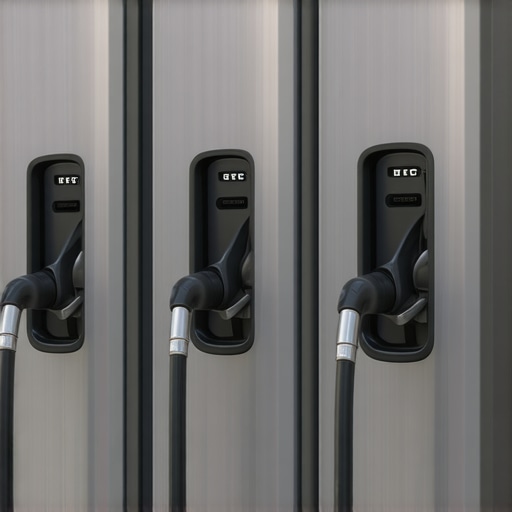
The Hard Truth About Modern Security
I teach my apprentices that if you have to force the key, you’ve already lost. In my shop, we see the aftermath of ‘brute force logic’ every day. By the time a customer brings me a mangled lock, the physics of the mechanism have been compromised by either poor maintenance or a thief who knew more about the hardware’s weaknesses than the owner did. As we move into 2026, the target hasn’t just changed; it’s electrified. EV charging stations are the new gold mines for metal thieves and vandals. If you’re relying on the factory-standard pot metal locks that come with these units, you’re essentially leaving your vault door propped open with a toothpick.
“Security is always a trade-off between convenience and protection.” – Industry Axiom
The Physics of the EV Charger Lock Failure
When we look at the internal physics of a standard EV station cabinet lock, we’re usually looking at a basic cam lock or a low-grade wafer system. These are not ‘locks’ in the professional sense; they are mere suggestions. A wafer lock relies on thin metal plates that sit in slots within the plug. When the correct key is inserted, these wafers are pulled flush with the plug’s diameter, allowing it to rotate. The problem? The tolerances are massive—often exceeding .005 inches. This allows a thief with a simple jiggler key or a flathead screwdriver to bypass the shear line entirely. [IMAGE_PLACEHOLDER] To stop charger theft in 2026, we have to move toward high-security euro cylinder locks or specialized deadbolt configurations that utilize hardened steel pins and tighter tolerances.
Fix 1: Upgrading to High-Security Euro Cylinder Locks
Most commercial EV enclosures use a cutout that can be adapted for a euro cylinder. In the world of high-security, we look for hardware that resists the ‘Big Three’: picking, drilling, and snapping. A standard zinc-bodied cylinder will snap like a dry twig under a pair of vice grips. A high-security euro cylinder, however, utilizes a molybdenum alloy core and sacrificial snap points. If a thief attempts to snap the lock, the cylinder breaks at a predetermined point, leaving the actual locking bolt engaged and unreachable. We zoom in on the pin stack: you want a cylinder with at least six pins, preferably with mushroom or spool drivers. These ‘security pins’ are designed to catch on the shear line when tension is applied, giving the picker a ‘false set’ that makes it nearly impossible to feel the true binding order.
Fix 2: The Deadbolt Reinforcement Strategy
For residential EV owners, particularly those with wall-mounted units in carports, the question of rekeying vs replacing locks which is better often comes up. If you have a budget smart lock starter kit installed on your garage door, but your EV charger is secured with a luggage lock, your priorities are skewed. I always recommend a deadbolt installation DIY vs pro debate. While you can buy a hole saw kit at a big-box store, a pro-grade installation involves mortising the strike plate deep into the structural timber. For EV cabinets, we can retro-fit a deadbolt-style throw that engages a steel frame. This prevents the ‘crowbar gap’—the physical space a thief needs to leverage the door open. We use Grade 1 ANSI-rated hardware, which is tested to withstand ten 75-foot-pound blows. Your average hardware store deadbolt is lucky to survive two.
Fix 3: Access Control and Smart Tech Integration
We’re seeing a massive uptick in preventing bike lockouts with smart tech, and that same logic applies to EV chargers. For vacation homes or commercial hubs, physical keys are a liability. Employee theft or lost keys lead to expensive rekeying. Instead, we are installing panic bar installation and repair for commercial buildings that integrate with digital credentials. If you’re managing a fleet of chargers, you need ‘Key Control.’ This means using restricted keyways where blanks are not available at the local hardware store. In 2026, car lockout services for Tesla models are becoming more technical, and the same goes for station access. We use rolling code technology so that even if a signal is intercepted, it cannot be reused to open the cabinet. This is the ‘Fortress Upgrade’—moving away from physical metal vulnerabilities toward encrypted digital barriers.
“The strength of a lock is inversely proportional to the number of people who have a copy of the key.” – Locksmith Manual v.4
The Forensic View of Material Science
Why do these locks fail? It’s often down to material science. Many EV charger manufacturers save costs by using die-cast zinc alloys. Zinc is brittle. When the temperature drops, or when a thief uses a hit of liquid nitrogen, that lock will shatter. In my shop, we replace these with cold-rolled steel or brass components. Brass is a self-lubricating metal that handles the friction of the pins much better over thousands of cycles. For those looking for budget home security upgrades 2026, the single best move is to swap out your strike plate screws. Most come with half-inch screws that barely grab the trim. We use three-inch hardened steel screws that anchor into the wall studs. It’s the difference between a door that folds and a door that holds.
The Verdict: Security is a Process
Whether it’s car lockout services for Tesla models or securing a commercial charging hub, the physics remains the same. You need to eliminate the leverage points and tighten the tolerances. If you’re managing a property, don’t wait for a ‘crunch’ sound to realize your hardware has failed. Regular maintenance—using a high-quality PTFE-based lubricant, never WD-40 which attracts grit—will keep those pins moving freely. Security isn’t about one lock; it’s about layers. A high-security cylinder, a reinforced strike plate, and a smart access log form a triad that most thieves will simply walk away from. They’re looking for the ‘Trunk Slammer’ special—the cheap, easy-to-drill hardware. Don’t give it to them.


