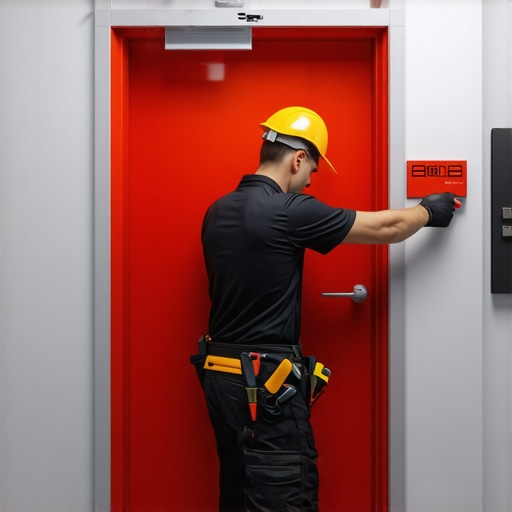
The Sound of Failure: A Forensic Autopsy of the Commercial Exit Device
When you hear that specific metallic grind—the one that sounds like a handful of gravel tossed into a blender—you aren’t just hearing a mechanical glitch; you’re hearing the physics of a failed egress system. In my 25 years at the bench, I’ve seen thousands of panic bars, from the heavy-duty Von Duprin 99 series to the absolute garbage zinc-cast knock-offs that ‘trunk slammers’ try to pass off as ‘commercial grade.’ A lady came into my shop crying because a scammer drilled her lock and charged her nearly a thousand dollars for a $40 knock-off replacement that failed within a week. That is the reality of the industry today. If you are managing a commercial building in 2026, you cannot afford to ignore the internal mechanics of your exit hardware. A panic bar is a complex assembly of springs, slides, and latch bolts designed to withstand the pressure of a thousand bodies in an emergency. When it fails, it’s rarely a ‘sudden’ event; it’s a slow death by friction and neglect. The symptoms start with a slightly sticking touch bar or a latch that doesn’t fully retract, leaving the door to drag against the strike plate. This isn’t just an annoyance; it’s a code violation and a security risk. Before you call a mobile locksmith for RVs and campers for a job they aren’t equipped for, you need to understand the forensic reality of what is happening inside that housing. We are talking about ANSI Grade 1 hardware that is rated for a million cycles. If yours is failing after a few thousand, you’ve been sold a bill of goods made of pot metal instead of hardened steel.
“Security is always a trade-off between convenience and protection.” – Industry Axiom
1. Diagnosing the Dogging Mechanism and Internal Chassis Alignment
The dogging mechanism is the heart of a non-fire-rated exit device. It is the component that allows you to keep the latch retracted during business hours, effectively turning the door into a simple push-pull entrance. In 2026, many buildings are integrating touchless entry systems for offices, which often interface with the panic bar’s electrical dogging. When this fails, the symptom is usually a bar that stays partially depressed or a latch that ‘walks’ out of the housing while the door is supposedly open. Mechanism zooming reveals the culprit: the hex-key cam or the cylinder dogging assembly. Over years of use, the internal cam—usually a small piece of hardened steel—begins to round off the edges of the dogging plate. Once that plate loses its sharp edge, the spring tension of the latch bolt wins the battle of physics, pushing the bar back out. If you are using commercial restricted keyways, you might have an IC core integrated here. A common mistake is using too much force on the key, which shears the pins in the core. If the bar won’t stay dogged, do not just tape it down. Open the housing and inspect the chassis. You are looking for ‘metal shavings’—the glitter of a dying lock. If you see silver dust, your internal slides are out of alignment. This often happens because the door itself has sagged, forcing the latch bolt to hit the strike plate at an angle. This lateral pressure transfers back into the chassis, bending the thin guide rails. A real locksmith won’t just replace the bar; they will re-hang the door or install a continuous hinge to fix the root cause of the mechanical stress.
2. Fire-Rated Panic Hardware Options and the Physics of Heat-Activated Latches
There is a massive difference between a ‘panic bar’ and ‘fire-rated exit hardware.’ You cannot dog a fire-rated door. It must be ‘positive latching,’ meaning the latch must always be able to catch the strike to keep the door closed in a fire. I’ve seen people try to install smart lock hacking prevention tips on fire doors that involve blocking the latch—this is a death sentence in an inspection. Fire-rated hardware uses different metallurgy. While a standard bar might use a lot of aluminum and plastic components to reduce weight, fire-rated options are heavy steel. The internal springs are stouter, designed to withstand the warping of a door under high heat. If your fire-rated bar is sticking, the problem is often the ‘dead-latching’ tab. This is a small trigger above or below the main latch bolt. When the door is closed, the strike plate pushes this tab in, which prevents the main latch from being ‘shimmied’ or ‘loided’ with a credit card. If the gap between the door and the frame is too wide (more than 1/8th of an inch), that tab won’t engage. The physics here is simple: if the tab isn’t depressed, the latch won’t stay dead-locked, and the internal mechanism remains under constant tension. In 2026, we are seeing more fire-rated hardware with integrated sensors for mobile app locksmith booking 2026 integration. If these sensors are misaligned, they can send false ‘door open’ signals to your security desk. Repairing this involves more than a screwdriver; it requires a deep understanding of the UL (Underwriters Laboratories) listings. You cannot field-modify a fire-rated bar by drilling new holes or swapping in parts from a non-rated device without voiding the fire certification of the entire opening.
“The primary purpose of an exit device is to provide life safety, with security being a secondary but vital function.” – Life Safety Code Handbook
3. Managing Restricted Keyways and SFIC Core Maintenance
The most technical aspect of commercial exit hardware is the integration of restricted keyways. Most high-end buildings use SFIC (Small Format Interchangeable Core) systems like Best or Falcon. This allows the facility manager to swap out the lock cylinder in seconds without taking the whole panic bar off the door. However, these cores are precision-engineered with incredibly tight tolerances. If you are experiencing a ‘crunchy’ feel when turning the key to dog or undog the bar, you are likely looking at master wafer buildup. In a master-keyed building, there are tiny brass disks (wafers) inside the core. Over time, these wafers wear down and create brass dust that mixes with old oil to form a sticky paste. Do not use WD-40. I’ll say it again for the people in the back: WD-40 is a solvent, not a long-term lubricant. It will eventually dry into a gummy resin that will seize the pins entirely. Instead, use a dry PTFE-based lubricant or high-quality graphite. If the key is stuck, do not use pliers. I’ve performed more broken key extraction tools 2026 reviews than I care to count because someone thought they could ‘muscle’ a brass key through a seized core. The key always loses against the steel chassis. If the core itself is loose in the housing, the throw-member (the tailpiece that connects the core to the panic bar) is likely worn. This creates a ‘dead spot’ in the rotation, where you turn the key but nothing happens. Replacing the throw-member is a five-minute job for a shop locksmith but an all-day disaster for a handyman. For those looking for the best residential door locks for safety and durability, the same logic applies: look for solid brass internals and restricted keyways that prevent unauthorized duplication. Whether it is a house or a skyscraper, the quality of the cylinder determines the integrity of the barrier.
The Repair Process: Rekeying vs. Total Replacement
When I walk up to a failing panic bar, I perform a ‘sensory check.’ I push the bar slowly and feel for the ‘break’—the point where the springs compress and the latch retracts. It should be smooth, with a consistent increase in resistance. If there is a ‘hitch’ or a ‘pop,’ the internal timing is off. In many cases, a total replacement is unnecessary. Most Grade 1 exit devices are modular. You can replace the head assembly, the springs, or the touch bar end caps individually. This is where the ‘scam buster’ mindset comes in. A scammer will tell you the whole unit is ‘unrepairable’ and try to sell you a cheap, unbranded bar that won’t last a year. A real master locksmith will pull the chassis, clean the old grease off the slides with a parts cleaner, inspect the shear points, and apply a fresh coat of lithium grease. We look for ‘mushrooming’ on the latch bolt—where the steel has been hit so many times it has started to deform and widen. If we see that, we file it back to its original profile or replace the bolt. This is the difference between security as a product and security as a physics-based solution. If you’re also dealing with vehicle issues, like needing car remote programming tutorials or specialized mobile locksmithing, the principle of choosing quality over ‘cheap and fast’ remains the same. Security is a long game. Whether you are installing a voice-activated locks setup tutorial for a modern office or repairing a 40-year-old mechanical crash bar, the goal is the same: a flush fit, a smooth throw, and a reliable egress every single time. Stop buying zinc hardware from big-box stores and start investing in hardware that can actually handle the weight of the world.


![Dead Key Fob? Replace Your Battery in 3 Minutes [2026 Tutorial]](https://prolocksmithco.com/wp-content/uploads/2026/01/Dead-Key-Fob-Replace-Your-Battery-in-3-Minutes-2026-Tutorial-75x75.jpeg)

![5 Modern Access Control Fixes for Co-Working Spaces [2026]](https://prolocksmithco.com/wp-content/uploads/2026/02/5-Modern-Access-Control-Fixes-for-Co-Working-Spaces-2026-500x330.jpeg)
This post really highlights how vital it is to pay close attention to the mechanical integrity of exit hardware, especially in high-traffic areas. I’ve seen many cases where simple misalignment or worn-out internal components lead to failure, which can compromise safety and violate codes. What’s interesting in my experience is how frequent unnoticed sagging doors can cause lateral pressure on the chassis, leading to eventual failure. It makes me wonder—how often do building managers actually inspect these internal components versus just replacing the entire unit? Regular maintenance, including inspection of metal shavings and proper lubrication, seems like a small investment that can prevent costly emergency repairs later. I’m curious, what have others found to be the most effective routine check to prevent panic bar failure before it happens? Also, with the advancement of smart sensors on fire-rated hardware, are there reliable monitoring systems that can be integrated to alert staff of potential issues before failure occurs? Would love to hear some seasoned insights on proactive maintenance methods.