The Illusion of Digital Safety: A Locksmith’s Perspective on 2026 Hardware
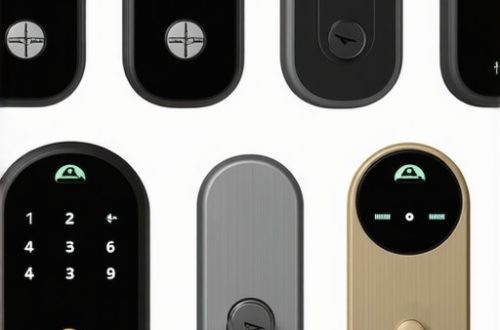
Most people think a burglar is a high-tech ninja. They aren’t. Most burglars are looking for a path of least resistance, usually a door that yields to a well-placed boot or a pry bar. As a locksmith with 25 years on the bench, I see the same story every week: a homeowner spends $300 on a shiny smart lock thinking they’ve built a fortress, only to realize the actual deadbolt is made of pot metal that snaps under thirty pounds of pressure. A lady came into my shop crying because a scammer drilled her lock and charged her $600 for a ‘smart’ upgrade that was actually a plastic-housed Grade 3 piece of junk. This is the reality of the market as we move into 2026. If you are looking at residential keypad locks reviews, you aren’t just buying software; you are buying a physical barrier. If that barrier is weak, the best app in the world won’t save you.
“Security is always a trade-off between convenience and protection.” – Industry Axiom
1. The Physical Compromise: The “Smart” Wrapper Problem
The first risk is the most glaring: the sacrifice of mechanical integrity for digital features. Many best smart locks compatible with Alexa 2026 focus on the circuit board rather than the bolt. When I strip these locks down on my bench, I often find a hollow tailpiece and a zinc-alloy cam. In a standard high-security setup, you want a solid brass cylinder and a hardened steel bolt that extends at least one inch into the frame. Most budget home security upgrades 2026 skip this. They use a Grade 3 rating, which is the lowest possible residential standard. This means the lock can be defeated with a standard screwdriver and a hammer in under ten seconds. When considering the benefits of installing smart locks for home security, you must ensure the mechanical core is at least ANSI Grade 2. The physics of the deadbolt are what matter when someone is trying to kick your door in. A smart lock with a weak bolt is just a fancy doorbell that holds the door shut with a prayer.
2. Solenoid Fatigue and Door Lock Jamming
One of the most common calls I get involves door lock jamming fixes 2026. This isn’t usually a digital hack; it’s a mechanical failure of the solenoid. The solenoid is the tiny electromagnetic coil that moves the internal clutch to allow the thumbturn to engage. In many affordable biometric door hardware options, these solenoids are under-powered. If your door isn’t perfectly aligned—meaning the weatherstripping is pushing against the door or the house has settled—the bolt rubs against the strike plate. This lateral pressure creates friction that the tiny motor cannot overcome. I tell my apprentices: if you hear a grinding noise, the motor is dying. Over time, the gears, often made of nylon in cheaper models, will strip. This leaves the homeowner locked out with a device that says ‘unlocked’ on their phone but remains physically barred. Proper smart home security integration 2026 requires a perfectly mortised strike plate and a door that shuts without being pulled or pushed. If you have to lift the handle to lock it, your smart lock will fail within six months.
“A lock is only as strong as its weakest component, and in the digital age, that component is often the power supply.” – Security Manual 401
3. The Connectivity Gap: EV Chargers and Signal Hijacking
As we integrate EV charging station lock security into our home ecosystems, we create new entry points. Most 2026 smart systems use a bridge to connect the lock to the internet. If your EV charger is on the same network and has weak encryption, a thief doesn’t need a pick; they need a laptop. They can spoof the ‘unlock’ command by intercepting the Bluetooth Low Energy (BLE) handshake. I’ve seen cases where the ‘smart’ features actually make it easier for a tech-savvy thief to bypass the deadbolt. Unlike automotive laser-cut keys costs, which involve high-end transponder programming and rolling codes that are difficult to clone, many home smart locks have static recovery codes or weak ’emergency’ overrides. If you are using affordable biometric door hardware, make sure it has two-factor authentication. Never rely on a single point of failure. The goal is to make the digital bypass as difficult as the physical one.
4. The “Backdoor” Keyway Vulnerability
Almost every smart lock has a traditional keyway for emergencies. This is the irony: people buy smart locks to avoid keys, but the lock still has a cheap 5-pin tumbler system that can be raked open by a novice in seconds. When reading residential keypad locks reviews, look at the keyway. Is it a Schlage C or a Kwikset KW1? These are standard and easily picked. A real security upgrade involves a restricted keyway or a cylinder with security pins like spools or serrated drivers. These pins are designed to catch on the shear line when tension is applied, making picking significantly harder. If you’re investing in budget home security upgrades 2026, don’t ignore the brass. I often recommend replacing the stock cylinder in a smart lock with a high-security aftermarket version. This ensures that even if the app is secure, the physical lock isn’t a ‘welcome’ sign for anyone with a set of $20 picks. Security is about layers. Your app is one layer, the motor is another, and the pin-tumbler stack is the final stand. If any of those are ‘pot metal’ quality, the whole system is a failure. Always use a dry PTFE-based lubricant for the mechanical parts; never use WD-40, which attracts grit and will eventually gum up the delicate electronics and pins. Real security is maintained through precision and physics, not just software updates.


![How Access Logs for Smart Locks Catch Security Breaches [2026]](https://prolocksmithco.com/wp-content/uploads/2026/02/How-Access-Logs-for-Smart-Locks-Catch-Security-Breaches-2026-500x330.jpeg)