The Illusion of Digital Safety: A Burglars Perspective
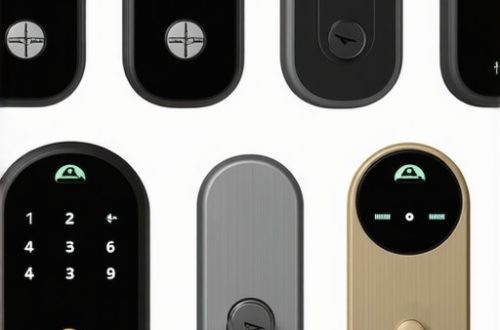
Most homeowners in 2026 are obsessed with their apps and notifications, but they forget that a burglar doesn’t need to hack your 256-bit encryption if they can just kick through a piece of soft pine. I have spent 25 years watching the evolution of security hardware, and I can tell you that the physics of a door remain unchanged. A burglar looks for the easiest path of resistance, which is usually the physical gap between a high-tech smart lock and a low-tech door frame. When you buy the best smart locks compatible with Alexa 2026, you are often buying a computer wrapped in cheap zinc-alloy ‘pot metal.’ I see it every day: people spend $500 on electronics and $5 on the strike plate. That is like putting a bank vault door on a cardboard shed.
A lady came into my shop crying because a scammer drilled her lock and charged her six hundred dollars for a ten-dollar replacement. She had a high-end smart lock that had jammed, and instead of using a Lishi tool or an air wedge to manipulate the mechanism, this ‘trunk slammer’ went straight for the drill. Not only did he destroy a beautiful piece of hardware, but he also left her door structurally compromised. This is why I tell my customers that security isn’t a product you buy at a big-box store; it is a system of physical tolerances and material science that needs to be maintained by a professional who knows the difference between a spool pin and a serrated pin.
“Security is always a trade-off between convenience and protection.” – Industry Axiom
Gap 1: The Metallurgy of Smart Hardware
The first gap I see in 2026 ecosystems is the material quality. In a high security locks vs standard locks comparison, the standard smart lock is almost always made of cast zinc. Zinc is brittle. It can be snapped with a heavy-duty wrench or melted with a handheld torch. When I do a fortress upgrade, I replace these components with solid brass or hardened steel cylinders. A real locksmith understands the shear line—the invisible boundary where the top pins and bottom pins must align perfectly to allow the plug to rotate. In cheap smart locks, the tolerances are so loose that the lock can often be ‘raked’ or ‘bumped’ in seconds, regardless of how many ‘smart’ features it has. A lock shield installation for doors is the first step in closing this gap, protecting the latch from being shimmed or sawed.
Gap 2: The Strike Plate and the Kick-In Vulnerability
The second gap is the strike plate. Your smart lock’s deadbolt is only as strong as the wood it is sitting in. Most smart locks come with 3/4-inch screws that barely penetrate the door casing. I always use 3-inch hardened steel deck screws that anchor directly into the 2×4 wall studs behind the frame. This transforms the door from a flimsy barrier into a structural part of the house. If you are looking for best residential door locks for safety and durability, you need to look at the ANSI Grade. An ANSI Grade 1 deadbolt is tested to withstand ten strikes of 75 foot-pounds of force. Most smart locks struggle to meet Grade 2, yet people trust them with their entire lives. We don’t just install locks; we reinforce the entire aperture.
“A lock is only as strong as its weakest point of contact.” – Security Manual
Gap 3: App-Controlled Door Locks Security Risks and Geofencing
We need to talk about app-controlled door locks security risks. The 2026 obsession with smart locks with geofencing features is a nightmare for actual security. Geofencing relies on your phone’s GPS to unlock the door when you are ‘near’ home. I have seen cases where a user is parked in their driveway or even a block away, and the door unlocks because the GPS signal drifted. This creates a massive window of opportunity for an intruder. Furthermore, if your smart home security integration 2026 is not properly segmented on your Wi-Fi, a vulnerability in a cheap smart bulb could lead a hacker straight to your front door’s API. I recommend my clients use physical push-button locks for offices and sensitive areas as a secondary failsafe that doesn’t rely on a cloud server.
Gap 4: The ‘Lockout’ Paradox of 2026
One of the most common calls I get involves emergency residential lockout solutions for smart homes. People think that because they have a keypad, they will never be locked out. But what happens when the actuator motor fails or the batteries leak and corrode the contact points? To how to prevent future house lockouts, I always insist on a ‘Master Key’ override. A mechanical keyway is a fail-secure backup. However, this keyway must be a high-security cylinder like a Medeco or Protec2, which utilizes rotating disks rather than traditional pins, making them virtually pick-proof. Without a mechanical override, your only option is to call me to drill the lock, which is exactly what we want to avoid.
Gap 5: Integration with Commercial-Grade Hardware
Finally, there is a gap in how residential users view commercial hardware. I often install push-button locks for offices in residential settings—specifically in home offices or garages. These mechanical locks, like the Simplex series, don’t have batteries, don’t have apps, and don’t have Wi-Fi. They use a heavy-duty mechanical clutch system that is built to last 30 years, not 3. In 2026, the best way to secure a home is to hybridize your tech. Use the smart features for convenience, but rely on the physical engineering of a Master Locksmith to ensure the door stays closed when it needs to. Security is about peace of mind, and you don’t get that from a blinking LED—you get it from the solid ‘thunk’ of a hardened steel bolt sliding into a reinforced strike plate.


![How Access Logs for Smart Locks Catch Security Breaches [2026]](https://prolocksmithco.com/wp-content/uploads/2026/02/How-Access-Logs-for-Smart-Locks-Catch-Security-Breaches-2026-500x330.jpeg)