The Anatomy of a Digital Breach: Why Physical Security Still Matters
I’ve spent over twenty-five years behind a locksmith bench, surrounded by the smell of brass shavings and the tactile resistance of high-tension springs. In that time, I’ve seen security evolve from simple five-pin tumblers to the complex smart deadbolts with fingerprint scanners we see today. But here is the cold, hard truth: a lock is a physics problem, and adding a circuit board doesn’t change the laws of nature. Burglars in 2026 aren’t just carrying crowbars; they’re carrying signal boosters and deauth tools. Yet, the most common entry point remains the same as it was in 1999—physical hardware failure disguised as high-tech convenience.
A lady came into my shop crying last month because a ‘trunk slammer’—one of those unlicensed scammers who pops up first on search results—had drilled out her expensive smart lock and charged her six hundred dollars for a replacement that was essentially pot-metal junk. She’d been locked out of her car first, then her house, and this technician didn’t even own a Lishi pick or a basic air wedge. He went straight for the drill. This is the reality of the industry today. People trade security for a shiny app, and when that app fails, they are at the mercy of predators. I teach my apprentices that a smart lock is only as good as its manual override. If the cylinder is a cheap Grade 3 zinc casting, your 256-bit encryption doesn’t mean a thing when a fourteen-year-old with a bump key can bypass it in ten seconds.
“Security is always a trade-off between convenience and protection.” – Industry Axiom
The Physics of the Modern Deadbolt
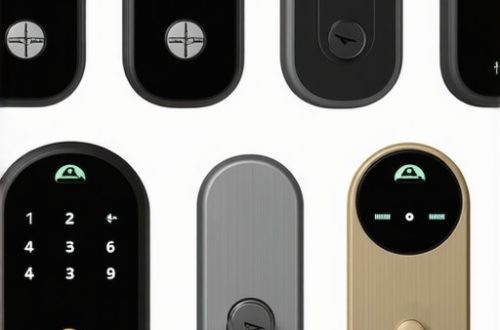
When you look at budget home security upgrades 2026, you have to look at the material science. Most ‘big box’ smart locks use a motor-driven cam to retract the bolt. Inside, you have a tiny DC motor, a series of nylon or plastic gears, and a solenoid that engages the drive bar. If those gears are plastic, they strip. If the solenoid is weak, it can be manipulated with a strong neodymium magnet from the outside. High-tech lock bumping prevention requires more than just a software patch; it requires anti-bump pins, such as spool or mushroom pins, that catch on the shear line when a kinetic energy attack is attempted. When the pins are struck by a bump key, they jump; a master technician ensures those pins are weighted and shaped to bind rather than clear the plug.
5 Hacking Signs to Watch for in 2026
As we move further into the era of smart home security integration 2026, the vulnerabilities shift from the mechanical to the ethereal. Here are the red flags I tell my customers to watch for:
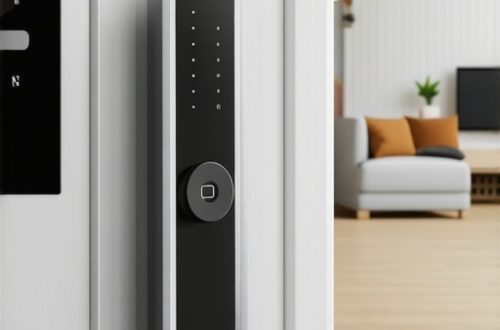
- 1. Unexplained Latency in Bolt Retraction: When you press ‘unlock’ or use the fingerprint scanner, the bolt should move instantly. If there is a two-to-five second delay that wasn’t there before, it could indicate a ‘man-in-the-middle’ attack where an external device is intercepting and re-broadcasting your signal.
- 2. Excessive Battery Drain on Solar-Powered Smart Locks: Solar-powered smart locks 2026 are great for off-grid or remote gates, but if your battery levels are plummeting despite full sun, the radio is likely stuck in a ‘polling’ loop. This happens when a hacker is spamming the device with requests to keep it awake and vulnerable.
- 3. The ‘Ghost’ Motor Cycle: If you hear the motor whirring or the solenoid clicking when no one is at the door, your commercial smart access control system might be experiencing a credential injection attack. The hardware is trying to execute a command it shouldn’t have received.
- 4. Fingerprint Scanner Rejection Flips: If a previously reliable scanner starts rejecting your thumbprint while accepting ‘near-matches,’ the biometric threshold may have been tampered with via a local Bluetooth exploit.
- 5. Hardware Warmth: A smart lock should be at ambient temperature. If the housing feels warm to the touch, the processor is running at 100% capacity. This is a classic sign of a device being used in a botnet or undergoing a brute-force local password crack.
Beyond the Front Door: EV and Commercial Trends
We are seeing a massive surge in EV charging station lock security. People are getting their charging cables stolen or their home stations hijacked. These locks rely on a locking pin that engages the J1772 or CCS1 handle. If that pin is made of cheap aluminum, a quick yank shears it. I recommend hardening these with aftermarket stainless steel pins. Similarly, for multi-family building lock rekeying, we are moving away from master wafer systems which are notoriously easy to pick, toward interchangeable cores (IC) that allow property managers to swap security in seconds without a locksmith, provided they have the control key.
“A lock is only as strong as the frame it is mounted in.” – BHMA Security Standard
I often see businesses failing panic bar code compliance 2026. You might have the most secure smart lock in the world, but if your exit device doesn’t allow for ‘one-motion’ egress during a fire, the fire marshal will shut you down faster than a broken latch. Real security involves understanding the tension between Life Safety codes and physical protection. You can’t just throw a padlocked chain over a panic bar because you’re worried about theft; you need a delayed-egress rim device that sounds an alarm while maintaining code-compliant exit paths.
The Solution: Hardening the Perimeter
Stop looking at the screen and start looking at the strike plate. If your deadbolt is throwing into a piece of wood held by half-inch screws, a boot will beat your ‘unhackable’ lock every time. You need a reinforced strike plate with three-inch screws that bite into the wall stud, not just the door jamb. When I perform a ‘Fortress Upgrade,’ I look at the tolerances. The gap between the door and the frame should be no more than 1/8th of an inch to prevent prying. If you are locked out of your car or house, don’t call the first person who quotes you twenty dollars. Call the guy who asks you what the brand of the lock is and whether the bolt is a full one-inch throw. Real security is built on precision and metal, not just silicon. Use a PTFE-based lubricant—never WD-40, which gums up the pins—to keep the mechanical parts of your smart lock moving. Remember, if the hardware fails, the software is irrelevant.


![How Access Logs for Smart Locks Catch Security Breaches [2026]](https://prolocksmithco.com/wp-content/uploads/2026/02/How-Access-Logs-for-Smart-Locks-Catch-Security-Breaches-2026-500x330.jpeg)