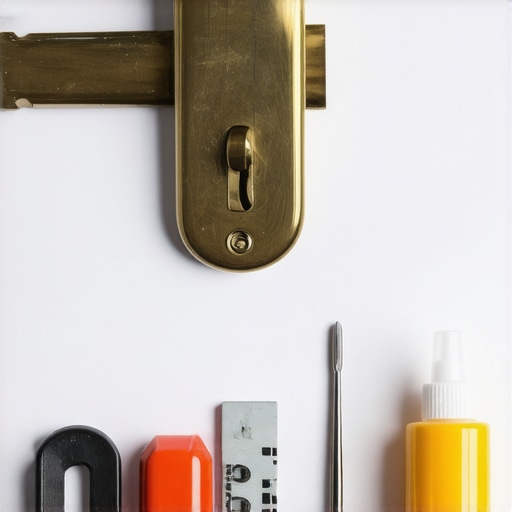
The Bench View: Why Your Hardware is Failing You
Welcome to my shop. I have spent over twenty-five years staring at the guts of pin-tumbler locks, electronic actuators, and high-security cylinders. If there is one thing I have learned since I started my apprenticeship in the 90s, it is that most people do not have a lock problem; they have a physics problem. Most of the ‘hardware’ sold at big-box retailers today is made of pot metal and zinc alloys that have the structural integrity of a soda can. When you tell me your door is jammed, I am already picturing the sheared tailpiece or the collapsed spring inside your cylinder. I teach my apprentices that if you have to force the key, you have already lost. The moment you apply more than two pounds of torque to a stuck key, you are no longer a homeowner trying to get inside; you are a destructive force of nature about to snap a brass blade off inside a plug, turning a $15 lubrication job into a $300 extraction and replacement. Security is not a product you buy in a plastic blister pack; it is the maintenance of mechanical tolerances.
“Security is always a trade-off between convenience and protection.” – Industry Axiom
The Anatomy of a Jam: Mechanism Zooming
Before you grab a hammer, you need to understand what is happening inside that brass housing. A standard deadbolt relies on a series of stacks—bottom pins, driver pins, and springs. Each must reach the ‘shear line’ to allow the plug to rotate. In 2026, we are seeing more hybrid systems where manual cylinders are integrated with smart lock motors. If your smart deadbolts with fingerprint scanners are acting up, the jam might not be mechanical at all; it could be a firmware handshake failure or a motorized actuator that has lost its home position. However, for 90% of residential calls, the issue is friction. Over time, moisture and atmospheric debris enter the keyway. This creates a slurry that gums up the driver pins, preventing them from seating properly. If a single spring has lost its tension—common in budget smart lock starter kits—the driver pin won’t drop, and the plug stays locked. This is the ‘crunch’ you feel. It is the sound of metal-on-metal interference where there should be a thousandth of an inch of clearance.
Fix 1: The Chemical Intervention (Avoid the WD-40 Trap)
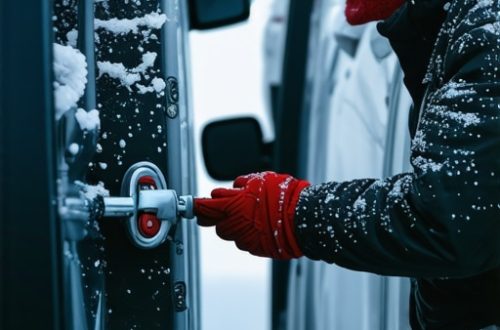
The biggest mistake I see is people spraying WD-40 into a keyway. Stop it. WD-40 is a solvent and a water-displacer, not a long-term lubricant for fine machinery. It will feel better for three days, then it will attract every bit of dust and lint in a five-mile radius, creating a black gunk that permanently ruins the lock. For 2026 standards, you want a dry PTFE (Teflon) spray or a high-grade de-icer if you are dealing with the winter humidity we see here. Spray a small amount into the keyway, then work your key in and out—not turning it, just sliding it—to distribute the lubricant across the pin stacks. This often clears minor debris and allows the springs to push the driver pins back into their chambers. If you are dealing with locksmith services for electric vehicles 2026, specifically those with hidden manual overrides, this lubrication is even more critical as those locks are rarely used and prone to seizing.
[IMAGE_PLACEHOLDER]
Fix 2: The Strike Plate Realignment
If the key turns but the door won’t open, the lock isn’t jammed; the house is. Buildings settle. In high-humidity months, wooden doors swell. This causes the deadbolt to rub against the strike plate. Look for ‘signs of tampered locks detection’—sometimes what looks like a break-in attempt is actually just the bolt grinding against metal. Take a piece of lipstick or a permanent marker and coat the end of the deadbolt. Try to lock the door, then look at where the mark transfers to the strike plate. If it is hitting the top or bottom, your door has sagged. You don’t need a locksmith for this; you need a screwdriver. Tighten the screws on the top hinge of your door to pull the whole unit back into alignment. This simple fix solves 40% of ‘jammed’ door calls I receive via mobile app locksmith booking 2026.
Fix 3: Smart Lock Power Cycling and Hacking Defense
Electronic locks introduce a whole new layer of failure. If your keypad is flashing red, you might be looking at a ‘motor stall’ error. This happens when the bolt cannot fully extend into the frame. Aside from physical obstruction, smart lock hacking prevention tips often suggest regular firmware updates. A jam in 2026 could actually be the result of a ‘brute force’ lockout mode triggered by electronic interference. Pull the battery pack, wait sixty seconds, and check the bolt’s path. Ensure your smart deadbolts with fingerprint scanners have clean sensors; a smudge of oil can mimic a tamper attempt and freeze the motor. If you’ve recently had an emergency lock change after break-in, ensure the installer didn’t over-tighten the mounting bolts, which can bow the internal motor housing and cause a permanent jam.
“The strength of a lock is only as good as the frame it’s bolted to.” – Security Manual Revision 4.2
Fix 4: The Key Forensic Check
Sometimes the lock is fine, but the key is trash. Look at your key under a bright light. Are the ‘peaks’ of the cuts rounded off? Is the ‘shoulder’—the part that stops the key from going too far in—worn down? If the key is worn, it won’t lift the pins to the shear line. This is especially true for transponder key programming guide users who still have a physical blade for emergencies. A poorly cut duplicate from a kiosk is the number one cause of jammed cylinders. If you have a second original key, try it. If it works, throw the old key away before it snaps. In the world of EV keyless entry troubleshooting, the ‘key’ might be a fob. Check for battery corrosion, as a weak signal can cause the solenoid to only half-engage, which feels like a mechanical jam when you try to pull the handle.
Fix 5: Debris Extraction and Burr Removal
Tiny metal shavings from the key itself can accumulate inside the plug. I often use a ‘hook’ pick to reach into the back of the cylinder and pull out ‘brass wool’—the byproduct of years of friction. If you can see a visible obstruction, do not try to blow it out with your mouth; the moisture in your breath will cause rust. Use compressed air. If you suspect someone has tampered with your lock—look for scratches around the keyway face—you might have a broken ‘bump key’ tip or a piece of a pick snapped off inside. This requires a professional extraction tool. If the lock was compromised, you should immediately look into emergency lock changes after break-in to ensure the structural integrity of your door remains intact.
The Professional Verdict
If these five fixes don’t work, you are likely looking at a broken internal component like a cam or a collapsed actuator. In 2026, we see a lot of ‘planned obsolescence’ in hardware. If your lock is over ten years old and jamming, it is telling you it’s time to retire. Don’t wait until you are standing in the rain at midnight to call me. Maintenance today prevents a lockout tomorrow. If you are upgrading, look for ANSI Grade 1 hardware—anything less is just a suggestion to a burglar. Keeping your security tight is about vigilance and the right chemicals, not just high-tech gadgets.


![How to Extract a Broken Key Safely and Avoid a $200 Repair [2026]](https://prolocksmithco.com/wp-content/uploads/2026/02/How-to-Extract-a-Broken-Key-Safely-and-Avoid-a-200-Repair-2026-500x330.jpeg)