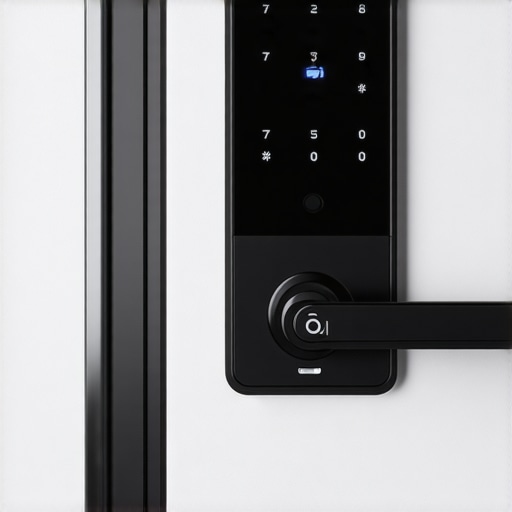
The Anatomy of a Hotel Security Crisis: A 3 AM Reality Check
I once had a customer call me at 3 AM because a frantic night manager at a boutique hotel realized their grand master key had gone missing. It wasn’t just a lost piece of brass; it was a total security collapse. In the locksmithing world, we look at security as a physics problem, not a brand name. When that master key disappears, every shear line in the building is compromised. I spent the next 18 hours at the bench, hand-filing pins and re-calculating bitting arrays for 140 rooms. That night proved why the standard ‘big box’ hardware and lazy key management are the greatest threats to any commercial establishment. Most people don’t realize that a master key system relies on tiny brass discs called master wafers. If your locksmith is sloppy, those wafers can create ‘ghost keys’—unintended combinations that can open doors they aren’t supposed to. As we move into 2026, the game has changed. We aren’t just fighting guys with tension wrenches; we’re fighting digital interceptors and physical bypass tools that exploit the microscopic tolerances of poorly machined hardware.
“Security is always a trade-off between convenience and protection.” – Industry Axiom
The Physics of the Shear Line: Why Your Current System is Failing
To understand the first major upgrade for 2026, you have to understand the internal mechanics of a pin-tumbler cylinder. In a standard hotel room lock, you have a plug and a shell. Inside, there are stacks of pins: the bottom pin (key pin), the top pin (driver pin), and in a master-keyed system, the master wafer. When you insert the correct key, all these pins align perfectly at the shear line, allowing the plug to rotate. The problem is that every master wafer you add creates an additional shear line. If a cylinder has five pins and each has a master wafer, you’ve just created 32 different key combinations that could potentially rotate that plug. This is why signs of tampered locks detection is critical. A professional thief looks for these extra shear lines to ‘read’ the lock. In 2026, the first essential upgrade is the transition to Patented Restricted Keyways with Sidebar Logic. Unlike standard pins that move only vertically, a sidebar system requires a secondary physical check—a finger pin or a side-bar that must engage a specific groove on the side of the key. This effectively kills 3D-printed key clones and prevents unauthorized car key duplication costs 2026 from being an issue because the blanks simply aren’t available to anyone but the original locksmith.
Upgrade 1: The High-Security SFIC Overhaul
Most hotels use Small Format Interchangeable Cores (SFIC). They are convenient because you can swap a lock in ten seconds with a control key. However, most SFICs are built with loose tolerances. In 2026, we are pushing for Grade 1 SFIC cylinders that utilize sustainable eco-friendly locks for homes and commercial spaces made from recycled hardened steel rather than soft zinc or low-grade brass. When you zoom into the mechanism of a Grade 1 cylinder, you see the difference. The springs are made of stainless steel to resist fatigue, and the pins are nickel-silver to prevent wear. If you’re seeing brass shavings on your threshold, your pins are disintegrating. We also see a rise in commercial mailbox lock repairs within hotel business centers, where the same high-security logic must be applied. A master key system is only as strong as its weakest link, and often that’s the utility closet or the guest mailbox. Upgrading to a system that uses 0.003-inch increment pinning instead of the standard 0.005-inch makes picking nearly impossible because the margin for error is thinner than a human hair.
Upgrade 2: Hybrid Electronic Integration and Hacking Prevention
The second upgrade involves the marriage of metal and silicon. We are seeing a massive shift toward electronic locks for Airbnb properties and major hotel chains that utilize encrypted RFID or BLE (Bluetooth Low Energy). But here is where the ‘trunk slammers’ get it wrong: they install cheap smart locks with plastic internals. A real master key system in 2026 uses a mechanical override that is just as secure as the digital side. When discussing smart lock hacking prevention tips, I tell my clients: if the lock doesn’t have a UL 437 rating, it’s a toy. High-security upgrades now include ‘Attack Resistance’ cores that can detect if a probe is inserted into the keyway. On the digital side, 128-bit AES encryption is the bare minimum. We are also integrating locksmith response times 2026 averages into our service contracts, ensuring that if a digital gateway fails, a technician who understands the physical bypass is on-site within 45 minutes. This is crucial for maintaining ‘Key Control’—knowing exactly who has access at any given millisecond.
“ANSI/BHMA A156.5 establishes the requirement for cycle tests and torque resistance in commercial locking hardware.” – BHMA Standards
Upgrade 3: Physical Hardening and Shielding
The third upgrade is often overlooked: the door itself. You can have the best master key system in the world, but if I can use a ‘shove knife’ or a credit card to bypass your latch, the lock is irrelevant. Lock shield installation for doors is the 2026 standard for high-traffic hotels. These steel plates cover the gap between the door and the frame, preventing ‘latch slipping.’ Furthermore, we are replacing standard deadbolt strikes with reinforced box strikes that use 3-inch screws anchored directly into the wall studs, not just the flimsy decorative trim. This prevents the ‘kick-in’ attack, which is the most common form of entry. Even for hotels, the mobile locksmith services for lost car keys we provide often see guests who have been victims of ‘proximity relay’ thefts. By hardening the physical perimeter with anti-drill plates made of ceramic or tungsten carbide, we ensure that the only way into that room is with a valid key or an industrial-grade grinder that will wake up the entire floor.
The Truth About Maintenance: Beyond the WD-40 Myth
I tell my apprentices that if you have to force the key, you’ve already lost. One of the biggest mistakes hotel maintenance crews make is spraying WD-40 into a high-security cylinder. WD-40 is a solvent, not a lubricant; it attracts dust and turns into a sticky paste that jams the master wafers. In a high-security 2026 environment, we use PTFE-based dry lubricants or graphite only in specific mechanical instances. Proper maintenance includes checking the ‘timing’ of the door closer. If the door doesn’t latch perfectly, the deadbolt or latch bolt puts ‘side load’ on the cylinder, causing the pins to bind. A bound pin is a pin that can be easily manipulated by a picker. Whether you are managing a 500-room resort or looking for sustainable eco-friendly locks for homes, the physics remain the same: precision, tension, and material strength. Don’t trust your security to someone who doesn’t own a micrometer. Trust the bench locksmith who knows that three thousandths of an inch is the difference between a secure room and an open invitation.


![Save $200: Car Key Replacement via Locksmith vs Dealership [2026]](https://prolocksmithco.com/wp-content/uploads/2026/01/Save-200-Car-Key-Replacement-via-Locksmith-vs-Dealership-2026-75x75.jpeg)
![5 Modern Access Control Fixes for Co-Working Spaces [2026]](https://prolocksmithco.com/wp-content/uploads/2026/02/5-Modern-Access-Control-Fixes-for-Co-Working-Spaces-2026-500x330.jpeg)
This post offers a really comprehensive look at the evolving landscape of hotel security, especially with the focus on transitioning to more advanced key systems. I’ve seen firsthand how relying solely on traditional mechanical locks can be risky, particularly in high-traffic environments where lock manipulation or duplication is a constant threat. The emphasis on using patented restricted keyways with sidebar logic is a smart move, as it significantly reduces the threat of key cloning. I also find the integration of electronic and mechanical security intriguing. In my experience managing hotel security, having a robust physical backup to digital systems is crucial, especially considering how hacking attempts are becoming more sophisticated. I wonder, though, how do smaller hotels or boutique properties handle the costs associated with these high-security upgrades? Are there scalable solutions or phased approaches that still offer meaningful protection without breaking the bank? Would love to hear how others are balancing security with budget constraints.