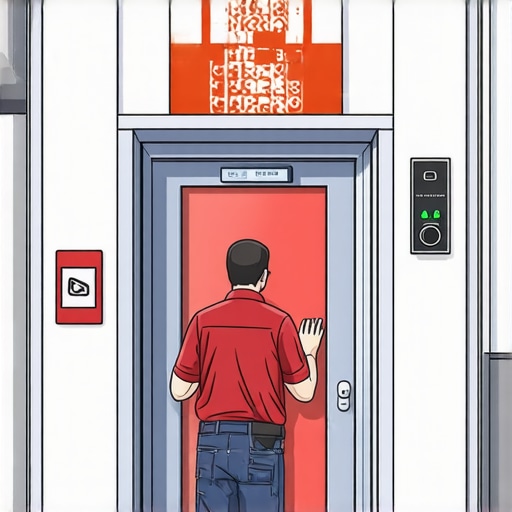
The Anatomy of a Failed Exit: When the Push Bar Refuses to Give
You hear it before you feel it—that hollow, metallic thud when a panic bar (or rim exit device, as we call them on the bench) fails to retract the latch. It is the sound of a liability lawsuit waiting to happen. In my shop, I teach my apprentices that if you have to force the key or lean your shoulder into a push bar, you’ve already lost the battle against physics. Mechanical advantage is a beautiful thing until the internal carriage assembly shears a pin or a torsion spring loses its temper. I once had an apprentice try to ‘muscle’ a stuck Von Duprin 99 series. I told him right then: ‘Security is about precision, not pressure. If the mechanism is fighting you, it’s because the alignment is telling a story you aren’t listening to.’ This isn’t just about a door that won’t open; it’s about the 2026 Life Safety Codes and the NFPA 101 standards that dictate exactly how much force a toddler or an elderly person should need to exert to escape a burning building.
“Safety to life shall be given primary consideration in all phases of design and construction.” – NFPA 101 Life Safety Code
Fix 1: The Forensic Diagnosis of Dogging Mechanism Failure
When a panic bar gets stuck in the ‘depressed’ or ‘locked’ position, the first culprit is usually the dogging mechanism. In commercial settings, ‘dogging’ is the act of mechanically holding the push bar down so the latch remains retracted, allowing people to pull the door open from the outside without a key. By 2026 standards, many jurisdictions are moving away from hex-key (allen wrench) dogging toward cylinder dogging for better key control. If the internal cam—usually a small piece of pot metal in cheap, ‘big box’ hardware—cracks, the bar stays stuck. To fix this, you must disassemble the housing and inspect the dogging arm. If you see zinc flakes or gray dust, the metal has fatigued. We replace these with Grade 1 stainless steel components. This is where 2026 smart lock trends for homes are actually bleeding into the commercial sector; we are seeing more motorized latch retraction (MLR) systems that use a linear actuator instead of a mechanical dogging arm. If your MLR system is humming but not moving, your 2026 wireless lock protocols might be hitting a handshake error with your access control panel.
Fix 2: Alignment, Thermal Expansion, and the ‘Strike Plate’ Shifting
A panic bar is only as good as the gap between the latch and the strike. I’ve seen doors in this region swell significantly during the high-humidity months, causing the latch to bind against the strike plate with several hundred pounds of lateral pressure. When this happens, the internal springs cannot overcome the friction. This is a physics problem. You don’t need a bigger hammer; you need to check the door’s verticality. 2026 building codes are increasingly strict about ‘clear width’ requirements, and a sagging door ruins that. If the latch is ‘binding,’ you’ll notice a shiny wear pattern on the top or bottom of the latch bolt. The fix involves shimmed hinges or adjusting the strike plate. We often see this in commercial mailbox lock repairs as well—metal-on-metal friction in outdoor enclosures leads to total mechanical seizure if not addressed with the right tolerances.
“Security is always a trade-off between convenience and protection.” – Industry Axiom
Fix 3: The Internal Carriage Autopsy (Material Science Matters)
Inside the rail of a panic bar, there is a sliding carriage. This carriage translates the horizontal push of your hand into the vertical or lateral movement of the latch. In low-end hardware, this carriage is made of thin stamped steel. Over time, the rivets loosen, and the carriage ‘racks,’ or tilts, inside the channel. Once it tilts, it jams. This is the difference between high security locks vs standard locks comparison. A Grade 1 exit device uses a heavy-duty chassis that prevents racking. If your bar is stuck, slide the cover off and look for ‘galling’—scratches in the metal where parts are rubbing. The fix here is often a complete re-lubrication, but never use WD-40. WD-40 is a solvent, not a long-term lubricant; it attracts dust and eventually turns into a sticky glue that will fail your next fingerprint lock reliability test or mechanical inspection. Use a high-quality synthetic grease or a dry PTFE spray that won’t gum up the 2026 wireless lock protocols or the delicate electronics in modern anti-pick locks for front doors.
Fix 4: Addressing the 2026 Sustainable Tech Integration
As we move toward more sustainable eco-friendly locks for homes and businesses, the materials are changing. We’re seeing more recycled aluminum alloys which have different thermal expansion coefficients. If your panic bar is part of an integrated system featuring 2026 smart lock trends, the failure might be electronic rather than mechanical. Modern emergency locksmith growth trends 2026 show a massive shift toward ‘delayed egress’ systems. These are bars that, when pushed, sound an alarm and stay locked for 15 seconds to prevent theft. If your bar won’t move, check the fire alarm interface. A ‘stuck’ bar is often just a bar that thinks the building is in a secure lockdown mode because of a faulty relay. When considering rekeying vs replacing locks which is better, always look at the cycle rating. A bar that has reached its 1-million-cycle limit is a liability. Replacing it with a high-security, anti-pick unit ensures that your mobile locksmith services for lost car keys won’t be the only thing you’re calling for when the building’s physical security fails. [{“@context”:”https://schema.org/”,”@type”:”HowTo”,”name”:”How to Fix a Stuck Panic Bar”,”description”:”Step-by-step guide to diagnosing and repairing a jammed commercial exit device for 2026 code compliance.”,”step”:[{“@type”:”HowToStep”,”text”:”Inspect the dogging mechanism for mechanical fatigue or broken cams.”,”name”:”Check Dogging”},{“@type”:”HowToStep”,”text”:”Verify door alignment and clear the strike plate of any binding friction.”,”name”:”Adjust Strike”},{“@type”:”HowToStep”,”text”:”Clean and lubricate the internal carriage with PTFE-based lubricants.”,”name”:”Lubricate Internal Rail”}]}]

![Save $200: Car Key Replacement via Locksmith vs Dealership [2026]](https://prolocksmithco.com/wp-content/uploads/2026/01/Save-200-Car-Key-Replacement-via-Locksmith-vs-Dealership-2026-75x75.jpeg)


![5 Modern Access Control Fixes for Co-Working Spaces [2026]](https://prolocksmithco.com/wp-content/uploads/2026/02/5-Modern-Access-Control-Fixes-for-Co-Working-Spaces-2026-500x330.jpeg)