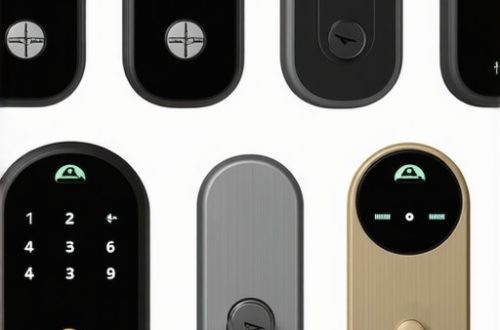
The Apprentice Lesson: Digital Handshakes and Physical Realities
I teach my apprentices that if you have to force the key, you’ve already lost. But in 2026, the ‘key’ isn’t always a piece of brass; it is a burst of 2.4GHz or 5GHz data. I remember standing in my shop last Tuesday, showing a kid how a physical shear line works on a high-security cylinder, and he asked me if digital locks were ‘easier.’ I told him that while you cannot use a pick set on a packet of data, the physics of a bypass remain the same. If the electronic solenoid does not fire because the protocol was intercepted, you are just as locked out as if you snapped a key in the plug. We are seeing a massive shift in how commercial properties handle access, and if you are still relying on 2022-era wireless protocols, your building is essentially wide open to anyone with a $50 software-defined radio.
“Security is always a trade-off between convenience and protection.” – Industry Axiom
1. Hardening the Handshake: Moving Beyond Legacy BLE
The first critical fix for 2026 involves the deprecation of legacy Bluetooth Low Energy (BLE) handshakes that do not utilize rolling encryption. In my 25 years on the bench, I have seen ‘trunk slammers’ install cheap residential smart locks on commercial storefronts. These units often use static identifiers. A sophisticated intruder can sniff that signal and replay it. The fix is the implementation of Ultra-Wideband (UWB) protocols which measure the ‘time-of-flight’ of the signal. This ensures the digital key is physically present at the door, preventing relay attacks where a signal is boosted from a distance. When we talk about multi-family building lock rekeying in the digital age, we are actually talking about rotating these digital certificates. If your locksmith is not talking about AES-256 bit encryption for your wireless gate, they are just a handyman with a van.
2. Commercial Restricted Keyways: The Mechanical Fail-Safe
Electronic systems fail. Batteries leak, PCBs oxidize, and cloud servers go down. This is why 2026 security standards demand that every electronic gate lock system or commercial entrance be backed by commercial restricted keyways. A restricted keyway ensures that keys cannot be duplicated at a hardware store kiosk. The physics of these locks involve side-bars and telescopic pins that provide a second layer of defense. In high-traffic environments, we see zinc-based hardware crumble under the stress of hundreds of cycles a day. I only install solid brass cylinders because the thermal expansion of zinc leads to ‘stacking’ where pins hang up in the Bible of the lock, leading to a total mechanical failure during a digital bypass.
3. Biometric Decentralization and Affordable Hardware Traps
We are seeing a surge in affordable biometric door hardware. However, ‘affordable’ in this industry usually means the fingerprint data is stored insecurely on the device itself. The 2026 fix is decentralized biometric processing. Instead of the lock storing your thumbprint, the template is stored on a secure element in your phone or a smart card. This prevents a thief from physically removing the lock and extracting the data. As a locksmith, I look at the strike plate before I look at the scanner. If you have a $900 biometric scanner mounted on a frame with half-inch screws, a kick-in attack will bypass your tech in three seconds. We use four-inch hardened steel screws that bite into the king stud, ensuring the hardware stays in the wall.
“The strength of a system is dictated by its weakest physical link, regardless of its digital complexity.” – Locksmiths’ Manual of Security
4. Panic Bar Code Compliance and Electronic Integration
Life safety codes are non-negotiable. In 2026, panic bar code compliance requires that all wireless locks on egress doors must immediately release upon fire alarm activation. I have walked into buildings where ‘amateur’ security techs have installed magnetic locks (mag-locks) that stay energized during a power failure, creating a death trap. Proper integration involves a double-cylinder or a fail-secure solenoid within the panic bar itself. This allows for free egress at all times while maintaining a locked exterior. When performing multi-family building lock rekeying, we often find that previous ‘pros’ have disabled the latch-dogging mechanism. We fix this by ensuring the vertical rods are timed perfectly to the millisecond, preventing the ‘clunk’ sound that indicates a misaligned strike.
5. Addressing Response Times and Car Key Duplication Costs
Security is time-sensitive. Locksmith response times 2026 averages show that legitimate brick-and-mortar shops are responding within 30-45 minutes, while ‘dispatch centers’ (scammers) quote 15 minutes but show up three hours later with a drill. This applies to automotive security too. Car key duplication costs 2026 have risen because of the move toward encrypted transponder key programming. If you are rekeying smart locks after moving in, do not forget the garage and the side gates. A total security audit means looking at every entry point as a physics problem. We analyze the gap between the door and the frame—if I can see your latch, a criminal can shim it. We install latch protectors to ensure that the only way through that door is with a valid digital or physical credential.


![How Access Logs for Smart Locks Catch Security Breaches [2026]](https://prolocksmithco.com/wp-content/uploads/2026/02/How-Access-Logs-for-Smart-Locks-Catch-Security-Breaches-2026-500x330.jpeg)