
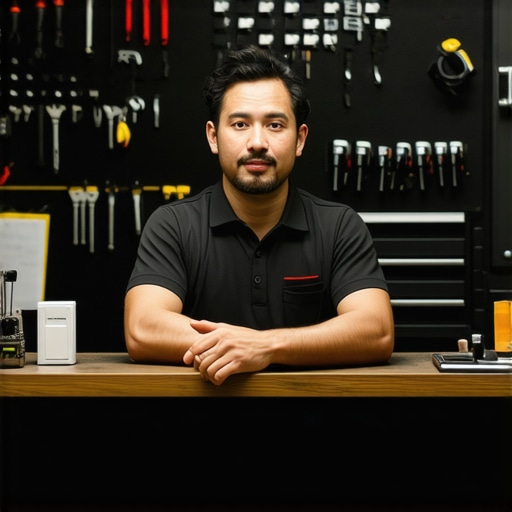
Protecting Your Locksmith Shop Reputation From Fake Reviews and Local Attacks
For the modern locksmith, the battle for customers no longer happens solely on the streets or through the Yellow Pages. It happens on the digital map. However, this territory is fraught with danger. If you own a locksmith business, you’ve likely felt the “suspension paranoia” – that sinking feeling when you check your dashboard and wonder if your listing will still be there tomorrow. Locksmithing has long been classified as a “high-risk” category by Google, and for good reason. The industry is a prime target for lead-generation scammers and malicious competitors.
When it comes to google business profile seo, the stakes couldn’t be higher. A single week of suspension or a coordinated review attack can wipe out years of hard-earned reputation and thousands of dollars in revenue. My philosophy, as a Local SEO strategist, is rooted in building local search ecosystems, not just profiles. You need a defensive perimeter around your business that makes it difficult for attackers to succeed and easy for Google to trust you. To truly rank higher on google maps, you must first ensure your foundation is unshakeable.
Before diving into the tactics, it is essential to understand the current landscape. According to a UC San Diego study, partnerships between computer scientists and Google have successfully reduced Map abuse by 70%. Yet, despite these advances, locksmithing remains a primary target for sophisticated spam networks. If you want to stay ahead, you need to implement 7 Essential Google Business Profile Tips for Local Locksmiths in 2026 to ensure your digital presence is hardened against the coming shifts in the algorithm.
Anatomy of an Attack: How Locksmiths Are Targeted
The threats facing your locksmith shop are not always random. Often, they are calculated moves by “black hat” operators looking to clear the local competition. Understanding the anatomy of these attacks is the first step in defending your livelihood.
1. Review Bombing and Extortion
One of the most devastating attacks is the coordinated “review bomb.” This involves a sudden influx of 1-star reviews from accounts that have never set foot in your service area. This isn’t just about spite; it’s often a business model. The New York Times has reported on the “Pay up or be flooded” tactic, where locksmiths and moving companies are hit with a barrage of negative reviews until they pay a “protection fee” to the attackers. These extortionists leverage Google’s automated systems against you, knowing that a drop in your average rating will immediately impact your ability to rank google business profile results effectively.
2. Competitor Suggested Edits
Malicious competitors often use the “Suggest an edit” feature to sabotage your listing. They may mark your shop as “Permanently Closed,” change your phone number to a dead line, or move your map pin to a remote location. If Google’s automated system accepts these changes, your calls will stop overnight. This is why utilizing a professional google maps ranking service is often necessary to monitor and revert these changes before they become permanent.
3. The “Lead Gen” Flood
In 2024 and 2025, Google took massive legal action against a scam network responsible for creating over 10,000 fake listings and millions of fraudulent reviews (Source: CBS News/The Verge). These networks create “ghost” locksmith shops that don’t exist, using keyword-stuffed names to dominate the local pack. They then sell the leads generated from these fake listings to unlicensed technicians, effectively stealing the traffic that should belong to your legitimate, local shop.
The 2026 SEO Crackdown: Why Legitimate Shops Get Suspended
While scammers are a major threat, sometimes the biggest danger to your profile is your own attempt at optimization. The March 2026 Core Update marked a turning point in how Google handles local business data. This update specifically targeted keyword stuffing in business names – a tactic many locksmiths used to gain a temporary edge.
Legitimate locksmiths who renamed their business “Best Locksmith [City Name] Emergency Services” found themselves hit with mass suspensions. Google’s AI now cross-references your GBP name with state business registries, signage, and tax documents. If there is a mismatch, the listing is flagged. This aggressive stance is part of Google’s effort to clean up high-risk categories, but it often catches honest business owners in the crossfire. You might find that Why Local Customers Skip Your Locksmith Profile and What to Fix First often boils down to a lack of perceived authenticity caused by over-optimization.
To avoid these pitfalls, you should regularly use a google business profile audit tool to ensure your data is compliant with the latest guidelines. Over-optimization is no longer a shortcut to the top; it is a fast track to a “Suspended” badge.
Defensive Hardening: Pre-Emptive Protection
To “bulletproof” your locksmith profile, you must provide Google with an overwhelming amount of evidence that your business is real, local, and reputable. This process is known as defensive hardening.
Mastering NAP Consistency
NAP stands for Name, Address, and Phone number. For high-risk industries, Google requires absolute consistency. If your website says “Main St. Locksmith” but your GBP says “Main Street Locksmiths,” it creates a “trust gap.” Ensure your NAP is identical across your website, social media, Yelp, and industry-specific directories. This consistency is a core pillar of google business profile optimization and is essential for long-term stability. Furthermore, Why NAP Consistency is the Secret to Ranking Your Commercial Lock Service cannot be overstated – it is the digital glue that holds your authority together.
Visual Proof and Transparency
Google’s AI is incredibly proficient at analyzing images. To protect your listing, regularly upload high-resolution photos of:
- Your branded service vans (including license plates and permanent decals).
- Your physical storefront and permanent outdoor signage.
- Your team in uniform performing actual locksmith tasks.
- Your business license and insurance certificates (with sensitive info blurred but the business name visible).
By providing this “real-world proof,” you make it much harder for a competitor to successfully flag your business as “fake.” If you are struggling to maintain this level of activity, hiring a professional google business profile optimization team can ensure your profile remains active and verified.
The “Report and Remove” Protocol for Fake Reviews
When you are hit with a fake review, your first instinct might be to reply with anger. Don’t. Instead, follow this professional protocol to have the review removed.
Step 1: The Investigation
Check the reviewer’s profile. Do they have a history of reviewing locksmiths in five different states in one day? This is a clear sign of a bot or a paid “click farm.” Take screenshots of this suspicious activity.
Step 2: The Google Business Console Tool
Google now provides a dedicated “Review Management Tool” within the Business Console. Use this to flag the review for “Conflict of Interest” or “Spam.” Provide a clear, concise explanation of why the review is fraudulent (e.g., “This user is not in our customer database and their profile shows a pattern of attacking locksmiths across the country”).
Step 3: The Appeal Process
If your initial request is denied – which happens often – do not give up. Use the “Appeal” process. This usually moves the request from an automated bot to a human reviewer. This is where your screenshots and evidence of the “Pay up or be flooded” extortion tactics become invaluable. Managing your reputation is a constant task; learning 5 Practical Ways to Manage Google Reviews for Better Customer Trust will help you build a buffer of positive sentiment that can withstand occasional attacks.
Recovering from a Malicious Suspension
If your listing is suspended due to a competitor attack or an algorithm sweep, do not panic. Panic leads to multiple reinstatement requests, which can permanently blacklist your business.
To recover, you must prepare a “Reinstatement Dossier.” This should include:
- A scanned copy of your official business license.
- A utility bill (water, electric, or internet) in the business name at the registered address.
- Photos of your storefront from the street, showing the building number and your signage.
- A video walkthrough of your office or shop, showing your equipment and branded vehicles.
When you submit your reinstatement request, be professional and factual. Explain that you are a legitimate local business and provide the link to your dossier. While waiting for a response, you can use local seo ranking tools to monitor if your competitors are moving into the vacuum left by your absence, giving you data to provide to Google regarding the malicious nature of the suspension.
Remember, local seo services are not just about getting to the top; they are about staying there by adhering to the highest standards of data integrity.
Conclusion: Winning the Long Game
In the locksmith industry, your reputation is your most valuable asset. It takes years to build and only minutes to damage. By understanding the tactics of scammers, staying compliant with updates like the March 2026 Core Update, and maintaining a rigorous defensive posture, you can protect your shop from local attacks. Your goal should be to become a “trusted entity” in Google’s eyes – a business so well-documented and well-reviewed that malicious flags simply bounce off.
The digital landscape for locksmiths is constantly shifting. If you are concerned about your current standing or need a “second opinion” on your profile’s health, I am here to help. I don’t just optimize profiles; I build search ecosystems that defend themselves.
About the Author:
Shahid Anwar is a Local SEO & GMB / Google Business Profile Expert specializing in high-risk service industries. With a focus on technical compliance and reputation defense, Shahid helps business owners navigate the complexities of Google Maps to achieve sustainable growth. “I don’t just optimize profiles; I build local search ecosystems that consistently attract customers. Message me for a second opinion or Local SEO review.”