
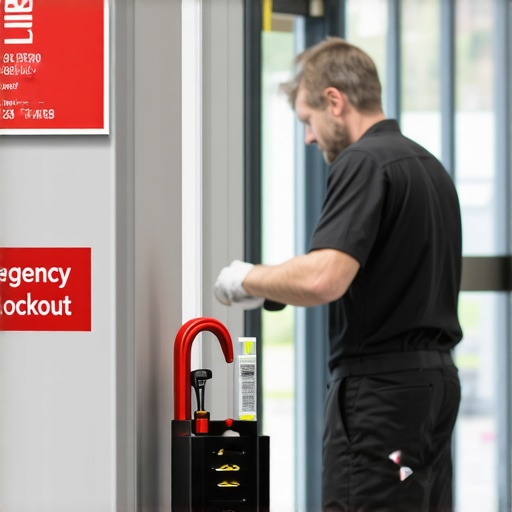
Building Service Area Pages That Actually Capture Emergency Lockout Leads
If you are a locksmith, you know the drill. It’s 2:00 AM, it’s raining, and a potential customer is standing outside their front door or their car, staring at their keys through the window. In that moment, they aren’t looking for a history of lock-picking or a 3,000-word blog post on the evolution of deadbolts. They are looking for one thing: a “Call Now” button and a guarantee that you can get there fast. This is the essence of “emergency intent,” and it is where most service area business seo strategies fall flat on their face.
Most locksmith websites are littered with what I call “ghost town” service area pages. These are thin, cookie-cutter templates where the only thing that changes from page to page is the name of the city. Google’s algorithms have grown far too sophisticated for these old-school doorway pages. If you want to capture high-intent leads, your service area pages (SAPs) need to be more than just a placeholder; they need to be high-converting landing engines that satisfy both a stressed-out human and a demanding search engine. In this guide, I’m going to show you how to build SAPs that dominate the local landscape and actually ring the phone.
Why Traditional “City Pages” are Failing Locksmiths in 2026
The days of “spray and pray” SEO are over. In 2026, Google’s Helpful Content standards have fundamentally changed how we approach local seo services. If your website has 50 pages that all look identical except for the city name in the H1, you aren’t just wasting your time – you are actively hurting your brand’s authority. These thin, doorway pages are being penalized or, worse, simply ignored by search crawlers.
The shift we are seeing is a move away from pure “Proximity” toward “Relevance” and “Proof of Life.” In the past, being the closest locksmith to the user was often enough to rank. Today, Google wants to see that you actually operate in that area. This means your pages need real, hyperlocal data. According to recent industry shifts, pages that lack “Proof of Life” – such as real photos of your vans in the neighborhood, mentions of local landmarks, or reviews from customers in that specific zip code – are failing to convert and failing to rank.
Stop using stock photos of a generic guy holding a wrench. Users can smell a stock photo from a mile away, and it kills trust instantly. If you want to rank in the Google map pack and stay there, your service area pages must reflect the reality of your business operations in that specific community. You need to prove to Google and the customer that you aren’t a lead-gen “ghost” but a legitimate local professional.
The Anatomy of a High-Converting Lockout Landing Page
To capture an emergency lockout lead, your page needs to be built like a cockpit: everything the user needs must be within immediate reach. When a user lands on your page from a google maps ranking service or an organic search, they are usually on a mobile device and in a state of panic. Here is the anatomical breakdown of a page that converts:
The Hero Section: The 15-Minute Promise
Your hero section (the top part of the page) must be minimalist and action-oriented. It needs a prominent, “sticky” Click-to-Call button. Don’t make them scroll to find your number. More importantly, you need a clear value proposition. “Locksmith in Springfield” is a feature; “On-site in 15 Minutes, 24/7 Emergency Service” is a benefit. This is how you triple your phone calls from Google Maps without spending an extra dime on ads.
Trust Signals: The “NeverMiss” Factor
Research from NeverMiss has shown that trust signals like license numbers, insurance certificates, and BBB ratings dramatically affect conversion rates for locksmiths. In a “blind” service industry where a stranger is coming to your home or car, trust is the primary currency. Display your state locksmith license number and “Fully Insured” badges right below the hero section. This isn’t just for the customer; it’s a signal to Google that you are a legitimate entity, which helps you rank google business profile assets more effectively.
Mobile-First Design and FOXVISITS Insights
Data from FOXVISITS indicates that for emergency services, “mobile call prominence” and “surcharge clarity blocks” are critical for reducing bounce rates. If a user thinks there’s a hidden fee, they’ll bounce to the next listing. Be transparent. Use a mobile-first design where the “Call Now” button stays at the bottom of the screen as they scroll. Shorter first-step forms (if they aren’t ready to call) are also essential for capturing those who might be in a situation where they can’t talk on the phone.
Hyperlocal Content: How to Rank Without Being “Spammy”
The secret to service area business seo isn’t keyword stuffing; it’s neighborhood relevance. Instead of writing generic fluff about “the importance of home security,” talk about the specific area. Mention local landmarks, major intersections, or nearby neighborhoods. For example, “Serving the North End, just minutes away from the City Stadium.”
This does two things: it tells the customer you know the area, and it provides Google with the “geo-relevance” signals it needs to rank you. An iWebhacks case study recently highlighted how a focused hyperlocal strategy led to a 36% lift in organic revenue and grew traffic from 500 to 3.8K monthly visits for a service provider. They didn’t do this by creating more pages; they did it by making their existing pages more relevant to the local community.
Actionable Tip: Include a custom Google Map embed on each service area page that shows your service radius for that specific town. To keep an eye on how these localized efforts are paying off, I recommend using local seo tools like a google maps rank tracker. This allows you to see exactly where your visibility drops off so you can double down on those specific “weak” neighborhoods.
Integrating Google Business Profile (GBP) with Your Service Pages
Your service area pages should not live in a vacuum. They are part of a larger ecosystem that includes your Google Business Profile. To rank higher on google maps, your website and your GBP must speak the same language. If your website says you serve “Downtown,” but your GBP service area doesn’t include those zip codes, you are creating a disconnect that confuses Google.
Effective google business profile seo involves linking your service area pages directly from your GBP posts and “Services” section. When you upload a photo of a job to your GBP, mention the neighborhood and then link back to the corresponding service area page on your site. This creates a powerful feedback loop of local relevance. For more on this, check out these 7 essential Google Business Profile tips for 2026.
Using google business profile optimization techniques like geo-tagging your photos before uploading them to your SAPs can also provide that extra bit of metadata that helps you increase your Google Business Profile visibility fast. Remember, the goal is to show Google a consistent story: you are who you say you are, and you do what you say you do, exactly where you say you do it.
Technical SEO for Service Area Businesses (SABs)
While content is king, technical SEO is the crown. For locksmiths, speed and structured data are non-negotiable. If your page takes 5 seconds to load on a 4G connection in a parking lot, that customer is gone. They will click the next google maps ranking service result before your logo even finishes loading.
- Schema Markup: You must use LocalBusiness and Service schema. Tell Google explicitly what services you offer (e.g., “Emergency Lockout Service,” “Rekeying”) and what areas you cover. This helps you rank in google map pack results by providing clear, structured data that search engines can digest.
- Page Speed: Optimize images and leverage caching. A fast site is a trust signal.
- NAP Consistency: Ensure your Name, Address, and Phone number are identical across your website, GBP, and all local citations. Learn why NAP consistency is the secret to ranking your commercial lock service.
Monitoring these technical aspects requires the right local seo software. You need to know if your rankings are slipping or if your site speed is bottlenecking your conversions. Utilizing gmb seo tools can help you stay ahead of the competition who are likely still using outdated, slow templates.
Conclusion: Turning Clicks into Dispatched Vans
Success in service area business seo isn’t about how many pages you have; it’s about the quality and conversion power of those pages. The “Benner Method” has always been about quality over quantity. One high-quality, hyperlocal service page that features real photos, genuine trust signals, and a lightning-fast mobile experience is worth 50 thin, “spammy” city pages that Google will eventually de-index.
If you want to lead your local niche, you need to treat every service area page as a dedicated sales representative for your business. It needs to look the part, speak the local language, and close the deal immediately. Follow the local SEO checklist for locksmiths to ensure you haven’t missed any critical steps.
Ready to see where you stand? I highly recommend you audit your existing pages using a google business profile seo audit tool. Stop guessing and start using data-driven local seo tools to dominate the map pack and keep your vans moving 24/7. Your customers are waiting; make sure they can find you.
Comments are closed.