
The Price of Cheap Hardware and Expensive Lessons
A lady came into my shop crying because a scammer drilled her lock and charged her six hundred dollars for a twenty dollar piece of zinc garbage that I would not use to secure a birdhouse. She managed a co-working space downtown and thought she was saving money by calling the first number on a search result. That trunk-slammer didn’t just ruin the door hardware; he compromised the security of forty individual small businesses. In twenty-five years of bench work, I have seen this tragedy play out too many times. When you are managing a shared office environment, you are not just selling desk space; you are selling a promise of security. If your access control relies on a master key system from the 1990s or a cheap smart lock you bought at a discount warehouse, you are failing your members. Real security is a physics problem, not a software feature. It is about how metal interacts with metal under stress and how data encryption prevents unauthorized entry in a landscape where transponder chip key cloning 2026 techniques are becoming common knowledge for the wrong people.
“Security is always a trade-off between convenience and protection.” – Industry Axiom
The Anatomy of a Commercial Breach
Most co-working spaces fail at the strike plate. In my shop, I show apprentices that a standard strike plate is held in by half-inch screws that barely catch the soft pine of a door frame. One solid kick and that door is open. For commercial buildings, door reinforcement for security is mandatory. This means using four-inch heat-treated steel screws that anchor deep into the wall studs, not just the decorative trim. When we look at panic bar installation and repair for commercial buildings, we have to talk about the physics of the latchbolt. A Grade 1 rim exit device uses a massive deadlocking latch. When that latch clicks into the strike, it should have less than a sixteenth of an inch of play. If there is more, a criminal with a simple shove-knife can bypass the entire mechanism. Mechanism zooming reveals that inside a quality panic bar, there are heavy-duty return springs and a solid steel chassis. If you hear a ‘tinny’ sound when the bar is pressed, you are looking at a liability, not a security product.
Integrated Smart Lock Hubs 2026 and Member Security
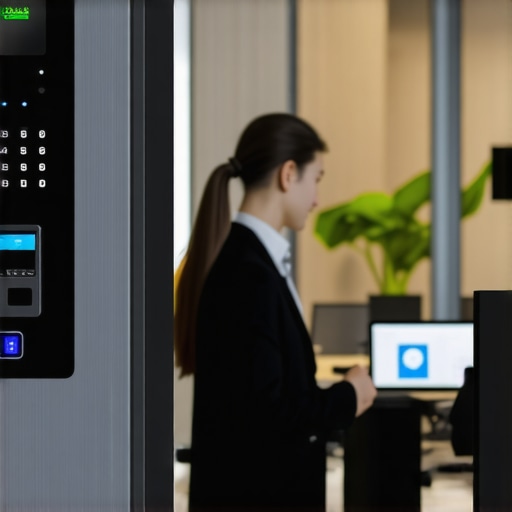
By 2026, the standard for shared spaces will move toward integrated smart lock hubs 2026. This is not about some gadget you control with a phone; it is about a centralized ecosystem that manages credentials in real-time. If a member cancels their subscription at 2 PM, their access should vanish by 2:01 PM. Mechanical keys cannot do this. If you are still handing out brass keys, you are living in a fantasy world. You have no idea how many copies of that key exist at the local hardware store. Smart lock hacking prevention tips always start with the protocol. You need hardware that utilizes AES-256 encryption or higher. Anything less is just a digital welcome mat. We are seeing a rise in affordable biometric door hardware that actually works. In the past, fingerprint scanners were a joke; a little bit of sweat or a cold day and you were locked out. The 2026 sensors use sub-dermal imaging to verify the pulse and the deep tissue patterns, making it nearly impossible to spoof with a silicone mold or a high-resolution photo.
“The strength of a system is only as great as its weakest point of failure.” – Security Standards Manual
The Mechanism of the Modern Smart Lock
Let’s zoom into the gearbox of a modern commercial smart lock. Inside, you have a high-torque DC motor that drives a worm gear. This gear moves the actuator that engages the clutch. In cheap consumer-grade locks, these gears are made of nylon. They will melt in a fire and snap if the door is slightly misaligned. A professional-grade lock uses sintered steel or brass gears. When we talk about smart home security integration 2026, we are looking at how these locks communicate with the building’s HVAC and lighting systems to ensure that no one is left in the dark and that the building is pressurized correctly to prevent door bowing. If the humidity in your city causes the wood doors to swell, a weak motor in a cheap lock will burn out in a month. You need a motor with enough stall torque to pull the latch even when the door is under ten pounds of pressure from a warped frame.
Emergency Lock Changes after Break-In
If the worst happens and you suffer a breach, emergency lock changes after break-in must be handled with forensic precision. You don’t just swap the cylinder. You have to inspect the box strike, the hinges, and the door closer. Often, a break-in occurs because the door closer was leaking oil and didn’t have the strength to pull the door fully into the shut position, leaving the latch exposed. I often deal with home safe lockout recovery for members who keep their valuables in the office. If your safe uses a solenoid-based electronic lock, it can often be opened with a strong rare-earth magnet. This is why I only recommend safes with redundant mechanical overrides or motor-driven locking bolts that physically cannot be moved by a magnetic field. Integrated home security lock bundles are great for residences, but for a co-working space, you need the heavy-duty stuff. You need Interchangeable Cores (IC). This allows a locksmith like me to rekey your entire floor in minutes by swapping the cores without ever touching a screwdriver. It is the gold standard for key control.
The Reality of Biometrics and Key Cloning
As we move into the next few years, transponder chip key cloning 2026 technology will be a major threat to those who rely on outdated RFID cards. Many of the 125kHz proximity cards used in offices today can be cloned with a twenty-dollar device bought online. Your members’ security is being bypassed by teenagers with a hobby. This is why you must move to encrypted smart cards or mobile credentials that use rolling codes. It is the same tech used in modern car fobs. Every time the lock is opened, the code changes. Even if someone intercepts the signal, it is useless ten seconds later. If you care about your members, you stop looking at the price tag of the hardware and start looking at the specification sheet. Buy Grade 1. Use solid brass. Trust a locksmith who has grease under his fingernails and a shop you can actually visit when things go wrong.