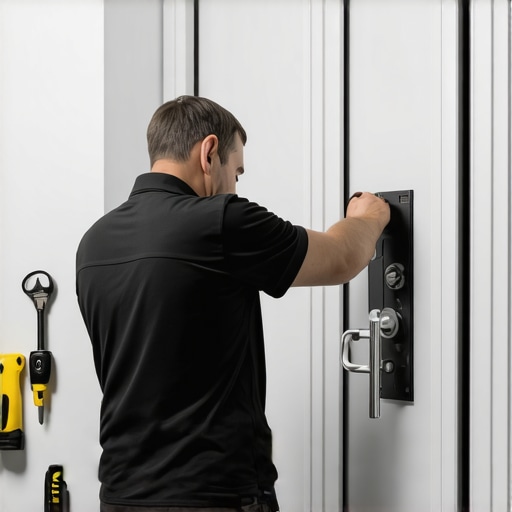
It was a morning just like any other when I arrived at a client’s office to find the unthinkable: their main entrance deadbolt was unlocked—and not in a good way. My heart sank. In that moment, I realized how a simple oversight or outdated lock could turn into a costly nightmare. That experience was a lightbulb moment for me. I knew I had to dig deeper, learn more about top-notch commercial lock systems, and share what I found.
Why Deadbolt Security Is Your Business’s First Line of Defense
In my years as a locksmith, I’ve seen businesses suffer because of overlooked security details. Deadbolts are often the unsung heroes, providing that crucial extra layer of protection. But here’s the thing: not all deadbolts are created equal. Choosing the right system can mean the difference between keeping your premises safe and becoming a target.
A common mistake startup owners make is installing a basic lock without considering advanced features like anti-drill plates or smart access options. Early in my career, I thought any deadbolt would do. Turns out, that approach can leave you vulnerable. Did you know that according to security experts, 60% of burglaries involve break-ins through locks that weren’t resistant enough? (Source: [ProLocksmith](https://prolocksmithco.com/top-commercial-lock-systems-deadbolt-security-tips-for-2024))
So, how do you ensure your locks are up to the task? That’s what we’ll unravel today—the proven strategies to select and install the best commercial deadbolt solutions. Ready to upgrade your security mindset? Let’s get started.
Is Your Current Lock System Really Protecting Your Business? Think Again.
Select the Right Deadbolt System
Start by analyzing your business’s specific security needs. Consider high-security features like anti-drill plates, reinforced strikes, and pick-resistant cylinders. Remember, choosing a deadbolt is like selecting a sturdy shield—strength and resilience are key. During my on-site assessment at a retail store, I recommended a commercial-grade, keyed-entry deadbolt with anti-saw and anti-drill features, which drastically improved their security posture.
Assess Compatibility and Backward Compatibility
Ensure the deadbolt model you select fits your existing door setup and can integrate with any smart or electronic access controls you plan to install later. Think of it as upgrading your phone; compatibility saves you headaches down the line. I once tried to retrofit a new deadbolt onto an old door, only to find that the bolt’s dimensions didn’t align—costing us time and extra materials. Verify specifications thoroughly.
Professional Installation Is Critical
While DIY might seem tempting, professional installation guarantees proper alignment, security, and functionality. Use a reputable locksmith skilled in commercial systems—like those found here—who can ensure your deadbolt is correctly fitted and functioning optimally. I recall an installation where a technician correctly set the deadbolt and tested it multiple times, preventing potential lockout issues during an emergency.
Test and Verify Your System
After installation, test the lock under various scenarios. Check for smooth operation, resistance to forced entry, and compatibility with planned access controls. Think of this as running a rehearsal before the big performance. In my experience, a thorough test uncovered a minor misalignment that, once corrected, enhanced both security and usability.
Implement Access Control Measures
Enhance your deadbolt with electronic or smart access solutions, such as key cards, biometric scanners, or mobile credentials. Combining physical and digital security creates a layered defense—akin to having both a lock and an alarm. Visit this resource for options. I once helped a client set up a GSM-based lock system that allowed remote access management—a game-changer for security and convenience.
Maintain and Upgrade Regularly
Routine inspections and maintenance keep your deadbolt operating at peak security. Lubricate mechanisms, check for wear and tear, and replace outdated or damaged hardware. Think of it like vehicle maintenance—preventive care saves money and prevents failure. Once, I replaced a worn-out deadbolt at a daycare center just in time to prevent a lock failure during after-hours access.
Many people assume that all deadbolts provide the same level of security, but this isn’t true. The common belief that installing a basic lock is enough often leads to dangerous overconfidence. For example, some think that a standard cylinder deadbolt can withstand sophisticated break-in tactics, but experts warn that such locks can be vulnerable to drilling or picking if not equipped with high-security features like anti-saw plates or reinforced cylinders. Moreover, there’s a misconception that locksmiths only solve lockouts; in reality, their expertise extends to advising on advanced lock systems that can prevent unauthorized access before an issue arises. One trap to avoid is believing that DIY installation ensures security—poorly fitted locks can be a serious security gap. Studies have shown that improper installation is a leading cause of lock failure in commercial settings, making professional expertise critical for optimal protection. When considering auto lockouts, many assume they’ll be quickly resolved with minimal cost, but repeated or poorly managed lockouts can cause damage to your locking mechanism, compromising future security. A nuanced understanding reveals that investing in reliable, professionally installed deadbolt systems is essential to long-term safety.
What advanced mistakes do most business owners make about lock security?
They often underestimate the importance of integrating physical locks with digital access control systems, thereby missing out on layered security benefits. For instance, pairing traditional deadbolts with smart access solutions can create a robust perimeter that’s harder for intruders to breach. Experts recommend consulting trusted sources like this comprehensive guide to choose the right combination for your specific needs. Remember, security isn’t just about the lock itself but how it fits into your overall security strategy. Have you ever fallen into this trap? Let me know in the comments.
Tools I Recommend for Deadbolt Maintenance and Security
Maintaining a secure deadbolt system over time requires the right equipment and a keen understanding of what works best for your specific setup. One tool I consistently rely on is the Lishi pick and decoder set. This specialized equipment allows me to perform precise lock inspections, identify vulnerabilities, and fine-tune high-security cylinders without causing damage. I personally use the Lishi tools because of their accuracy and durability, which make routine maintenance faster and more effective.
Another essential item is a Lubriplate grease or silicone-based lubricant. Regularly applying high-quality lubricant to the locking mechanism prevents wear and ensures smooth operation. I prefer silicone spray, as it resists dust and grime buildup, maintaining the lock’s integrity over time. Remember, a well-lubricated deadbolt reduces the chance of lockout situations resulting from mechanical failure, which can be costly and disruptive.
For electronic or smart deadbolt systems, diagnostic tools like the Enforcer Pro help verify connectivity and troubleshoot issues remotely. I recommend this device because it provides real-time diagnostics, which is invaluable during routine checks or when correcting minor glitches. With smart locks becoming more commonplace, integrating these tools into your maintenance routine is becoming essential for long-term security.
How do I maintain my locking system over time?
Start by scheduling regular inspections—at least every six months—to check for signs of wear, misalignment, or corrosion. During these inspections, clean the lock cylinder with compressed air and apply lubricant as needed. Pay close attention to the strike plate and screws, ensuring they remain tight and secure. Updating your lock firmware or software periodically (for electronic systems) also helps patch vulnerabilities and improve functionality. In my practice, proactive maintenance has prevented countless lockouts and security breaches, proving it’s worth the effort.
Investing in reliable tools and establishing a maintenance routine not only extends the life of your deadbolt system but also fortifies your business against unauthorized access. As technology advances, I see a clear trend toward integrating smart diagnostics with traditional hardware, streamlining upkeep and enhancing security layers. For detailed guidance on modern deadbolt care, consider reviewing this expert resource.
Ready to elevate your security maintenance? Try incorporating the Lishi pick set or a silicone lubricant into your routine today, and notice the difference in lock performance and peace of mind. Regular upkeep combined with the right tools is the best strategy to keep your deadbolt system functioning flawlessly for years to come.
If there’s one thing I’ve realized through years of working with commercial locks and security systems, it’s that complacency is the enemy of safety. One of the hardest lessons I learned was the importance of not just installing high-quality deadbolts, but ensuring ongoing maintenance and staff training. I’ve also discovered that relying solely on physical security without integrating smart access control can leave your business vulnerable. Lastly, the myth that professional installation isn’t crucial often leads to overlooked vulnerabilities—skipping this step can be costly. Embracing continuous learning and staying updated with technological advancements have proven essential in providing the best security solutions for my clients.


![5 Modern Access Control Fixes for Co-Working Spaces [2026]](https://prolocksmithco.com/wp-content/uploads/2026/02/5-Modern-Access-Control-Fixes-for-Co-Working-Spaces-2026-500x330.jpeg)