The 2026 High-Security Key Reality
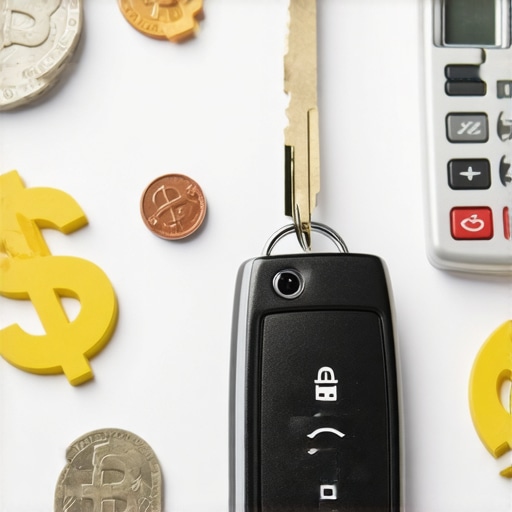
If you are holding a key with a smooth, snaking groove cut down the center of the blade instead of the jagged shark-teeth edges of the 1990s, you have a laser-cut key—or what we in the shop call a ‘sidewinder’ key. By 2026, these are no longer luxury items; they are the standard. But with standard tech comes the standard dealer markup. I have spent 25 years watching people walk into my shop after being quoted $500 for a single key at the dealership. It is a racket, plain and simple. The physics of these keys are designed to prevent simple duplication, but they aren’t magic. They are just metal and silicon.
A lady came into my shop crying because a scammer drilled her door lock then charged her $400 for a $20 Chinese knockoff car key that wouldn’t even start the ignition. She found him on a ‘sponsored’ ad promising $19 service calls. That is the oldest trick in the book. He didn’t have a CNC milling machine; he had a drill and a prayer. I had to explain to her that the mechanical cut is only half the battle. The other half is the handshake between the transponder chip and the Engine Control Unit (ECU). If that handshake doesn’t happen with the right rolling code, that car is a two-ton paperweight. You cannot ‘hack’ a 2026 transponder with a screwdriver.
“High-security automotive keys require specialized equipment to replicate the intricate milling patterns necessary for mechanical operation.” – Locksmithing Manual 101
The Mechanics of the Sidewinder: Why It Costs So Much
To understand why you’re being overcharged, you have to understand the internal physics of the ignition cylinder. In a standard edge-cut lock, the pins are pushed up by the peaks of the key. In a laser-cut system, the wafers (usually split-wafers in modern Euro and Japanese models) slide along the internal track. This allows for tighter tolerances. We are talking about measurements in the tenths of a millimeter. If the milling bit on a locksmith’s machine is even slightly dull, the resulting ‘burr’ on the brass or nickel-silver blade will cause the wafers to bind. If you force that key, you’ll snap the wafers, and then you aren’t just looking at a new key; you’re looking at a full ignition rebuild.
In 2026, we are seeing more 4-track internal cuts. These are even more complex. While a locksmith needs a $5,000 CNC machine like a Futura Pro to cut these, the dealership uses that equipment cost to justify a 400% markup. They aren’t charging for the metal; they are charging for the software license. But there are ways around the ‘Dealer Tax’ if you know how the industry actually works behind the bench.
Way 1: The ‘Blank’ Arbitrage (Saving $60-$80)
The first way to save $150 is to stop buying the hardware from the guy who is programming it. Most dealerships won’t tell you that you can buy your own OEM (Original Equipment Manufacturer) blank. However, a word of caution from a man who has seen it all: avoid the $9.99 specials on discount sites. Those are made of pot metal—a zinc alloy that is too soft for the ignition but too hard for my milling bits. They can literally snap off inside your door lock during a freeze. Instead, look for refurbished OEM keys or high-quality aftermarket brands like Ilco or JMA. By bringing your own quality blank, you bypass the 300% markup the dealer puts on the hardware. Even if a locksmith charges a ‘cut fee’ for using your part, you’re still ahead.
Way 2: Transponder Chip Cloning 2026 Trends (Saving $70-$100)
In 2026, transponder chip cloning tech has evolved. For many years, if you lost a key, the only option was to connect a diagnostic tool to the OBD-II port and ‘introduce’ the new key to the car’s computer. This is expensive because it risks ‘bricking’ the ECU if the battery voltage drops. However, for many 2026 models, we can now perform ‘cloning.’ We take your existing working key, read the data, and mirror it onto a ‘super chip.’ To the car, the new key is the old key. It doesn’t know the difference. Because this doesn’t require a deep dive into the car’s software, the labor cost drops significantly. This is also one of the best rekeying after burglary best practices for your vehicle—if your spare was stolen, we don’t just clone; we wipe the old ID from the ECU and start fresh. That keeps the thief out of your car even if they have the physical metal.
“Security is always a trade-off between convenience and protection.” – Industry Axiom
Way 3: The Lishi Revolution and Independent Locksmiths
The third way to save is to find a locksmith who uses Lishi 2-in-1 tools. These tools allow a master technician to ‘decode’ your lock through the keyhole without taking the door apart. If you’ve lost all your keys, a dealer will often tell you they need to replace the entire lock housing. That is a lie. A skilled tech can read the wafer depths, input them into a computer, and cut a key from code in twenty minutes. By avoiding the ‘teardown’ labor at the dealer, you save at least $150 in shop hours alone. This same level of precision is why we recommend anti-pick locks for front doors 2026 models; the tighter the tolerance, the harder it is for anyone—including me—to get in without the right gear.
Residential Crossover: Smart Locks and 2026 Security
I often tell my customers that if they are worried about their car key security, they should look at their front door. We are seeing a massive surge in 2026 smart lock trends for homes where car-style transponder tech is entering the residential market. Budget smart lock starter kits are everywhere, but most of them are garbage made of plastic gears. If you are looking at biometric locks installation guide 2026 editions, make sure the manual override is a high-security cylinder, not a cheap 5-pin sc1 keyway that a teenager can rake open in five seconds. Smart home security integration 2026 means your car and home might soon share a digital ‘key,’ but that makes signs of tampered locks detection even more critical. Look for ‘shimmering’ on the keyway or scratches around the face—that’s a sign someone’s been poking around with a pick gun.
Whether it’s garage door lock upgrades 2026 or commercial smart access control 2026 trends, the principle remains: you get what you pay for in hardware, but you shouldn’t pay for a dealer’s overhead. Use a real locksmith with a shop you can visit. If they don’t have a brick-and-mortar address, they are likely a trunk-slammer who will overcharge you for a key that will fail in six months. Keep your locks lubricated with a PTFE-based spray—never WD-40, which gums up the wafers—and you’ll keep those 2026 high-security systems running until the car’s engine gives out.


![3 Reliable Biometric Door Locks Under $200 [2026 Tested]](https://prolocksmithco.com/wp-content/uploads/2026/03/3-Reliable-Biometric-Door-Locks-Under-200-2026-Tested-75x75.jpeg)
![3 Reasons Your EV Keyless Entry Is Failing in 2026 [Fixed]](https://prolocksmithco.com/wp-content/uploads/2026/03/3-Reasons-Your-EV-Keyless-Entry-Is-Failing-in-2026-Fixed-500x330.jpeg)