The 25-Year Bench Perspective on Digital Keys
I teach my apprentices that if you have to force the key, you’ve already lost—but in 2026, the ‘key’ is an invisible handshake between a silicon chip and an onboard computer. My shop has seen the evolution from jagged brass blades to the complex encrypted proximity fobs that run today’s hybrids and EVs. When your vehicle refuses to start, it isn’t just a mechanical failure; it is a breakdown in the logic gate of your car’s security architecture. People come in here panicking, thinking they need a five-figure ECU replacement, when most keyless ignition repair services come down to physics and frequency interference. We are dealing with 128-bit AES encryption now, not just tumblers and springs.
“Security is always a trade-off between convenience and protection.” – Industry Axiom
The Forensic Autopsy: Why Your Push-To-Start Fails
When you press that button and nothing happens, your vehicle is performing a high-speed interrogation. The Immobilizer Control Unit sends a low-frequency (LF) ping to wake up the transponder chip. If the chip responds with the correct rolling code via a high-frequency (HF) burst, the fuel injectors and starter motor are green-lit. But the materials in these fobs are increasingly flimsy. We are seeing internal solder joints on the PCB (Printed Circuit Board) crack from simple thermal expansion. A 2026 hybrid fob sitting in a hot car in July will see its microscopic traces expand at different rates than the plastic housing, leading to intermittent signal loss. This isn’t a ‘broken’ lock; it’s a material science failure. If you are stuck, don’t call the dealership yet—their solution is always ‘replace and charge.’ Real keyless ignition repair involves diagnosing the signal path.
[IMAGE_PLACEHOLDER]
Fix 1: The Induction Coil ‘Backdoor’ Start
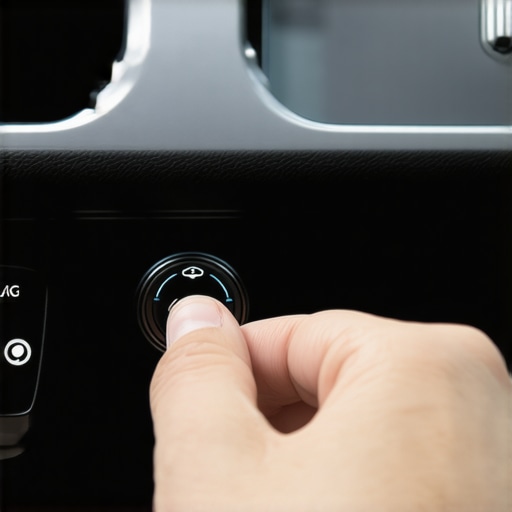
Most drivers don’t realize their ‘keyless’ car still has a physical backup. Inside every push-to-start button or steering column is an induction coil. This is a passive copper winding that can harvest energy from the car’s own magnetic field to power a dead fob. If your fob battery is flat—a common cause for emergency residential lockout solutions calls—hold the fob directly against the start button while pressing it with your finger. This overrides the need for the fob’s internal battery power. It’s the same tech used in tap-to-pay credit cards. If this works, your problem is simply a CR2032 or CR2450 cell that’s lost its voltage. In my shop, I see ‘pro’ scammers try to charge $300 for a new fob when all the customer needed was a $5 battery and this induction trick.
Fix 2: RF Interference Scrubbing and Signal Shielding
The airwaves are crowded in 2026. If you’re parked near a high-voltage power line, a 5G relay, or even if you have a cheap dashcam plugged into your 12V socket, the electronic noise can drown out the fob’s handshake. This is the ‘phantom lockout.’ I’ve had cases where lost key replacement for hybrids 2026 was requested, only for me to find the ‘lost’ key was just being jammed by a wireless charger in the center console. To fix this, remove all electronics from the cabin and try the start sequence again. It’s about clearing the ‘noise floor’ so the BCM (Body Control Module) can hear the fob’s tiny 315MHz or 433MHz cry for help.
“The complexity of a system is inversely proportional to its reliability in the field.” – Locksmith’s Law
Fix 3: The BCM Hard-Reset (The ‘Digital Drain’)
Sometimes the car’s computer just hangs. Just like a laptop, the immobilizer software can get stuck in a logic loop. This often happens after a jump-start or a sudden voltage spike. To fix this without specialized tools, you can perform a ‘capacitive discharge.’ Disconnect the negative battery terminal for exactly 60 seconds. This forces the capacitors in the transponder chip key cloning 2026 modules to drain, wiping the temporary memory and forcing a fresh handshake attempt. When you reconnect, the system re-polls every sensor, often clearing the ‘Key Not Detected’ error that plagues modern drivers. This is a standard part of 24/7 emergency locksmith services explained to new techs—don’t start drilling until you’ve tried to reboot the brain.
The Hybrid Dilemma: 2026 Security Standards
For those driving the latest hybrids, lost key replacement for hybrids 2026 has become a nightmare of proprietary software. The ‘Big Box’ hardware stores can’t touch these. They don’t have the VCI (Vehicle Communication Interface) tools to write to the EEPROM. If you lose your last key, you aren’t just buying metal; you’re buying a seat at the table with the car’s firmware. This is why transponder chip key cloning 2026 is a service you should get done *before* you lose your primary fob. Cloning a working key is a 10-minute bench job; generating a key from a ‘dead’ car is a 3-hour forensic operation. Whether you need master key systems for hotels 2026 or a single hybrid fob, the logic remains the same: redundancy is your only true security. And if you’re worried about winter, remember that lock maintenance tips for winter 2026 still include keeping your fobs warm—lithium batteries hate the cold and will drop voltage just enough to fail that crucial handshake at 6 AM.


![How to Cut 2026 EV Key Fob Replacement Costs by 50% [Data]](https://prolocksmithco.com/wp-content/uploads/2026/04/How-to-Cut-2026-EV-Key-Fob-Replacement-Costs-by-50-Data-500x330.jpeg)
This article highlights some very practical troubleshooting techniques that I’ve found to be invaluable over the years, especially the induction coil ‘backdoor’ start. It’s surprising how many drivers are unaware of this simple backup, and how often a dead fob battery is mistaken for a more serious issue. The RF interference point is also something I’ve encountered frequently—sometimes the simplest solution is removing a wireless charger or dashcam that’s causing the problem. I’m curious, though, in your experience, what’s the most common material failure in these chips? Do you find that certain brands or models are more prone to solder joint cracks or PCB failures? I’d love to hear other technicians’ insights on which hardware tends to hold up best under thermal stress, especially in hot climates. It feels like understanding these nuances can really reduce troubleshooting time and improve customer satisfaction.
Your post offers an excellent overview of the complexities involved in keyless ignition systems, especially the focus on material science failures and how they impact longevity. In my own experience, consistent temperature extremes—hot summers or cold winters—really accelerate solder joint cracks on PCB components, particularly in hybrid fobs. From what I’ve seen, brands that use higher quality PCB materials and more robust solder joints tend to hold up better under thermal stress. I’d be interested to hear from other technicians—have you noticed any particular brands that seem to be more resistant to these failures? Additionally, I wonder if there are emerging protective coatings or stress-relief techniques that could extend the life of these crucial soldered connections. Understanding these nuances can definitely help us recommend better preventative measures and save customers that costly replacement in the long run. What’s everyone’s go-to method for inspecting PCB integrity before a failure occurs? I think proactive diagnostics could shift the whole game for techs working with these advanced systems.