The $29 Bait-and-Switch Nightmare
A lady named Mrs. Gable walked into my shop last week, and she was nearly in tears. She had been locked out of her home on a Tuesday afternoon and called the first number she found on a search engine that promised a $15 or $29 service call. When the technician arrived in an unmarked sedan, he didn’t even look at her lock cylinder for more than ten seconds before claiming it was a high-security model that was impossible to pick. He pulled out a power drill, butchered her Grade 2 deadbolt, and then handed her a bill for $450 for the labor and a replacement lock that I happen to know costs nine dollars at a big-box hardware store. This is the reality of the trunk-slammer era. As someone who has spent over 25 years at the bench, I can tell you that a true master locksmith views a lockout as a physics puzzle, not an excuse to destroy property. Real security is about precision, not power tools.
“Security is always a trade-off between convenience and protection.” – Industry Axiom
1. The Art of the Lishi: Precision Decoding
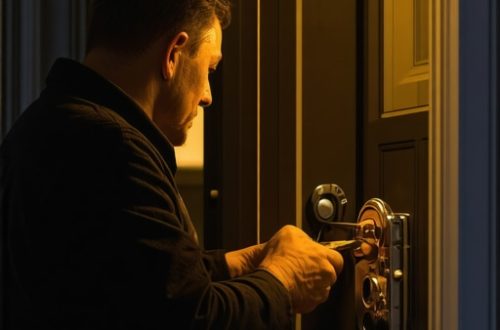
In 2026, the primary tool of the professional is the Lishi decoder. To understand why this is superior to drilling, you have to look at the internal physics of the pin tumbler system. Inside your lock, there are typically five or six chambers containing a bottom pin, a top driver pin, and a spring. The goal of picking is to align the gap between the bottom and top pins exactly at the shear line, where the plug meets the housing. A Lishi tool allows us to feel each individual spring’s resistance. We are looking for the binding pin, the one pin that is caught between the plug and the shell due to microscopic manufacturing imperfections. By applying precise tension and lifting that specific pin until it clicks into the shear line, we can manipulate the lock without leaving a single scratch on the finish. This is the gold standard for damage-free entry. It requires an intimate knowledge of tolerances; if a lock is made of cheap zinc or pot metal, the feedback is mushy and difficult. High-quality brass cylinders provide a crisp, mechanical feedback that a skilled hand can read like Braille.
2. Bypassing the Strike Plate: The Air Wedge and Reach
Sometimes the lock itself is not the easiest point of entry. If you are dealing with a standard spring latch rather than a deadbolt, we often look at the gap between the door and the frame. This is where the air wedge comes in. By inserting a heavy-duty vinyl bladder and inflating it slowly, we can create just enough clearance to see the latch mechanism. Unlike the movies where people use a credit card, a pro uses a specialized shim made of high-tensile spring steel. We navigate around the strike plate to retract the latch. However, if your home has a properly installed deadbolt with a deep-seated strike plate and long screws reaching into the wall stud, this method is useless. That is why I always tell my customers that a deadbolt is your primary defense. If you are worried about high-tech lock bumping prevention, ensure your cylinders are fitted with spool pins or serrated drivers. These are security pins designed to snag at the shear line, making traditional bumping or picking significantly harder for anyone without specialized training.
3. Smart Lock Manipulation: Electronic Overrides
When rekeying smart locks after moving in, people often ask if these digital units are harder to get into during a lockout. The answer is: it depends on the mechanical backup. Most smart locks compatible with Alexa in 2026 still feature a physical keyway as a fail-safe. If the batteries in the unit fail, or if you have a key fob battery replacement guide handy but the fob is inside, we treat the mechanical side just like a traditional lock. However, some higher-end units have jump-start contacts on the exterior. By applying a 9V battery to these terminals, we can power the electronics enough for you to enter your code. If the electronic logic has failed, we may use an automated pick gun which vibrates the pins at a high frequency, hoping to jump them all to the shear line simultaneously. This is still non-destructive, though it lacks the elegance of manual picking. We never want to force the motor; if the gears are jammed, we have to diagnose if the door has sagged, putting lateral pressure on the bolt.
“Standardization of hardware is the enemy of the burglar but the friend of the locksmith.” – Security Manual 101
4. Surgical Broken Key Extraction
One of the most common calls I get involves a key snapping off inside the cylinder. This usually happens because the user is forcing a key into a lock that needs lubrication. If you have to force the key, you have already lost. To extract a broken key from a lock safely, we use a spiral extractor, which is a thin, serrated wire. We slide it alongside the broken fragment, hook one of the key’s bittings, and pull it out. The trick is to avoid pushing the fragment further back into the springs and pins. Once the fragment is out, we can often decode the broken pieces and cut a new key on the spot. I strongly advise against using glue or magnets to get a key out; you will only end up ruining the pin chambers and turning a $100 service call into a $300 replacement job. Use a dry PTFE lubricant, never WD-40 or graphite, to keep your pins moving freely. Graphite can clump with moisture and turn into a paste that cements the pins in place over time.
Locksmith Costs in Urban Areas 2026
In major metro areas, the cost of a legitimate, 24/7 emergency locksmith service has stabilized. You should expect to pay a base service call fee between $75 and $125, plus labor for the entry itself. If a company quotes you $29, they are likely going to scam you. A real pro has overhead: a brick-and-mortar shop, insurance, expensive Lishi tools, and years of expertise. When you are looking for multi-family building lock rekeying or even fire-rated panic hardware options for commercial buildings, you are paying for the technician’s ability to navigate complex codes and life-safety regulations. Panic bar installation and repair for commercial buildings is especially sensitive; if the hardware is installed incorrectly, it could fail during an emergency, leading to massive liability. Always verify a locksmith’s local address and look for a technician who can explain the physics of the problem rather than just reaching for a drill.