The Physics of Friction and the Apprentice Lesson
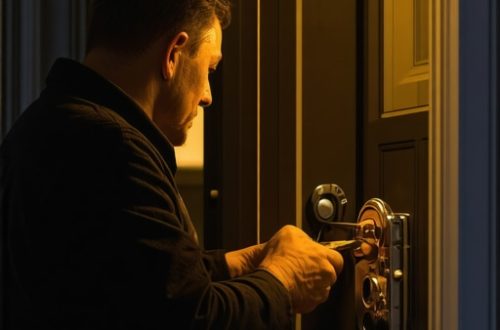
I teach my apprentices that if you have to force the key, you’ve already lost. That resistance is not a suggestion: it is a warning from the physics of the cylinder. If you lean into it, you are merely fighting against the shear line of the pins, and when that brass yields, it snaps. I have seen too many rookies think they can muscle their way through a stubborn ignition. By the time they call me, the key blade is sheared off inside the lock, and the customer is looking at a massive bill for a new housing. A master understands that every lock is a series of tolerances. In 2026, those tolerances are getting tighter. We are moving away from the simple mechanical spring-and-pin setups of the past and moving into the world of AI-integrated security. This shift is not just about fancy gadgets; it is about efficiency. We are seeing three specific AI locksmith fixes that are finally putting an end to the agonizing four-hour wait for an emergency technician.
“Security is always a trade-off between convenience and protection.” – Industry Axiom
AI Fix 1: Predictive Logistics and Inventory Matching
The biggest reason people wait for a locksmith is not the driving time: it is the inventory mismatch. In the old days, a guy would roll up in a van, look at your 2026 hybrid, and realize he did not have the specific encrypted blank or the correct high-security milling bit. By 2026, AI-powered locksmith services have eliminated this guesswork. When you call a shop like mine, the AI diagnostic engine analyzes your vehicle identification number and cross-references it with 2026 trends in automotive security. It knows the exact rolling code protocol of your hybrid. It confirms that the technician has the specific Lishi tool and the transponder programmer in the van before he even starts the engine. This reduces wait times because we are no longer running back to the shop to grab a specialized wafer kit. We are seeing a locksmith tools market outlook in 2026 where predictive stocking is the standard. If the AI detects a spike in lost key replacement for hybrids 2026, it ensures my bench is stocked with the specific transponder chips that match the updated ECU handshakes. This is how we get wait times down from hours to minutes.
AI Fix 2: Real-time Hybrid Transponder Decrypting
Hybrid vehicles in 2026 use complex encryption that would make a standard locksmith from ten years ago throw his hands up in frustration. We are dealing with multi-layered security protocols where the key communicates with the immobilizer using a unique, time-sensitive hash. Traditional duplication was slow because the software had to bridge to a remote server. Now, AI-powered locksmith services 2026 use localized machine learning to predict the next rolling code sequence based on the vehicle behavior. This does not mean we are hacking; it means the tool is smarter. Car key duplication costs 2026 have stabilized because we can now clone these complex signals at the curbside. I have seen cars that use 128-bit encryption keys that used to take an hour to cycle through. With the new AI algorithms, we are getting a handshake in under ninety seconds. When you are standing in a parking lot in the rain, that difference is everything. We are no longer waiting for a server in another country to give us permission to cut a key; the AI on my tablet does the heavy lifting right there on the sidewalk.
“Locks are but the visible sign of a system of order.” – Security Manual 101
AI Fix 3: Biometric and Smart Tech Diagnostic Overlays
Electronic locks for Airbnb properties and 2026 smart lock trends for homes have introduced a new problem: digital failure. In the past, if a lock did not turn, it was a mechanical bind. Now, it could be a firmware glitch or a battery sag in a budget smart lock starter kit. The third AI fix involves remote diagnostic overlays. Before I even leave my shop, I can have the customer hold their phone up to the lock. My AI system analyzes the blink codes of the LED or the specific frequency of the motor strain to determine if the failure is mechanical or digital. If it is digital, I can often push a localized override command through an encrypted tunnel. If it is mechanical, I know exactly which part of the actuator has failed. This preventing bike lockouts with smart tech logic is now applied to residential front doors. We are seeing a massive reduction in unnecessary service calls, which frees up my technicians for the real emergencies. Instead of driving forty minutes to tell someone their batteries are dead, the AI handles the triage.
The Forensic Autopsy of a Broken Key Extraction
Even with all this AI, we still deal with the physical reality of metal fatigue. People ask me how to extract a broken key from a lock safely. The answer is usually: do not touch it. Most people try to use a pair of tweezers or a paperclip, and all they do is push the broken fragment deeper into the keyway, past the fourth pin. This makes a simple extraction impossible. In my shop, we look at the jagged edge of the break under magnification. The blade of a key is usually a brass alloy, often coated in nickel. When it snaps, it leaves a microscopic shelf. I use a spiral extractor, a tool thinner than a needle with tiny barbs. I slide it along the side of the key fragment, rotate it forty-five degrees to catch one of those brass teeth, and pull. It requires a steady hand and a feel for the spring tension. If you try this at home with a screwdriver, you will mar the plug, and then the whole cylinder is junk. This is the difference between a master and a trunk slammer: I respect the metal.
The Truth About 2026 Smart Lock Trends for Homes
As we look at the 2026 trends, the market is flooded with budget smart lock starter kits. These are usually made of zinc alloys and pot metal. They look shiny, but the internal clutch is often a plastic gear that will shear if the door is slightly misaligned. If your door swells in the humidity, that tiny motor will burn itself out trying to throw the bolt. A real security professional will tell you to look for ANSI Grade 1 ratings. The AI in these locks might be smart, but the hardware is often stupid. I always recommend a hybrid approach: a high-quality mechanical deadbolt paired with a smart keypad that uses a hardened steel tailpiece. This ensures that even if the AI glitches, the physical barrier remains. We are seeing more people move toward these robust systems for Airbnb properties because they need reliability. You do not want a guest locked out at midnight because a cheap plastic gear stripped. Trust the metal first, the software second. That is the only way to sleep soundly in 2026.