The Sound of Failure: A Forensic Autopsy of the Commercial Exit Device When you hear that specific metallic grind—the one that sounds like a handful of gravel tossed into a blender—you aren’t just hearing a mechanical glitch; you’re hearing the physics of a failed egress system. In my 25 years at the bench, I’ve seen thousands of panic bars, from the heavy-duty Von Duprin 99 series to the absolute garbage zinc-cast knock-offs that ‘trunk slammers’ try to pass off as ‘commercial grade.’ A lady came into my shop crying because a scammer drilled her lock and charged her nearly a…
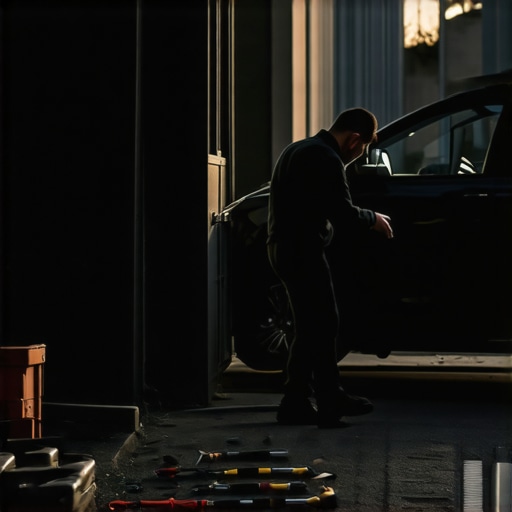
The Symptom: Why Your Car Is Ghosting You It starts with a stutter. You press the unlock button and… nothing. You press it again, harder this time, as if physical pressure correlates to signal strength. On the third try, the lights flash. Most drivers ignore this warning sign until they are standing in a rain-slicked parking lot at midnight, clicking a plastic brick that has effectively become a paperweight. This isn’t just a dead battery; it is a breakdown in the communication between your vehicle’s Electronic Control Unit (ECU) and the transponder chip inside your remote. I once had a…
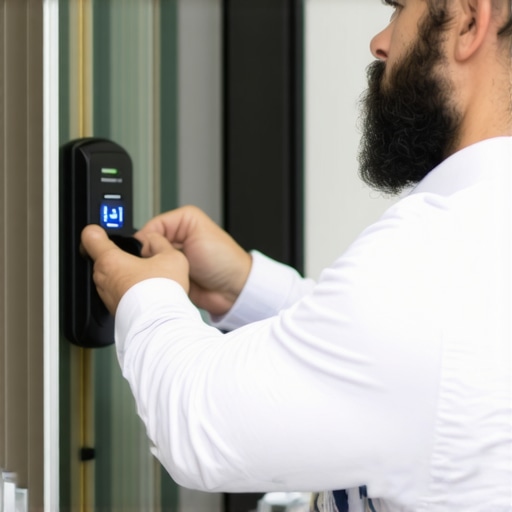
The Illusion of Digital Safety: A Master Locksmith’s Warning I’ve spent over 25 years at a workbench, breathing in the scent of brass shavings and TRI-FLOW lubricant. I’ve seen security evolve from basic skeleton keys to encrypted biometric scanners, but one thing never changes: security is a physics problem, not a software update. Most homeowners in 2026 treat their biometric locks like a smartphone—they think if the screen glows, the house is safe. That’s a dangerous lie. I own a real brick-and-mortar shop, and I see the aftermath of these ‘high-tech’ installs every single day. People are trading solid steel…
The Burglar’s Mindset: Why Your Door Is Just a Suggestion Stop thinking about your home security as a list of gadgets you bought at a big-box store. A burglar doesn’t look at your front door and see a ‘security system.’ They see a series of physics-based vulnerabilities. They see a 1/16th-inch gap between the door and the frame. They see soft pine wood held together by half-inch screws that wouldn’t hold a picture frame during a mild earthquake, let alone a 200-pound man’s shoulder. Most people spend thousands on cameras but won’t spend twenty bucks on the actual metal that…
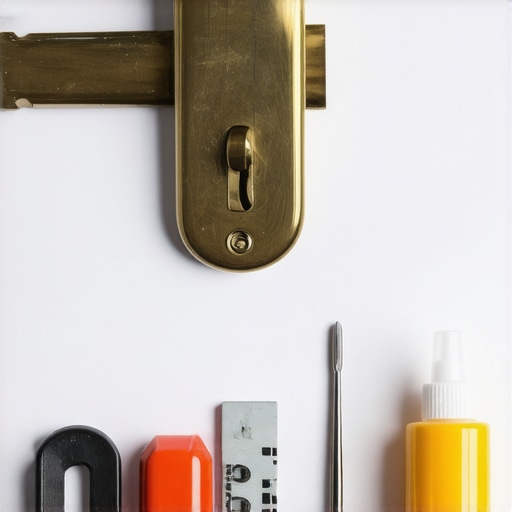
The Apprentice’s Hardest Lesson I teach my apprentices that if you have to force the key, you’ve already lost. Technical wisdom isn’t about how hard you can turn a wrench; it’s about understanding the microscopic tolerances inside that cylinder. I remember a kid named Mike who thought he could muscle a stuck tailpiece on a commercial mortise lock. He ended up snapping the cam and sending brass shards into the deep recesses of the housing. I told him then, and I’ll tell you now: a lock is a precision instrument, not a brute-force challenge. When a lock starts acting up,…
The Bench View: Why Your Hardware is Failing You Welcome to my shop. I have spent over twenty-five years staring at the guts of pin-tumbler locks, electronic actuators, and high-security cylinders. If there is one thing I have learned since I started my apprenticeship in the 90s, it is that most people do not have a lock problem; they have a physics problem. Most of the ‘hardware’ sold at big-box retailers today is made of pot metal and zinc alloys that have the structural integrity of a soda can. When you tell me your door is jammed, I am already…
The Apprentice Lesson: Digital Handshakes and Physical Realities I teach my apprentices that if you have to force the key, you’ve already lost. But in 2026, the ‘key’ isn’t always a piece of brass; it is a burst of 2.4GHz or 5GHz data. I remember standing in my shop last Tuesday, showing a kid how a physical shear line works on a high-security cylinder, and he asked me if digital locks were ‘easier.’ I told him that while you cannot use a pick set on a packet of data, the physics of a bypass remain the same. If the electronic…
The Evolution of the Lockout: From Brass to Binary I teach my apprentices that if you have to force the key, you’ve already lost. That was the rule in 1998 when we were dealing with double-sided wafers in a Chevy ignition, and it remains the rule in 2026 as we troubleshoot the Bluetooth Low Energy (BLE) handshakes of a Tesla Model 3. After 25 years at the bench, I’ve seen the industry pivot from the tactile click of a shear line to the invisible verification of a rolling code. A Tesla lockout isn’t a mechanical failure; it’s a physics problem…
The Anatomy of Resistance: Beyond the Pot Metal Standard Walk into any big-box hardware store and you will see rows of shiny, blister-packed locks that promise ‘maximum security.’ From where I sit behind my workbench, surrounded by the scent of tri-flow and brass shavings, those locks look like toys. I have spent 25 years watching how physics defeats marketing. Commercial security in 2024 and heading into 2026 is not about a brand name; it is about the metallurgical integrity of the bolt and the complexity of the cylinder’s shear line. When we talk about expert commercial deadbolt and lock security,…
The Psychology of the Breach: Why Your Hardware is Failing Most people think a burglar picks a lock like they see in the movies. They don’t. A burglar looks for physics-based vulnerabilities. They look for the 1/8-inch gap in a door frame or the soft zinc alloy of a big-box store deadbolt. As a locksmith with over 25 years at the bench, I can tell you that 90% of the hardware installed on modern homes is what we call ‘pot metal’—junk that can be snapped with a pipe wrench or bypassed with a simple flathead screwdriver. If you want real…