The Anatomy of the Invisible Handshake
I teach my apprentices that if you have to force the key, you’ve already lost. That wisdom applies to the mechanical side, but in 2026, the real ‘forcing’ happens in the software. Most drivers walking into my shop are convinced that a car key is just a piece of plastic and a battery. They are wrong. When you stick that key into the ignition—or even just sit inside a modern EV with a proximity fob—a high-frequency conversation occurs in milliseconds. The car’s transceiver ring, located around the ignition lock or hidden in the dash, sends an electromagnetic pulse to the transponder chip inside your key. This chip doesn’t have its own power source; it’s powered by induction. If that conversation, that ‘handshake,’ fails by even one bit of data, your engine is a multi-ton paperweight. Understanding the physics of this process is the first step toward saving $150 or more on a replacement.
“Security is always a trade-off between convenience and protection.” – Industry Axiom
Cloning vs. Programming: The Secret the Dealership Hides
When you lose a key or need a spare for your 2026 model, the dealership will tell you that the car needs to be ‘hooked up to the computer’ for an hour. They charge you for a new OEM key, a programming fee, and often a ‘diagnostic’ fee. This is where the cloning method saves you cold, hard cash. Programming involves introducing a brand-new, unique ID to the car’s Engine Control Unit (ECU). Cloning, however, is the art of ‘sniffing’ the data from your existing working key and writing an exact digital twin onto a blank emulator chip. To the car, it’s the same key. No OBD-II port access is required, and no dealership labor rates apply. Whether you are dealing with high-security euro cylinder locks at home or a complex deadbolt, the principle remains: if you can replicate the data or the depth of the cut accurately, the lock cannot tell the difference.
The Toolset: Lishis, EEPROMs, and Sniffers
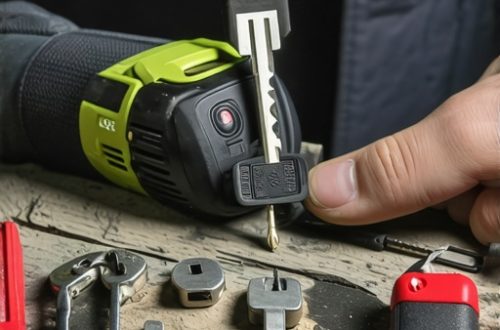
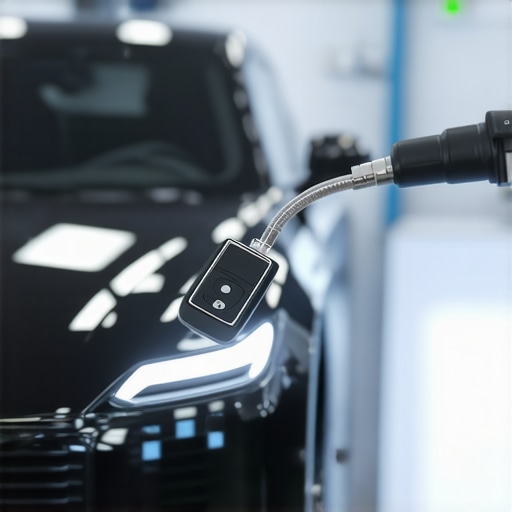
To clone a key successfully, we use specialized hardware like the VVDI Key Tool or a Silca RW4. We aren’t just copying a physical shape; we are capturing a 128-bit encrypted string. For most 2026 vehicles, we utilize a ‘sniffer’ that sits next to the ignition. When you turn the original key, the sniffer captures the rolling code calculation. We then take that data back to the bench. It’s a forensic process. Unlike a key extraction for deadbolts, which is a physical retrieval of brass and pin fragments, transponder cloning is a retrieval of logic. If you’re looking at EV car key fob replacement costs 2026, you’ll see prices upwards of $400. Cloning a simple transponder chip can often be done for under $100 because we aren’t paying for the proprietary software ‘tokens’ that manufacturers like Tesla or Ford demand for ECU access.
“Cryptography is the lock and key of the digital age, but if the physical shell is weak, the code is irrelevant.” – Security Manual 101
Why Materials Matter: Brass, Nickel, and Silicon
Most ‘trunk slammer’ locksmiths use cheap, zinc-alloy blanks from overseas. I refuse to stock them. A real transponder key should have a high-quality nickel-silver blade. Zinc is soft; it leaves deposits inside the wafers of your ignition, eventually causing the lock to seize. When we talk about rekeying after burglary best practices, we focus on hardening the cylinder. The same logic applies to your car. A cheap cloned chip might work today, but if the silicon is sensitive to heat, your car won’t start after sitting in a sun-drenched parking lot. This is why a key fob battery replacement guide is often the first thing I hand to a customer—sometimes the ‘broken’ chip is just a dead power cell in a proximity fob, and a $5 battery saves them from a $200 ’emergency’ service.
The 2026 Landscape: Smart Homes and Panic Hardware
As we move further into the decade, the lines between automotive and residential security are blurring. I now see customers asking for a locksmith for smart home ecosystems who can also handle their car keys. We are seeing voice-activated locks setup tutorial requests alongside panic hardware for office buildings 2026 requirements. Security is becoming a unified field. However, the physical reality of a deadbolt or a car lockout services for Tesla models remains grounded in the same physics: tolerances. If the tolerances of your cloned chip are off by even a few milliseconds in response time, the immobilizer will trigger. Always ensure your locksmith uses ‘Super Chips’ that can emulate multiple frequencies (315MHz, 433MHz, and 868MHz) to ensure compatibility with global standards.


![5 Signs You Need an Emergency Lock Change Immediately [2026]](https://prolocksmithco.com/wp-content/uploads/2026/02/5-Signs-You-Need-an-Emergency-Lock-Change-Immediately-2026-75x75.jpeg)