
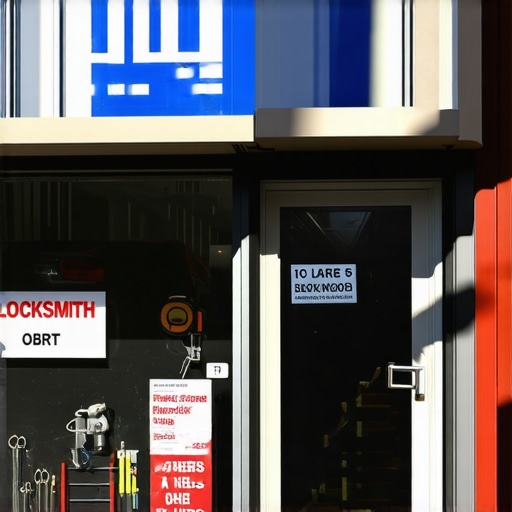
The Simple Local Listing Mistakes That Cost Locksmiths New Commercial Contracts
In the world of local search, your Google Business Profile (GBP) is no longer just a digital yellow page listing – it is your digital storefront, your first impression, and your most powerful lead generation tool. As someone who has spent years dissecting the mechanics of local search, I’ve seen how google business profile seo can make or break a service-based business. For locksmiths, the stakes are even higher. You aren’t just competing with the shop down the street; you are operating in a “high-risk” category where Google’s algorithm is primed to view you with suspicion.
While most locksmiths are content fighting for one-off residential lockouts or car key replacements, the real revenue lies in commercial contracts. Property managers, HOA boards, and corporate facility directors aren’t looking for a “cheap locksmith near me.” They are looking for a professional partner who can handle master key systems, electronic access control, and high-security hardware. To win these high-value contracts, your local SEO strategy must shift from “emergency response” to “authoritative professional.”
Section 1: The “Trust Gap” in Commercial Locksmithing
There is a fundamental “Trust Gap” that exists between locksmiths and high-value commercial clients. When a motorist is locked out of their car at 2 AM, they are desperate. They click the first result that looks legitimate. However, a property manager responsible for a 200-unit apartment complex vets their vendors differently. They look for signals of longevity, professional accreditation, and geographic stability.
Google understands this dynamic, but it also views the locksmith industry through a lens of skepticism. Due to a decade of “lead gen” scams and fake listings, Google treats locksmiths as a high-risk category. If your profile looks even slightly “spammy,” you won’t just lose ranking – you’ll face a hard suspension. Research shows that Google’s algorithm is hyper-sensitive to locksmith data; if your address doesn’t perfectly match your business registration or if your photos look like stock imagery, you are flagged. To bridge the trust gap, your google business profile seo must prove to both Google and the commercial client that you are a legitimate, brick-and-mortar entity capable of handling enterprise-level security needs.
Section 2: Mistake #1: The “Keyword-Stuffed” Business Name Trap
One of the most common mistakes I see locksmiths make is trying to “game” the system by stuffing keywords into their business name. It’s tempting to change your name to “Locksmith Near Me 24/7” or “Commercial Locksmith Services [City Name]” because, in the short term, it can help you rank google business profile higher for those specific terms. However, this is a recipe for disaster.
Recent research in professional SEO circles highlighted a case where a user named their listing “Locksmith Near Me 24/7” and faced an immediate, irreversible suspension. Why? Because the name on the listing did not match the name on their legal business registration, tax documents, or physical signage. When you are chasing commercial contracts, a “spammy” name sends a signal to property managers that you are a fly-by-night operation. They want to see a real brand name, like “Apex Security Solutions” or “Metro Lock & Key.”
While you want to rank google business profile effectively, you must do it within the guidelines. If you want to include keywords, they must be part of your legal DBA. Otherwise, you risk a hard suspension that kills your lead flow entirely. For more on how to navigate these technicalities, check out 7 Essential Google Business Profile Tips for Local Locksmiths in 2026.
Section 3: Mistake #2: NAP Inconsistency and the Commercial “Vetting” Process
NAP stands for Name, Address, and Phone number. In the world of local SEO, NAP consistency is the bedrock of authority. If your address is listed as “123 Main St. Suite 4” on Google, but “123 Main Street #4” on Yelp, and “123 Main” on your website, Google begins to lose confidence in your location data.
For commercial clients, this inconsistency is a red flag. Property managers often perform “due diligence” before awarding a contract. If they find three different addresses or phone numbers for your business across the web, they may question your reliability. Are you a real shop, or just a technician working out of a van? Using local seo tools to audit your citations is non-negotiable. You need to ensure that every mention of your business across the internet – from the Yellow Pages to niche locksmith directories – is identical.
Google’s algorithm uses these citations as “votes of confidence.” The more consistent your NAP data is, the higher your “prominence” score becomes, which is a major factor in the map pack. If you’re struggling with this, read our guide on Why NAP Consistency is the Secret to Ranking Your Commercial Lock Service.
Section 4: Mistake #3: Neglecting Commercial-Specific Service Categories
Most locksmiths set up their GBP and select “Locksmith” as their primary category, then leave the rest blank. This is a massive missed opportunity for google business profile optimization. If you want to attract commercial clients, you must tell Google (and the user) exactly what B2B services you offer.
In 2026, property managers aren’t just searching for “locksmith.” They are searching for “access control installation,” “master key system design,” and “commercial door hardware.” By neglecting secondary categories like “Security System Installer,” “Safe Vault Shop,” or “Door Supplier,” you are invisible to the very people you want to reach.
Effective google business profile optimization involves utilizing the “Services” menu to its fullest extent. Don’t just list “Commercial Locksmithing.” Break it down into “Panic Bar Installation,” “I/C Core Re-keying,” and “High-Security Lock Upgrades.” This level of detail shows Google that you are a specialized B2B provider. This is particularly important when dealing with niche industries; for instance, understanding 5 Costly Master Key System Mistakes for Hotels in 2026 can help you tailor your profile to attract hospitality contracts.
Section 5: Mistake #4: The Review Quality Gap
We all know that reviews help you rank, but for commercial locksmithing, the *content* of the review matters as much as the star rating. A profile with 500 reviews that all say “He opened my car fast!” is great for residential leads, but it does nothing to convince a facility manager that you can handle a multi-floor office build-out.
Commercial clients look for specific keywords in reviews: “professionalism,” “billing,” “contract,” “reliability,” and “expertise.” To close the trust gap, you need a google review strategy that specifically targets your commercial clients. When you finish a job for a local business, ask them to mention the specific hardware you installed. A review that says, “They installed a 40-door master key system and the billing process was seamless,” is worth its weight in gold.
Furthermore, you must actively manage your reputation. The locksmith industry is notorious for “review attacks” from competitors. Protecting your business means staying vigilant. Learn more about Protecting Your Locksmith Shop Reputation From Fake Reviews and Local Attacks to ensure your commercial-grade reputation remains untarnished.
Section 6: Leveraging Advanced Tools for Commercial Dominance
If you are operating in a competitive metropolitan area, manual optimization isn’t enough. You are competing against national franchises and established local giants. To win, you need to know exactly where you stand in the “Map Pack” for specific high-value commercial zones – like industrial parks, downtown business districts, and medical complexes.
This is where local seo ranking tools become essential. You cannot rely on searching from your office computer; Google knows your location and will show you biased results. You need a google maps rank tracker that can show you a grid-based view of your rankings across the entire city. Tools like SEO Viper Tools allow you to see exactly where your visibility drops off.
Perhaps you rank #1 in the suburbs but drop to #10 in the downtown core where the big office buildings are. By using a google maps rank tracker, you can identify these gaps and adjust your strategy – perhaps by adding more “geo-relevant” content to your profile or gathering reviews from businesses in that specific zip code. In 2026, data-driven decisions are what separate the “emergency locksmiths” from the “commercial security partners.”
Section 7: Conclusion & The 2026 Commercial Locksmith Checklist
The transition from a residential-focused locksmith to a commercial powerhouse requires a shift in mindset. You are no longer just selling a service; you are selling security, reliability, and professional partnership. Your Google Business Profile is the evidence of that professionalism. By avoiding keyword-stuffing, maintaining NAP consistency, optimizing for B2B categories, and leveraging professional GBP ranking tools, you position yourself as the obvious choice for high-value contracts.
As we move deeper into 2026, commercial security standards are evolving. Property managers are looking for experts in Business Key Management Software and smart access systems. If your profile doesn’t reflect this expertise, you are leaving money on the table.
Your 2026 Commercial Audit Checklist:
- Verify Legal Name: Ensure your GBP name matches your business license exactly.
- Audit NAP: Use local seo performance software to ensure your address and phone number are consistent across the web.
- Expand Categories: Add “Access Control” and “Security System Installer” to your profile.
- Update Photos: Post high-resolution photos of commercial jobs (panic bars, master key charts, branded vans).
- Monitor Rankings: Use a google maps ranking service to track your visibility in commercial zones.
Don’t let simple listing mistakes cost you another five-figure contract. Start your audit today and ensure you’re following The Local SEO Checklist for Locksmiths Who Want to Lead Their Local Niche.