
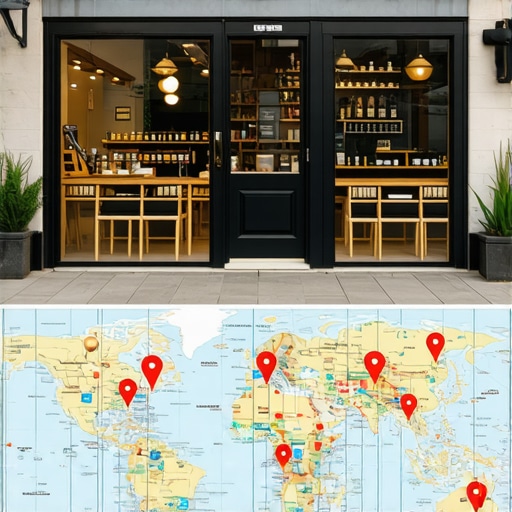
5 Map Marketing Adjustments That Stop Your Shop From Being Ignored
In the current digital landscape of 2026, the physical sign hanging above your door is no longer your primary storefront. Your real entrance – the one that determines whether your phones ring or stay silent – is the Google Map Pack. After 12 years of deep-trench warfare in the Local SEO industry, I’ve seen the same tragedy play out thousands of times: a high-quality local business, offering superior service, remains completely invisible to its neighbors.
The data doesn’t lie. Research indicates that 90% of local businesses are invisible on Google Maps for their most profitable keywords. They exist on the map, but they are buried under layers of competitors who have mastered the art of google business profile seo. If you aren’t in the top three results of the “Map Pack,” you are effectively out of business for 44% of all local searchers. Before you spend another dime on generic advertising, you need to perform a Stop Losing Leads: A Brutally Honest Audit of Your Google Business Profile.
I am Sandeep Nandal, and over the last decade, I have helped service-based businesses – from locksmiths to HVAC contractors – reclaim their local territory. In this guide, I’m moving past the basic “fill out your profile” advice. We are going to dive into the five specific, high-impact adjustments you must make to stop being ignored and start dominating your local market.
Adjustment #1: Solving the Proximity vs. Relevance Paradox
One of the biggest frustrations for local business owners is the “Proximity Bias.” You might be the best locksmith in the city, but if a user is searching from three miles away, Google might prioritize a mediocre competitor simply because they are physically closer. This is the proximity paradox: how do you rank for a customer who isn’t standing on your doorstep?
While you cannot move your physical shop every time a customer searches, you can aggressively expand your “relevance” radius. Google’s algorithm weighs three pillars: Proximity, Prominence, and Relevance. Since proximity is a fixed coordinate, your growth must come from the other two. To rank google business profile listings higher, you must prove to Google that your business is the most relevant answer to a specific query, regardless of those extra two miles.
Consider this: 80% of local searches result in conversions. These are high-intent users. To capture them, your google business profile optimization must go beyond just selecting a primary category. You need to utilize “Secondary Categories” and “Services” with surgical precision. For a locksmith, don’t just list “Locksmith.” You must explicitly list “Key Duplication,” “High-Security Lock Installation,” “Emergency Car Unlocking,” and “Smart Lock Programming.” By saturating your profile with these specific service entities, you build a “Relevance Shield” that allows you to outrank closer competitors who have lazy, incomplete profiles.
Adjustment #2: Engagement as the New Ranking Factor
By 2026, traditional ranking factors like backlinks have taken a backseat to “User Engagement Signals.” Google is no longer just looking at what you say about yourself; it is looking at how users interact with your profile. If twenty people search for a “locksmith near me,” and ten of them click your profile, spend two minutes reading your updates, and then click “Call,” Google receives a massive signal that your business is the authority.
Engagement is the heartbeat of local seo services. If your profile is static, it’s dying. You need to treat your Google Business Profile (GBP) like a social media feed. This means high-quality photos (uploaded weekly), responding to every single review (even the bad ones), and utilizing the “Updates” feature.
To really move the needle, you should implement 7 Google Business Profile Posts That Get More Phones Ringing. These posts shouldn’t just be sales pitches; they should be engagement magnets. Use “Before and After” photos of a complex job, or a short video explaining a common security flaw. When users linger on your photos or click your “Learn More” buttons, your engagement score skyrockets, signaling to Google that you deserve a permanent spot at the top of the Map Pack. To track these metrics effectively, you should be using professional local seo tools to monitor your click-through rates (CTR) and interaction heatmaps.
Adjustment #3: Hyperlocal Content & Service Area Pages
The “Invisible Shop” syndrome often stems from trying to be everything to an entire city. In 2026, “City-level” ranking is a myth for most competitive niches. You don’t rank for “Los Angeles”; you rank for “Santa Monica” or “Silver Lake.” To stop being ignored, you must pivot to a hyperlocal strategy.
This involves creating dedicated Service Area Pages (SAPs) on your website that are tightly integrated with your GBP. If you are a locksmith, you need a page specifically for Creating Service Area Pages That Win Emergency Lockout Calls in Every Town. Each page should feature:
- Specific neighborhood landmarks and zip codes.
- Customer testimonials from that specific area.
- Unique descriptions of the common security issues in that neighborhood (e.g., “Common break-in methods in [Neighborhood] and how our deadbolts stop them”).
- An embedded Google Map showing your service radius for that specific zone.
This hyperlocal approach signals to Google that you aren’t just a “city-wide” service, but a local fixture in every specific neighborhood you serve. This is how you bypass the proximity filter and show up in the Map Pack for users ten miles away from your headquarters.
Adjustment #4: The Technical “Trust” Stack (Schema & Citations)
You can have the best photos and the most reviews, but if your technical foundation is cracked, your rankings will eventually crumble. This is where many businesses fail because they ignore the “Trust” signals that Google’s crawlers look for behind the scenes.
First, let’s talk about NAP consistency: Name, Address, and Phone number. It sounds basic, but even a small discrepancy – like “Street” vs. “St.” or an old phone number on an obscure directory – can confuse Google’s AI. In fact, there are 5 citation errors that are pushing your business off the first page that most owners never notice. If Google doesn’t 100% trust that your location data is accurate, it will never risk its own reputation by showing you in the top 3.
Second, you must implement **Local Business Schema Markup**. This is a piece of code (JSON-LD) that tells Google’s bots exactly what your business is, what your hours are, and what services you offer in a language they understand perfectly. Using a professional google maps ranking service can ensure your schema is correctly implemented, linking your website’s data directly to your GBP. This creates a “loop of trust” where your website confirms your GBP data, and your GBP data confirms your website’s authority.
Adjustment #5: AI & Voice Search Optimization for 2026
The way people find your shop has fundamentally changed. We are no longer just typing “locksmith” into a search bar. We are talking to our cars, our watches, and our home assistants. “Hey Google, find a locksmith near me that handles Tesla key fobs” is a very different query than “locksmith 90210.”
To capture this traffic, your google maps seo strategy must transition to natural, conversational language. Google’s AI (Search Generative Experience) now looks for “long-tail” answers within your profile.
- The FAQ Section: Use the “Questions & Answers” feature on your GBP to seed your own questions. Ask and answer things like, “Do you offer 24/7 emergency lockout services for European car models?”
- Service Descriptions: Stop using bullet points only. Use full sentences that mirror how people talk. Instead of “Key Fob Repair,” use “We provide on-site repair and programming for all major electronic key fobs and smart keys.”
By optimizing for these conversational queries, you position your shop as the specific solution to a complex problem. This is a core part of 7 Essential Google Business Profile Tips for Local Locksmiths in 2026. If you can answer the AI’s specific questions, you will be the one and only recommendation it provides during a voice search.
Conclusion: The Map is Your Real Battlefield
Map Marketing is not a “set it and forget it” task. It is an active, ongoing strategy that requires constant adjustment to the shifting winds of Google’s algorithm. If your shop is currently being ignored, it’s not because you aren’t a great business – it’s because you haven’t optimized your digital presence for the way customers search today.
By solving the proximity paradox, driving engagement, going hyperlocal, fixing your technical trust stack, and preparing for AI search, you can reclaim your visibility. Don’t let your competitors steal the leads that belong to you. Whether you decide to do this yourself or hire a google maps seo expert, the time to act is now. Perform your own Google Business Profile audit today and start turning those “invisible” impressions into ringing phones.