
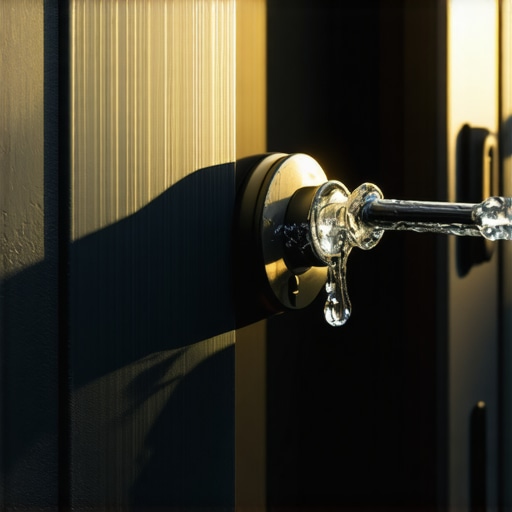
The Sound of a Failing Mechanism
I teach my apprentices that if you have to force the key, you have already lost the battle against physics. That gritty, grinding sensation you feel when sliding a brass key into a cylinder isn’t just an inconvenience; it is the sound of metal-on-metal violence. As we approach the winter of 2026, the shift in atmospheric pressure and the inevitable drop in temperature will turn minor friction into a total mechanical seizure. In my shop, I see it every year. A customer comes in with a snapped key, blaming the metal, but the fault lies in the lack of lubrication and the accumulation of debris within the pin chambers. Modern locks, even those integrated home security lock bundles we see today, rely on tolerances thinner than a human hair. When the mercury drops, the zinc die-cast housings common in big-box hardware contract at a different rate than the brass plug, leading to a binding effect that no amount of jiggling will solve.
“Standardized testing ensures that architectural hardware performs under extreme environmental stress, yet no lock is immune to the laws of friction.” – ANSI/BHMA A156.5 Security Standards
The Forensic Autopsy of a Stuck Lock
To understand why your lock is sticking, you have to look at the internal anatomy. Inside a standard pin tumbler lock, you have a series of small springs pushing down on driver pins, which in turn push down on key pins. When these components are clean, they move with fluid precision. However, over time, microscopic particles of dust and metal shavings from the key itself begin to mix with old, oxidized grease. By the time winter 2026 hits, this mixture becomes a thick paste. In the cold, that paste hardens. If you are using solar-powered smart locks 2026 models, the motor inside the housing has a limited amount of torque. It is designed to move a free-spinning bolt, not to fight through a layer of frozen gunk. This is often where electronic access control systems for small businesses fail; the solenoid triggers, but the mechanical linkage is too stiff to retract. [IMAGE_PLACEHOLDER] The result is a stalled motor and a locked door that requires a mobile locksmith for an emergency bypass.
The Myth of the Quick Fix
Let’s talk about the blue and yellow can in everyone’s garage. Using a water-displacement spray as a long-term lubricant is the fastest way to ensure you’ll be calling me for a drill-out by next spring. Those products are degreasers, not lubricants. They might provide a temporary reprieve by loosening the grime, but they leave behind a sticky residue that attracts even more dirt. For high-security cylinders and business access control audits 2026, we use dry-film lubricants or high-grade PTFE sprays. These substances don’t stay wet. They bond to the metal surfaces of the pins and the shear line, providing a slick path for the components without creating a trap for particulates. If you are managing vacation homes, where locks sit idle for months, the wrong lubricant can actually glue the pins in the ‘up’ position, leaving the lock effectively open to anyone with a screwdriver or permanently jammed.
“Security is always a trade-off between convenience and protection, but maintenance is the bridge that keeps both functional.” – Security Systems Handbook
Maintenance Protocols for Winter 2026
The first step in your maintenance routine is a thorough cleaning. I recommend using a pressurized air canister to blow out the keyway. You would be surprised at how much lint from your pockets ends up inside your ignition or your deadbolt. For those experiencing a lockout from their vehicle, knowing what to do when locked out of your car starts with prevention. If your key is getting harder to turn in the door lock, the wafer tumblers are likely sticking. A light application of a specialized lock lubricant into the keyway, followed by inserting and removing the key several times to distribute the fluid, can save you a three-hundred-dollar service call. For commercial properties, panic hardware for office buildings 2026 requirements demand that exit devices operate with minimal force. These large mechanical assemblies have multiple pivot points that need a heavier synthetic grease, not a spray, to handle the constant cycling of a high-traffic environment.
Advanced Access Systems and Audits
As we transition more toward electronic access control systems for small businesses, the maintenance shifts from the mechanical to the electro-mechanical. Access logs for smart locks often show ‘motor stall’ errors which are actually just mechanical resistance issues. During a business access control audit 2026, we don’t just check the software; we check the strike plate alignment. If the building has shifted due to the freezing ground, the bolt may be rubbing against the strike. No amount of lubricant will fix a door that is out of plumb. You need to ensure the gap between the door and the frame is consistent. If you’re using integrated home security lock bundles, check the battery life before the deep freeze. Cold weather reduces battery chemistry efficiency, and a motor struggling against a sticky bolt will drain a set of AAs in a week. Keeping the mechanism smooth is the only way to ensure the longevity of these expensive smart units. If you find yourself stuck, remember that mobile locksmith services for lost car keys or residential lockouts are available, but a five-minute maintenance check today prevents a two-hour wait in the snow later.