
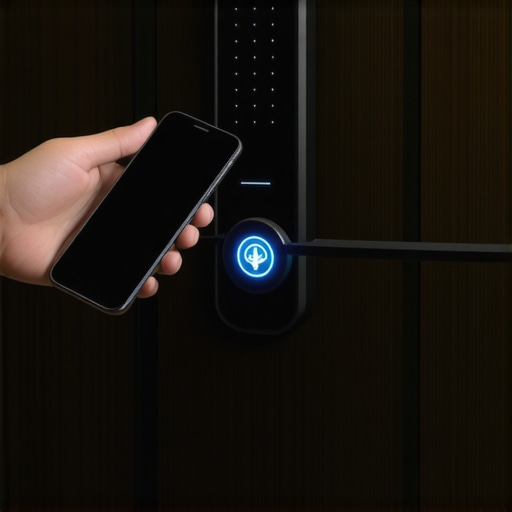
The Illusion of Security vs. The Physics of the Bolt
Most folks walk into my shop looking for the latest gadget they saw on a tech blog, thinking a voice command is a magical barrier. I tell my apprentices that if you have to force the key, you have already lost the battle against physics. The same applies to smart hardware. A voice-activated lock is still just a piece of metal governed by tolerances and torque. If your door frame is warped or your strike plate is misaligned, the most expensive electronic locks for Airbnb properties will fail just as fast as a five-dollar hardware store special. We are seeing a massive shift toward smart home security integration 2026, but the fundamentals of locksmithing remain the same: the bolt must throw freely into the pocket without friction.
“Security is always a trade-off between convenience and protection.” – Industry Axiom
Before you even think about syncing your voice assistant, you have to look at the ‘bones’ of your door. A smart lock is essentially a standard deadbolt with a motorized tailpiece. Inside that housing, a small DC motor turns a set of planetary gears. These gears are often made of plastic or thin sintered metal in cheaper units. When you tell a voice assistant to secure the door, that motor receives a signal to rotate. If the bolt hits the strike plate because the house settled, the motor draws excess amperage, heats up the circuit board, and eventually leads to those frustrating door lock jamming fixes 2026 that keep my shop busy. You want a flush fit where the bolt slides home with the sound of a heavy bank vault, not a grinding struggle.
The Anatomy of a Secure Voice Setup
Setting up the best smart locks compatible with Alexa 2026 requires more than just a Wi-Fi password. You start with the physical installation. Remove your old deadbolt and inspect the hole. If it is 2 and 1/8 inches, you are in good shape. But look at the wood. Is it soft? Is it splintered? I always recommend reinforcing the jamb with a four-hole strike plate and three-inch screws that reach past the trim and into the king stud. Without this, your voice-activated lock is just a fancy handle for a door that can be kicked in with one solid boot. [image placeholder]
Once the hardware is physically sound, we move to the communication stack. Most of these units use Z-Wave, Zigbee, or Matter protocols to talk to a bridge. This bridge is the translator between your local mesh network and the internet. In the locksmith for smart home ecosystems world, we prefer dedicated hubs over direct Wi-Fi connections because they save battery life. A lock that constantly hunts for a Wi-Fi signal will burn through four AA batteries in two months, and low voltage is the primary cause of home safe lockout recovery calls and failed entry attempts. When voltage drops, the solenoid lacks the punch to fully retract the locking pawl.
Programming for Airbnb and High-Turnover Properties
If you are managing electronic locks for Airbnb properties, your setup needs to be bulletproof. You aren’t just setting up one voice command; you are managing a rotating database of permissions. I tell my commercial clients that key control is the only thing standing between them and a lawsuit. In the 2026 landscape, we use ‘Temporary Token’ systems. You don’t give the guest a permanent voice code. You use the app to bridge a temporary permission that expires at checkout. This prevents the ‘ghost key’ problem where former tenants or guests can still access the property via a saved voice profile on a shared smart speaker.
“The strength of a system is determined by its weakest point of access, whether that be a physical keyway or a digital protocol.” – Security Manual 101
I recently had a guy come in asking about locksmith services for electric vehicles 2026 and how they might integrate with his home. He wanted his car to tell his front door to open when he pulled into the driveway. While technically possible, you have to consider the ‘Replay Attack’ risk. A criminal with a frequency sniffer can capture that ‘open’ command. This is why I always insist on a two-factor setup for voice. Your ‘best smart locks compatible with Alexa 2026’ should require a secondary PIN code spoken aloud. If someone shouts through your window or uses a recording, they shouldn’t be able to bypass your deadbolt without that four-digit numerical sequence.
Troubleshooting the 2026 Smart Ecosystem
What happens when the ‘Simplified Voice-Activated Locks Setup Tutorial’ goes sideways? Usually, it’s a synchronization error. The lock thinks it is ‘Locked’ because the motor reached the end of its travel, but the bolt is actually stuck against the strike plate. This is ‘False Positive’ security. To fix this, you must recalibrate the stroke of the motor. Most modern units have a ‘Learn’ function where the lock measures the exact distance from fully retracted to fully extended. If your door requires you to pull or push the handle to get the deadbolt to turn, your smart lock will fail. You need to file the strike plate or adjust the hinges until the bolt travels like it is greased with silk.
We also see issues with preventing bike lockouts with smart tech and car key duplication costs 2026 rising because people lose their master ‘pairing’ keys. Every smart lock comes with a physical override key. Do not leave this key inside the house you are trying to secure. It sounds like common sense, but you would be surprised how many safe lockouts I handle where the override key is locked inside the safe. Keep that physical key in your wallet or with a trusted neighbor. In the world of high-tech security, the 150-year-old brass key is still your best insurance policy against a dead battery or a fried motherboard.
The Verdict on Voice Control
Is a voice-activated lock worth it? If you value convenience and you are willing to do the legwork on the physical installation, yes. But if you think you can just slap a motor onto a sagging door and be secure, you are mistaken. Real security involves the marriage of precision engineering and modern encryption. Whether you are looking for commercial panic exit devices 2026 for a warehouse or a simple smart deadbolt for your condo, the rules are the same: Solid hardware, long screws, and a clean strike. Forget the marketing fluff about ‘seamless’ living. Focus on the metal, the throw, and the code. That is how you keep the ‘Trunk Slammers’ out and your family safe. Always use a high-quality synthetic lubricant on the internal sliding components. Avoid graphite in electronic locks; it is conductive and can short out the sensors if it migrates into the electronics housing. Stick to a PTFE-based spray that won’t gum up in the cold or attract dust in the summer heat.