
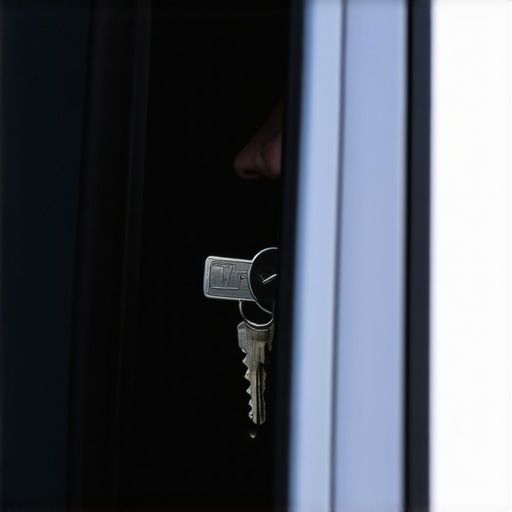
The Reality of a 3 AM Car Lockout
I once had a customer call me at 3 AM because she was stuck in a desolate parking lot after a late shift, her keys clearly visible on the passenger seat. She was shivering, not just from the cold night air but from the realization that she was completely vulnerable. In my 25 years of bench experience, I have seen this scenario play out a thousand times. Being stranded at night is a physics problem and a safety crisis rolled into one. When you are looking through that window at your keychain, your first instinct is panic, which leads to poor decisions. You might reach for a coat hanger or, worse, search for a cheap service online. This is exactly where the ‘Trunk Slammers’ find their prey.
The Physics of the Modern Automotive Lock
To understand why you cannot just ‘jimmy’ a modern car door, you have to understand Mechanism Zooming. Most vehicles today use a wafer tumbler system. Unlike a standard pin tumbler lock you find on a house, which uses cylindrical pins, a car lock uses flat pieces of metal called wafers. These wafers are spring-loaded and sit at varying heights. When the correct key is inserted, the specific ‘biting’ or cuts on the key pull these wafers into a perfect alignment within the lock cylinder, allowing it to rotate. If you are dealing with a high-security laser-cut key, often called a ‘sidewinder’ key, the tolerances are even tighter. We are talking about measurements in the thousandths of an inch. When a scammer sticks a blood-pressure cuff in your door and starts pumping, they are not solving a physics problem; they are bending your steel door frame, which often results in permanent wind noise or a shattered window. A real master locksmith approaches this with a Lishi 2-in-1 pick. This tool is a masterpiece of engineering that allows us to feel the resistance of each individual wafer, reading its depth and picking it without a single scratch to the vehicle’s finish.
“Security is always a trade-off between convenience and protection.” – Industry Axiom
The Transponder Handshake and Rolling Codes
Getting the door open is only half the battle if you have lost your keys entirely. Modern automotive security relies on a digital handshake. Inside the head of your key, or buried in your proximity fob, is a transponder chip. This is a passive RFID device. When you attempt to start the car, the induction coil around the ignition lock or the start button sends a burst of electromagnetic energy. This wakes up the chip, which then broadcasts a unique alphanumeric code back to the Engine Control Unit (ECU). If that code does not match the one stored in the ECU’s memory, the fuel injectors stay closed. The car might crank, but it will never fire. In the world of AI-powered locksmith services 2026, we are seeing even more complex rolling code algorithms like KeeLoq. Every time you press the button, the code changes based on a mathematical formula shared by the fob and the car. This prevents ‘replay attacks’ where a thief captures your signal. When you are stranded at night, you need a technician who understands these frequencies (often 315MHz or 433MHz) and has the expensive diagnostic equipment to ‘introduce’ a new key to your car’s computer. This is not something a budget smart lock starter kit or a general handyman can handle.
How to Spot a Locksmith Scam at Night
The scam starts with a ‘$29 service call’ advertisement. No legitimate locksmith can run a shop, pay for insurance, fuel a van, and maintain $50,000 in specialized computer equipment for twenty-nine dollars. When they arrive, they will claim your lock is ‘high security’ or ‘damaged’ and must be drilled. Do not let them drill your car. There is almost never a reason to drill an automotive lock to get a door open. These scammers are looking for a quick payout from a desperate person. They do not have a brick-and-mortar shop; they operate out of the back of a beat-up sedan. Ask to see their pocket Lishi set. Ask them to explain the difference between a transponder and a remote. If they look confused, send them away. It is better to wait another thirty minutes for a real pro than to pay $500 for a ruined door and a hole in your ignition. Real security involves trust, not just metal. We see the same issues in the commercial world where panic bar installation and repair for commercial buildings is often botched by unlicensed labor, leading to safety violations.
Tactical Steps When You Are Locked Out
If you find yourself stranded, your first move is to secure your immediate surroundings. Move to a well-lit area if possible. If you are in a city where humidity or extreme cold is a factor, remember that moisture can freeze the tiny springs behind those wafers, making even a legitimate key feel ‘sticky.’ Never force the key. If it doesn’t turn with light pressure, something is wrong with the physics of the lock. While you wait for a technician, verify their credentials. A real locksmith should be able to provide a flat-rate quote over the phone for the lockout itself, though the key programming might vary based on the VIN. This level of transparency is standard for professionals who handle commercial master key system advantages for businesses or electronic access control systems for small businesses. We value our reputation. We don’t need to hide our prices behind a ‘starting at’ bait-and-switch.
“A lock only keeps an honest man out.” – Old Locksmith Proverb
Modern Security Parallels
The technology keeping your car safe is increasingly similar to what we use for high-end properties. For instance, smart locks with geofencing features and touchless entry systems for offices use the same encrypted protocols as your car’s proximity fob. We are seeing a move toward high-security locks for rental properties that utilize interchangeable cores (IC), allowing for instant rekeying without dismantling the entire hardware set. This is the same logic as ‘re-flashing’ a car’s ECU. Whether it is commercial keyless entry benefits or preventing bike lockouts with smart tech, the goal is always the same: controlled access through precise engineering. If you are stranded, remember that the person you call should be an expert in that engineering, not a guy with a drill and a desperate need for your cash. Stay safe, stay observant, and always demand a professional with a real shop address.