
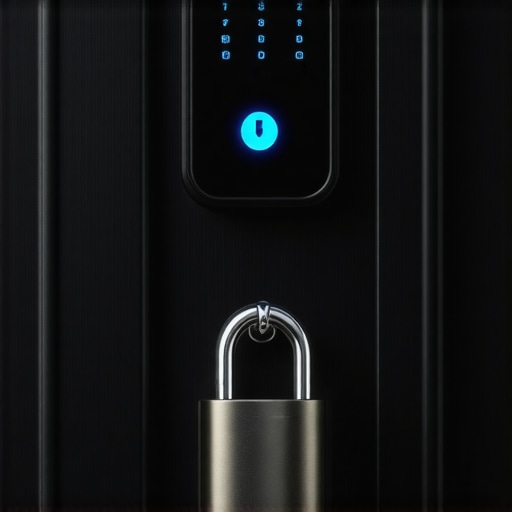
I teach my apprentices that if you have to force the key, you’ve already lost. It is a technical wisdom born from twenty-five years of staring at mangled brass and sheared pins. When you spend your life at a locksmith bench, you stop seeing a door as an entrance and start seeing it as a physics problem involving torque, friction, and material fatigue. Lately, I have seen a disturbing trend where homeowners and business managers rely entirely on the digital layer of their security, forgetting that the software is only as strong as the physical metal it controls. Whether you are looking into a voice-activated locks setup tutorial or researching commercial keyless entry benefits, the reality remains: electricity fails, but physics is constant.
“Security is always a trade-off between convenience and protection.” – Security Industry Axiom
The psychology of a burglar is simpler than you think. They are not hackers; they are opportunists. They look for the path of least resistance, which usually means a kick-in or a quick prying of a weak strike plate. When people ask me about rekeying vs replacing locks which is better after they move into a new home, they are often distracted by the flashy apps. I tell them to look at the weight of the hardware. If your smart lock feels like it was made from melted-down soda cans, it probably was. Most big-box smart locks utilize zinc-alloy internals, often called pot metal, which lacks the tensile strength to withstand a determined intruder. This is why rekeying smart locks after moving in is a critical first step, but only if the underlying chassis is worth keeping. A physical backup, like a high-security mechanical cylinder, ensures that when the batteries die or the Wi-Fi drops, you are not literally standing in the rain waiting for a server in another country to wake up.
Let us talk about Mechanism Zooming. Inside a standard high-security cylinder, you have a series of pin stacks consisting of driver pins and key pins. In a quality mechanical backup, these pins are not just simple cylinders; they are spool pins or serrated pins designed to catch on the shear line if someone tries to manipulate the lock. The shear line is that microscopic gap between the plug and the housing. When you use a transponder key programming guide for your vehicle, you are dealing with the digital handshake between the key and the ECU, but the mechanical bitting is what provides the physical leverage to turn the ignition. If your automotive key programming near me search leads you to a technician who does not understand the physical wafers inside the lock, you are only getting half the service. The same logic applies to your home or office. An integrated system might tell you the door is locked, but only a physical deadbolt with at least a one-inch throw and a hardened steel bolt can resist a crowbar.
“The strength of a system is determined by its weakest point, which is frequently the interface between the digital and the physical.” – ANSI Security Standard Guide
In our local area, the humidity frequently causes wooden doors to swell and shift. This is the nemesis of electronic gate lock systems. If the door frame moves by even three millimeters, the electronic motor might not have the torque to drive the bolt home. This leads to a jammed motor and eventually a key extraction for deadbolts situation when the owner tries to force the override. I have seen countless people in a panic after a lost wallet key replacement fast request because they realized their fancy electronic keypad does not have a physical keyway as a backup. They are locked out because they trusted a 9-volt battery more than a brass key. If you find yourself in this position, knowing what to do when locked out of your car or home starts with calling a professional who uses a Lishi pick or an air wedge, not a drill. A scammer will immediately reach for the DeWalt and destroy your expensive integrated hardware. A master locksmith understands the bypass points and the internal geography of the lock.
When I install a new system, I insist on ANSI Grade 1 hardware for the physical backup. Grade 1 means the lock has been tested to withstand 250,000 cycles and multiple heavy impacts. If your commercial keyless entry benefits do not include a high-security manual override like an Interchangeable Core (IC), you are creating a single point of failure. A physical backup is not a sign of weakness in your digital system; it is the final layer of a fortress. It is about peace of mind. You want to know that no matter what happens to the grid or your internet provider, the 70/30 brass pins and stainless steel springs in your door will still obey the laws of physics when you turn that key.