
The Silent Click: Diagnosing a Dead Remote
You stand next to your vehicle, thumbing the plastic button on your key fob, and nothing happens. No lights flash, no actuators fire, and the door stays stubbornly shut. Most drivers immediately assume the worst: a dealership trip that will cost five hundred dollars or a complete system failure. In my shop, I see these fobs every day. I tell my apprentices that if you have to force the key or mash the button until your thumb hurts, you have already lost the battle against physics. This is the first lesson in precision. A key fob is not just a piece of plastic; it is a sophisticated short-range radio transmitter that relies on a very specific set of electrical and mechanical conditions to function. When those conditions fail, you face an auto lockout situation that could have been prevented with basic maintenance.
“Security is always a trade-off between convenience and protection.” – Industry Axiom
The Forensic Autopsy of a Failing Fob
When a fob stops responding, we need to look at the material science inside the casing. Most modern remotes use a tactile dome switch soldered onto a Printed Circuit Board (PCB). These switches have a rated lifespan, usually measured in thousands of clicks, but environmental factors like pocket lint, moisture, and humidity significantly shorten that life. If you are using a mobile app locksmith booking 2026 service, you are likely looking for a professional to handle the technical side, but many fixes start with understanding the internal components. Inside the fob, you have a microcontroller, a crystal oscillator for frequency stability, and an EEPROM chip that stores your rolling code secret key.
The most common failure point is the battery contact. These are typically made of nickel-plated steel or phosphor bronze. Over time, vibration and temperature fluctuations cause these metal tabs to lose their tension. If the contact does not maintain constant pressure on the lithium cell, the voltage drops below the threshold required for the MCU to boot up and transmit. This is why you might find that the fob works when you squeeze the case but fails when you just press the button. This is not a software glitch; it is a mechanical failure of the power delivery system.
The Key Fob Battery Replacement Guide
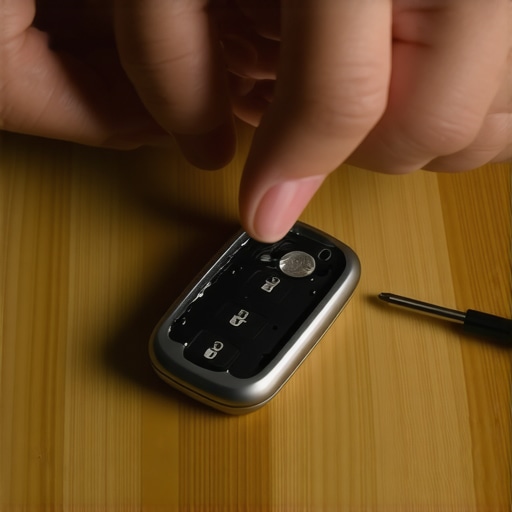
Before you dive into car remote programming tutorials, you must ensure the power source is pristine. Most fobs use a CR2032 or CR1632 coin cell. Do not buy the three-pack from the dollar store. Those cheap cells lack the pulse discharge capacity required for the high-current burst of a radio transmission. Use a high-quality Lithium Manganese Dioxide battery. When you open the case, use a non-marring nylon tool. Screwdrivers mar the plastic and can slip, shearing a surface-mount component right off the board. Once open, inspect the battery clips. If they look flattened, use a dental pick to gently increase the tension. If you see a white, chalky residue, that is corrosion from moisture ingress. Clean it with 99 percent isopropyl alcohol and a lint-free swab. This simple step often restores functionality without needing a full replacement.
Rolling Codes and Desynchronization
Sometimes the battery is fine, but the fob and the car are no longer speaking the same language. This is due to the rolling code window. To prevent replay attacks, the car and the fob both keep a counter. Every time you press the button, the counter increments. If you press the buttons hundreds of times while away from the vehicle, the fob’s counter gets too far ahead of the car’s receiver. The car then ignores the signal because it falls outside the accepted window. This is a security feature, not a bug. In these cases, you might need specialized car remote programming tutorials to resync the units. This often involves a specific sequence of ignition turns and door lock cycles that vary wildly between a 2018 sedan and a 2026 model year vehicle.
“A lock is only as strong as the intelligence behind its installation.” – Security Manual 101
Advanced Troubleshooting: Beyond the Battery
If a fresh battery and a resync do not work, we look at the PCB. I often find cracked solder joints on the battery terminal or the micro-switch itself. This is where the bench experience comes in. Using a fine-tipped soldering iron and a microscope, we can reflow these joints. This is a much better option than buying a cheap knock-off fob from an online marketplace. Those aftermarket remotes often use inferior RF shielding and can interfere with other systems, like your best smart locks compatible with Alexa 2026 or even your home safe lockout recovery tools if they operate on similar frequencies. Professional locksmiths use a frequency counter to verify that the fob is actually transmitting at 315MHz or 433MHz before they even touch the car.
The Intersection of Automotive and Home Security
Your security does not stop at the driveway. Often, the same person struggling with a car remote is also looking to upgrade their home. Whether it is installing a high-security deadbolt or looking into fire-rated panic hardware options for a home business, the principles remain the same: quality hardware over convenience. I see people spending thousands on EV charging station lock security but then using a cheap grade 3 lock on their front door. A real locksmith looks at the whole picture. For instance, if you are integrating smart locks with video integration into your home, you need to ensure the physical bolt is a Grade 1 hardened steel component. The tech is just a wrapper; the physical barrier is what stops the pry bar.
Maintenance and Prevention
To avoid a sudden auto lockout, treat your fob like the piece of electronics it is. Stop throwing your keys into a bowl of loose change where the metal can short out the contacts through the seams of the case. If the buttons feel mushy, it is time for a cleaning or a switch replacement. If you are moving toward a more digital lifestyle, make sure your mobile app locksmith booking 2026 platform is secure and verified. There are too many scammers out there who will drill your ignition or your deadbolt because they do not have the tools to pick it or the knowledge to program it properly. Real security is about preserving the hardware, not destroying it. Always use a dry lubricant like PTFE on your physical locks and keep your electronic fobs clean and dry. [IMAGE_PLACEHOLDER] Lubrication is key for the mechanical backup hidden inside your fob. That small emergency key needs to turn easily in the door lock, or you will be stranded even with a working battery. I have seen too many people snap that tiny emergency key because they never bothered to lubricate the door cylinder over five years of ownership.