
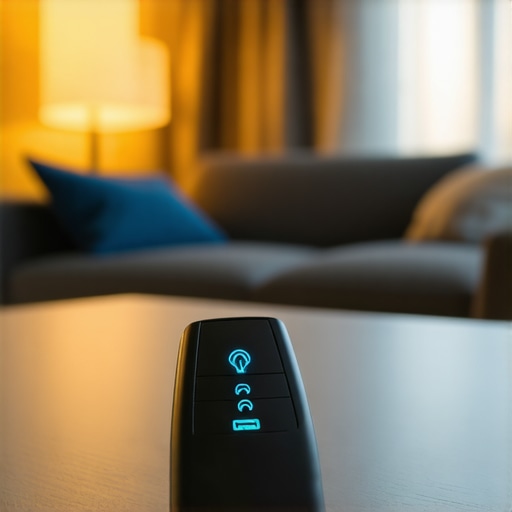
The Evolution of the Automotive Handshake
I have spent over twenty five years behind a locksmith bench, surrounded by the smell of brass shavings and the cold click of steel. I teach my apprentices that if you have to force the key, you have already lost. That technical wisdom has never been more relevant than in 2026, where we are no longer just cutting metal; we are programming biometric signatures into vehicle control modules. The transition from physical serrated blades to biometric car keys is not just a change in convenience; it is a shift in the very physics of security. When you hold a new biometric fob, you are holding a sophisticated piece of hardware that utilizes capacitive sensing and encrypted rolling codes to authenticate your identity. This guide will walk you through the syncing process while explaining the internal mechanisms that make this technology both brilliant and temperamental.
“Security is always a trade-off between convenience and protection.” – Industry Axiom
The Physics of the Biometric Sensor
Before you attempt to sync your key, you must understand the hardware. Most 2026 models use capacitive fingerprint sensors. These sensors do not just take a picture of your finger; they use tiny electrical capacitors to measure the voltage difference between the ridges and valleys of your skin. This data is processed by an internal ASIC (Application Specific Integrated Circuit) which generates a unique mathematical hash. This hash is never stored as an image, which is a critical security feature. Instead, the hash is compared against the authorized template stored in the fob’s secure enclave. When you are performing lock maintenance tips for winter 2026, you must remember that extreme cold can affect the skin’s conductivity. If your finger is too dry or the sensor is frosted, the capacitive circuit will not complete, resulting in a failed authentication. Always ensure the sensor face is clean of oils; a micro-layer of grime can create enough resistance to prevent the sensor from reading the sub-dermal ridges accurately.
The Digital Handshake: Rolling Codes and EEPROM
Once the biometric sensor verifies your identity, the fob initiates a handshake with the car’s Body Control Module (BCM). Unlike older systems that used a static signal, modern keys use a 128-bit rolling code algorithm. Every time the key is used, the code changes based on a pre-shared secret stored in the fob’s EEPROM (Electrically Erasable Programmable Read-Only Memory). This prevents replay attacks where a thief might try to capture the signal and rebroadcast it later. If you are dealing with car lockout services for Tesla models or other high-tech vehicles, you are often battling a desynchronization between the fob’s counter and the car’s expected code. This happens if the buttons are pressed too many times while out of range or if the battery voltage drops below a critical threshold. A key that appears dead often just needs a resync to realign these digital counters.
“A lock is only as good as the resistance it provides against known bypass techniques.” – Security Manual 101
Step-by-Step: Syncing Your Biometric Key at Home
To begin the sync, you first need to sit in the driver’s seat with all doors closed. This creates a closed-loop environment for the vehicle’s internal RF antennas. Insert your existing master key into the ignition or place it in the designated center console slot. For 2026 models, this slot often contains an induction coil that can power the fob even if its internal battery is dead. Turn the vehicle to the ‘On’ position without starting the engine. Within five seconds, place your finger on the biometric sensor of the new key until the LED indicator flashes amber. This puts the new fob into ‘Discovery Mode’. The car’s BCM will then broadcast a challenge signal. The new fob must respond with its public encryption key. Once the car recognizes the hardware, the dashboard display will typically prompt you to confirm the addition of a new biometric user. This process is far more secure than the old ‘clicker’ remotes because it requires physical presence and biological verification. If you are managing high-security locks for rental properties, this level of user-specific auditing is invaluable.
Winter 2026 Maintenance and Battery Health
Lock maintenance tips for winter 2026 are vital for biometric systems. Cold weather is the enemy of the lithium-ion coin cells used in these fobs. When the temperature drops, the chemical reaction inside the battery slows down, leading to a voltage sag. If the voltage drops while the fob is trying to compute a complex biometric hash, the sync can fail or the fob can become ‘soft-bricked’. I always recommend replacing fob batteries every autumn. Furthermore, the physical emergency blade hidden inside your fob should be lubricated with a dry PTFE-based spray. Avoid graphite for automotive locks, as it can interfere with the delicate wafers inside the ignition cylinder if it clumps with moisture. This is a common mistake I see when people are looking for broken key extraction tools 2026 reviews; they used the wrong lubricant and forced a key that was never meant to turn against frozen pins.
Security Logic: Why DIY Has Limits
While syncing a new key at home is possible for many 2026 models, there are limits. If you have a lost wallet key replacement fast situation, you might only have a ‘blank’ fob without the necessary pre-loaded vehicle data. In these cases, a professional locksmith with a dedicated transponder programmer is required. We use tools that interface directly with the OBD-II port to write the key’s unique ID into the car’s permanent memory. This is a forensic-level operation that ensures the old, lost keys are wiped from the system, preventing anyone who finds your wallet from accessing the vehicle. This is also why smart locks with video integration are becoming popular for budget home security upgrades 2026; they provide a secondary layer of verification if your primary car key is compromised. When preventing bike lockouts with smart tech or securing your home, always look for devices that offer multi-factor authentication, such as a physical key combined with a biometric or PIN code.
The Forensic Outlook on Biometric Hardware
When you look at the internals of a biometric lock installation guide 2026, you will see that the build quality varies wildly. Avoid cheap aftermarket fobs found on discount sites. These often use zinc-alloy components instead of hardened steel and their circuit boards lack the necessary shielding to prevent electromagnetic interference. A high-quality fob will have a flush-fit sensor and a gasket-sealed housing to prevent moisture ingress. If the sensor face feels ‘spongy’ or if the emergency blade has a loose tolerance, it will eventually fail. Security is about material science as much as it is about software. A locksmith’s job is to ensure that the physical barrier is just as strong as the digital one. As we move further into 2026, the line between a computer technician and a locksmith continues to blur, but the goal remains the same: protecting the person on the other side of the door.