
Technical Wisdom from the Bench
I teach my apprentices that if you have to force the key, you’ve already lost. This fundamental truth applies to every piece of hardware that leaves my shop, but nowhere is it more critical than in the world of commercial exit devices. When a business owner comes in asking why a Von Duprin costs significantly more than a generic bar they found online, I tell them to look at the internals. We are talking about the difference between precision-engineered stainless steel and the cheap pot metal found in big-box stores. Security is a physics problem, and physics does not care about your budget. Panic bar installation and repair for commercial buildings requires an understanding of cycle counts and spring tension that most amateurs simply do not possess. If you are using a bar rated for 100,000 cycles on a door that sees 500 operations a day, you are literally installing a countdown to a lockout.
“Security is always a trade-off between convenience and protection.” – Industry Axiom
The Anatomy of a Failure: Material Science in Commercial Hardware
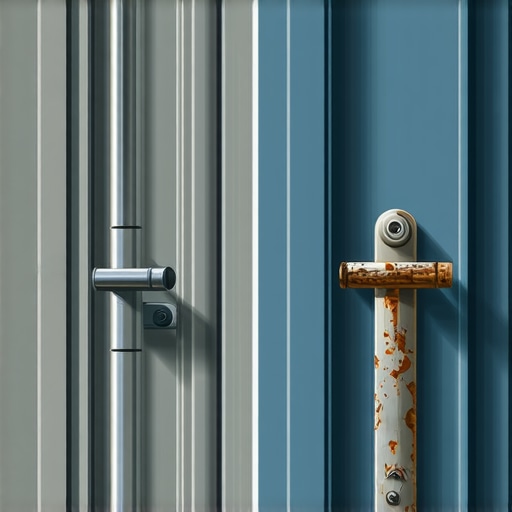
Let’s zoom into the chassis of a Grade 1 exit device. In a high-quality rim device, the latch bolt is typically a thick piece of stainless steel with a deadlocking feature. This prevents someone from using a shim or a credit card to retract the latch from the outside. When you press the touch bar, a series of mechanical linkages, often made of heat-treated steel, pull that latch back with a crisp, smooth motion. Contrast this with the cheap stuff. You will find thin aluminum or even plastic components inside the main housing. These materials fatigue under the constant pressure of a heavy commercial door closer. Eventually, the metal crystallizes and snaps. This is why commercial master key system advantages for businesses often start with the quality of the hardware. You cannot maintain a reliable master key system if the physical cylinders are spinning in a housing made of soft zinc that strips after six months of use. When we talk about door reinforcement for security, we are talking about ensuring the hardware remains rigid under stress. If the door flexes because the hardware is flimsy, the lock fails to engage the strike plate correctly.
Why Grades Matter: ANSI/BHMA Standards
I don’t care what the packaging says on a retail shelf. I care about the ANSI/BHMA rating. A Grade 1 exit device must pass 500,000 cycles. A Grade 3 device is basically a toy intended for light residential use. For a commercial facility, installing Grade 3 panic hardware is negligence. We see this often during home safe lockout recovery or when business owners ask about rekeying after burglary best practices. They realize too late that their hardware was the weak link. The internal springs in a Grade 1 device are designed with specific compression rates to ensure the bar returns to its neutral position every single time. Cheap hardware uses lower-quality wire that loses its ‘memory’ over time, leading to a sagging bar that eventually prevents the door from latching at all. This creates a massive liability. If a fire inspector walks in and sees a door that doesn’t latch or requires two hands to open, they will shut you down. It’s not just about keeping people out; it’s about life safety and making sure people can get out in an emergency.
“Life safety and security must always be balanced in the context of fire codes.” – NFPA Standard
The Evolution of Commercial Security and Smart Integration
As we look toward the locksmith tools market outlook 2026, we see a massive shift toward electrified hardware. High-end panic bars now integrate with access control systems, allowing for remote locking and monitoring. This is where smart home security integration 2026 trends are bleeding into the commercial sector. You might be wondering what to do when locked out of your car, or how car lockout services for Tesla models relate to a warehouse door. The answer is electronics. Modern commercial hardware uses the same rolling code logic and encrypted communication found in high-end automotive security. If you are still using a basic mechanical bar on a high-traffic entrance, you are missing out on the logging and auditing capabilities that come with an electrified exit device. A proper installation involves more than just screws; it involves running power through a transfer hinge and ensuring the power supply provides a clean, regulated voltage. If the voltage spikes, it can fry the solenoid in a cheap device, whereas a professional-grade bar has built-in surge protection.
Installation Precision and Environmental Factors
The weather is a silent killer of locks. In areas with high humidity, wood doors swell and metal doors expand. A cheap panic bar has very little tolerance for door misalignment. When the door shifts a fraction of an inch, the latch hits the strike plate at the wrong angle, causing friction. A Master Locksmith knows how to shim the strike and adjust the vertical rods so that even if the door moves, the hardware operates smoothly. We use dry lubricants because grease and oil attract dust and grit, which turn into a grinding paste inside the mechanism. This attention to detail is why my shop has been here for 25 years. We don’t just slap hardware on a door; we ensure it’s a permanent solution. Whether you’re dealing with a standard commercial entry or specialized car lockout services for Tesla models, the principle is the same: use the right tool and the right material for the job. The peace of mind that comes from knowing your exit device will work every time the bar is pushed is worth every penny of the initial investment. Stick to Grade 1, stick to reputable brands like Von Duprin, Sargent, or Hager, and leave the big-box junk for the amateurs. Professional security is an investment in your business’s continuity and safety.