
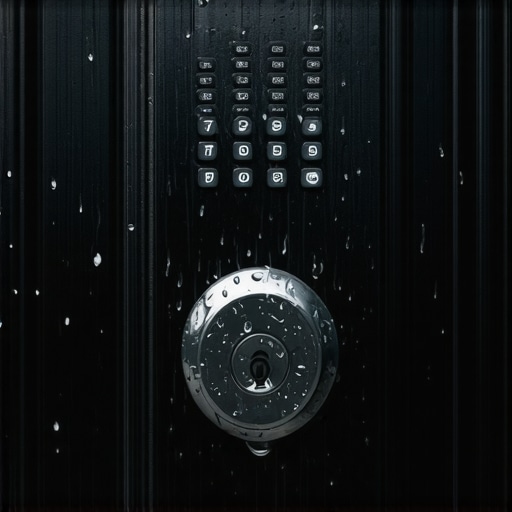
The Real Enemy of Electronic Locks is Not the Burglar, It Is the Cloudburst
Most electronic keypads are built like toys. Manufacturers throw together some cheap silicon, a weak solenoid, and housing made of pot-metal zinc, then slap an IP rating on the box and call it weather-resistant. But when you have spent over two decades at a locksmith bench, you learn that water always finds a path. Rain doesn’t just fall; it drivingly penetrates housing, corrodes solder joints, and turns lithium batteries into dead weight. If you are tired of getting locked out of your own property because of a spring shower, you need to understand the physics of moisture-resistant security hardware.
The Apprentice Lesson: Water Always Finds a Path
I teach my apprentices that if you have to force the key, you have already lost. The same concept applies to electronic security. When water gets inside a keypad chamber, it establishes parasitic electrical paths across the circuit board. I remember training a young tech who couldn’t understand why a high-end digital lock kept throwing false low-battery warnings. We pulled the casing apart on my workbench, and under the magnifying glass, you could see the tiny green trails of copper carbonate corrosion bridging the traces on the PCB. A single drop of moisture had bypassed a poorly seated silicone gasket and rendered a three-hundred-dollar lock completely useless. That is why physical engineering matters far more than clever software features.
“Security is always a trade-off between convenience and protection.” – Industry Axiom
The Physics of Rainproofing: What Makes a Keypad Truly Weatherproof?
To survive torrential downpours, freezing rain, and high humidity, a keypad lock must utilize specific mechanical and electrical design principles. First, we look at the physical interface. Touchscreens are notoriously terrible in the rain. Water droplets carry a minor electrical charge that mimics a human fingertip, causing capacitive screens to misinterpret inputs or freeze up entirely. True outdoor locks rely on physical buttons with mechanical microswitches nestled deep behind an elastomeric dome membrane. This physical barrier prevents water from touching the active contacts.
Second, the internal circuit boards must feature conformal coating. This is a specialized process where a thick, protective polymer film is sprayed or brushed directly onto the electronics, sealing the resistors, capacitors, and microprocessors from atmospheric moisture. If a lock manufacturer doesn’t explicitly state that their boards are conformally coated, assume they are bare green board, ready to corrode at the first sign of sea salt air or heavy humidity.
Evaluating Keypad Locks That Defy the Elements
When selecting a lock for exposed gates, exterior residential doors, or commercial entryways, the grade matters. For true durability, we look for physical construction that prioritizes mechanical bypass options, heavy gaskets, and drain channels. Many homeowners ask about the benefits of installing smart locks for home security, but those benefits vanish the moment the motherboard shorts out. Look for options that integrate seamlessly into smart home ecosystems without sacrificing physical ruggedness.
“The strength of any lock lies in its weakest physical component, not its strongest encryption key.” – Locksmith Axiom
Here are the core attributes that define the seven toughest keypad lock designs on the market today:
1. Mechanical Digital Deadbolts (The Battery-Free Warriors)
If you want a lock that absolutely cannot die in the rain, you eliminate the battery entirely. Mechanical digital locks use a system of internal chambers, levers, and slides. When you press a button on the faceplate, you are physically shifting a mechanical wafer inside the lock body. There are no wires, no circuit boards, and no batteries to freeze or leak. These locks are perfect for remote gates or outbuildings where servicing a battery is impractical.
2. Conformal-Coated Commercial Grade Mortise Keypads
Designed for heavy commercial traffic, these locks feature heavy-cast metal housings and internal chambers that are completely isolated from the key cylinder and latch mechanism. The internal electronics are fully potted, meaning the entire control board is encased in a solid block of protective resin. This ensures that even if water fills the housing, the electronic brains remain dry.
3. Sealed Touchpads with Capacitive Rain Rejection
While physical buttons are superior, some modern high-end residential units utilize smart touchscreens equipped with capacitive rain-rejection algorithms. These locks measure the surface area and duration of the contact. Raindrops hitting the screen are dismissed as background noise, while the deliberate press of a finger triggers the system. These must always be paired with a heavy-duty rubber gasket behind the trim plate to prevent water from wicking behind the lock body and rotting your wooden door.
4. Protected Clamshell Designs
Some industrial keypad locks feature a mechanical metal hood or flip-cover that physically shields the button interface from direct vertical rain. While simple, this physical barrier dramatically reduces the volume of water the keypad must endure, preventing ice from forming over the keyways and button channels during winter storms.
5. Dual-Chamber Keypad Systems
These locks separate the keypad interface from the battery pack and locking actuator. The keypad on the exterior of the door acts only as a dumb reader, sending low-voltage signals to the protected interior side of the door where the batteries and logic board are safely housed in a climate-controlled space. This design is highly recommended for storm doors and coastal properties.
6. Marine-Grade Keypad Deadbolts
Specifically engineered for saltwater environments, these locks use marine-grade chrome plating over brass or stainless steel internal parts. Standard locks quickly pit and seize when exposed to salty rain, but marine-grade units utilize specialized drain channels at the bottom of the lock chassis to ensure any water that enters is immediately channeled out instead of pooling inside the mechanism.
7. Sub-Plate Gasketed Smart Locks
For those looking to build a locksmith for smart home ecosystems, choosing a lock with an integrated sub-plate gasket is crucial. This gasket is not a simple piece of foam; it is a molded silicone seal that compresses tightly against the door face, filling the imperfections in the wood grain or metal skin to prevent rain from creeping into the borehole.
The Critical Installation Secret: Preventing Water Intrusion
Even the best waterproof keypad lock will fail if installed incorrectly. When mounting a lock on an exterior door, you must ensure a flush fit against the door face. If your door is weathered or warped, the gasket will not seal correctly. I always advise against using cheap silicone caulking around the top of the lock housing, as this can trap condensation inside. Instead, focus on proper alignment of the latch and strike plate to ensure the lock motor doesn’t have to work under tension, which causes the internal seals to wear out prematurely.
If you ever experience a failure where the keypad stops responding after a heavy storm, do not spray WD-40 into the electronics. This leaves a sticky residue that traps moisture and dirt. Instead, remove the battery cover on the inside of the door, check for moisture, and use a dedicated contact cleaner or a hair dryer on a cool setting to gently dry out the connection points. If you get locked out completely, seeking home safe lockout recovery or professional physical lock bypass services is always safer than drilling the lock yourself.