![Save $200: Car Key Replacement via Locksmith vs Dealership [2026]](https://prolocksmithco.com/wp-content/uploads/2026/01/Save-200-Car-Key-Replacement-via-Locksmith-vs-Dealership-2026.jpeg)
The Price of a Plastic Shell: A 3 AM Reality Check
A lady came into my shop crying last Tuesday. She had spent five hours stranded at a shopping center because her 2024 SUV wouldn’t recognize her proximity fob. A ‘trunk slammer’—one of those unlicensed scammers who pop up first on search engines—had arrived, drilled into her door handle like a maniac, charged her $400, and then told her he couldn’t program the ‘rolling code’ because his software was out of date. He left her with a ruined handle and a car that still wouldn’t start. This is the reality of the modern automotive security landscape. You aren’t just paying for a piece of metal anymore; you are paying for the encryption keys to a rolling-code fortress on wheels. In 2026, the gap between what a dealership charges and what a master locksmith can do has widened, but so has the risk of being taken for a ride by amateurs. If you want to save $200, you have to understand the physics of the transponder and the predatory pricing models of the service department.
“Security is always a trade-off between convenience and protection.” – Industry Axiom
The Dealership Tax: Why You Are Being Overcharged
When you walk into a dealership for a car key replacement, you are funding their marble floors and the free espresso in the waiting room. They view a lost key as a captive audience transaction. They will tell you that only their proprietary ‘Star-Link’ or ‘Auto-Connect’ diagnostic tools can sync with the ECU (Engine Control Unit). This is a lie. As a master locksmith, I invest upwards of $50,000 a year in EEPROM (Electrically Erasable Programmable Read-Only Memory) programmers and Lishi decoding tools that do exactly what the dealer does—often faster. The dealer typically charges for a full hour of labor at $180/hr plus a 200% markup on the hardware. We cut that fat by focusing strictly on the transponder handshake and the mechanical cut. For most 2025 and 2026 models, the hardware itself is a standard 433MHz or 315MHz board; the ‘magic’ is just knowing which security protocol is being used.
Mechanism Zooming: The Physics of the Transponder
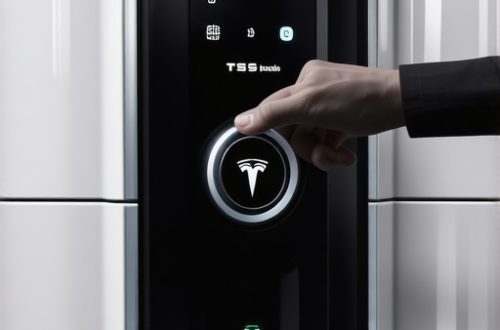
Let’s look at the internal physics. A modern key fob isn’t just a remote; it is a low-frequency radio station. Inside the fob, a copper coil acts as an antenna. When you push the start button, the car’s immobilizer antenna sends a burst of energy that induces a current in the key’s coil—this is basic induction. The chip then broadcasts a unique ID46, ID48, or the newer 128-bit AES encrypted string back to the car. If the rolling code doesn’t match the expected sequence in the BCM (Body Control Module), the fuel pump stays dead. When I perform car remote programming tutorials for my apprentices, I emphasize the ‘handshake.’ If your key fob battery replacement guide didn’t mention that a dead battery can sometimes cause a desync in the rolling code sequence, you are missing half the story. In 2026, we are seeing more biometric keyless entry for cars where the fob acts as a secondary authentication factor to a fingerprint scan. If that sync breaks, the dealer will try to sell you a new BCM. I’ll just reset the handshake.
“The most expensive lock is the one that doesn’t work when you need it.” – Traditional Locksmith Maxim
The $29 Bait-and-Switch: Spotting the Scam
The emergency locksmith growth trends of 2026 show a massive spike in ‘dispatcher’ services. These aren’t locksmiths. They are call centers that hire ‘technicians’ who own a wedge and a drill but zero diagnostic skills. If someone quotes you ‘$19 and up’ for an auto lockout or a key replacement, hang up. A real locksmith knows the value of their specialized hardware. To decode a locksmith for vintage car keys requires a different set of skills—feeling the wafer heights with a pick—than a modern laser-cut key, but both require a flat-rate quote. A professional will ask for your VIN and your proof of ownership before they even turn the van on. They won’t need to drill your door; they will use a Lishi tool to decode the wafers inside the cylinder without a scratch, then cut a key to code using a CNC punch like the Miracle A9.
The 2026 Tech Shift: Solar-Powered and Smart Features
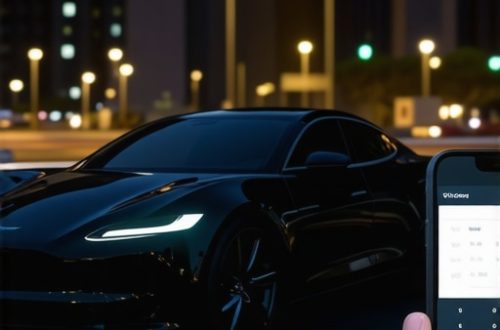
We are now seeing solar-powered smart locks 2026 models integrated into vehicle door pillars and smart locks with geofencing features that allow you to share digital ‘keys’ via an app. While this sounds high-tech, it creates new vulnerabilities. These systems still rely on a mechanical override hidden behind a plastic cap on your door handle. This is where the physics of the shear line still matters. Whether it is emergency safe cracking services or an auto lockout, the mechanical backup is always the weakest link. I tell my customers to keep a physical, non-remote ’emergency key’—just a blade with a transponder—hidden in a magnetic box. It costs $60 compared to $400 for a full proximity fob, and it will get you home when the geofencing software glitches out in a dead zone.
Emergency Residential Lockout Solutions vs. Auto Logic
While I specialize in automotive, the logic remains the same for emergency residential lockout solutions. People get locked out and their first instinct is to let a guy drill the deadbolt. Do not allow this. Most residential locks, even the fancy smart ones, can be bypassed with a shimmer or a pick gun by a competent professional. Drilling is for amateurs who want to sell you a $200 ‘high-security’ lock that they bought for $30 at a big-box store. If you are looking at car remote programming tutorials online, remember that without a licensed interface like an Autel or a Smart Pro, you risk ‘bricking’ your car’s computer. A dealership will charge you $2,000 for a new ECU if you fry the memory during a DIY programming attempt. Save the $200 by hiring a guy with a brick-and-mortar shop who has been doing this since keys had teeth instead of chips.
Final Technical Wisdom: The Maintenance Myth
Stop using WD-40 in your locks. It is a solvent, not a lubricant. It attracts grit and turns the pins inside your ignition or your deadbolt into a gummy mess. Use a dry PTFE spray or high-grade graphite. If your key is sticking, the wafers are likely worn or the ‘shoulders’ of the key are rounded off. Getting a ‘duplicate’ of a worn key is just making a copy of a mistake. A real locksmith cuts a key ‘to code’ based on the original factory specifications, not the worn-out piece of brass in your pocket. This precision is what separates a $200 savings from a $2,000 repair bill next year. Trust the physics, not the marketing.[IMAGE_PLACEHOLDER_1]


![How to Cut 2026 EV Key Fob Replacement Costs by 50% [Data]](https://prolocksmithco.com/wp-content/uploads/2026/04/How-to-Cut-2026-EV-Key-Fob-Replacement-Costs-by-50-Data-500x330.jpeg)
This post really hits home about the importance of understanding what you’re paying for when it comes to car key replacements. I’ve had a few close calls where I almost got ripped off at dealerships, mainly because I didn’t realize locksmiths could do the same job for a fraction of the cost with proper equipment. What I found intriguing was the emphasis on the internal physics of the transponder—it’s a reminder that these systems are more than just digital locks. I’ve always wondered, as tech evolves and biometric security becomes more prevalent, what new vulnerabilities could emerge? Has anyone here had experience with biometric or geofencing features that actually made their vehicle more secure, or do they pose new risks we should be aware of? I think the best advice is to keep a physical backup key, especially with all these new smart tech features. It’s about balancing security with practicality, and this post does a great job of highlighting that.