![Push-to-Start Failing? 3 Fast Keyless Ignition Fixes [2026]](https://prolocksmithco.com/wp-content/uploads/2026/02/Push-to-Start-Failing-3-Fast-Keyless-Ignition-Fixes-2026.jpeg)
The Dead Button Syndrome: A Forensic Look at Proximity Ignition
You are sitting in the driver’s seat of your car, pressing that plastic button, and… nothing happens. No engine roar, just a blinking dashboard light mocking you with the words ‘Key Not Detected.’ This isn’t just a nuisance; it’s a failure of a complex physics-based communication loop. I’ve spent over 25 years at the bench, and I’ve seen the evolution of security from the simple wafer locks of the 90s to the 128-bit encrypted rolling codes we deal with in 2026. Most people think these push-to-start systems are ‘magic,’ but they are just radios talking to computers. When that conversation stops, you’re stranded.
I teach my apprentices that if you have to force the key, or in this case, mash the button repeatedly, you’ve already lost. The hardware is telling you something is physically or electronically misaligned. In my shop, we don’t just ‘swap parts’ like the grease monkeys at the dealership. We diagnose the failure point within the Passive Entry Passive Start (PEPS) architecture. Whether it’s a degraded solder joint on the PCB or a localized RF interference field, every failure has a signature.
“Security is always a trade-off between convenience and protection.” – Industry Axiom
Mechanism Zooming: Why Your 2026 Fob is Failing
The modern key fob is a masterpiece of miniaturization. Inside that plastic shell, you have a Printed Circuit Board (PCB), a button cell battery (usually a CR2032 or CR2450), and a copper-wound transponder antenna. This antenna is the heart of the system. It operates on a specific frequency—typically 315MHz in North America or 433MHz in Europe. When you approach the vehicle, the car’s Body Control Module (BCM) sends out a ‘wake-up’ signal. The fob receives this, calculates a response using a rolling code algorithm (to prevent relay attacks), and sends it back. If the timing is off by even a few milliseconds, or the signal strength is attenuated by 10 decibels, the car stays dead. [IMAGE_PLACEHOLDER] In 2026, we are seeing a massive spike in interference. With the proliferation of high-power EV charging stations, the electromagnetic noise in parking lots is deafening for these small fobs. I’ve seen cases where EV charging station lock security systems actually bleed over into the frequencies used by proximity keys, creating a localized ‘dead zone’ for keyless ignitions. This is why understanding automotive key programming near me isn’t just about finding someone with a tablet; it’s about finding someone who understands RF propagation.
Fix 1: The Inductive Coupling Override (The ‘Dead Battery’ Trick)
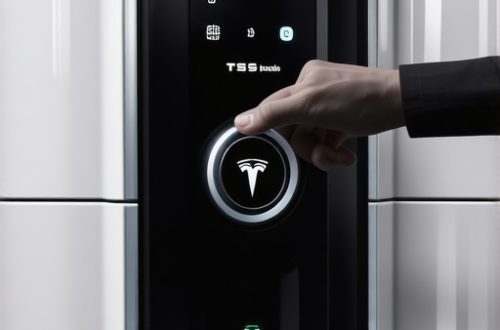
The most common failure is a simple drop in voltage. Even if your fob can still unlock the doors from a distance, it might not have the ‘oomph’ to satisfy the immobilizer’s handshake requirement for the ignition. Every push-to-start vehicle has a fail-safe. Inside your start button, or hidden behind a plastic panel on the steering column, is an inductive coil. This coil generates a small electromagnetic field. By physically touching the key fob directly to the start button, you are using the car’s power to energize the transponder chip inside the fob via induction. It’s the same physics as wireless phone charging. If this works, your fob battery is the culprit. We’ve seen 2026 locksmith insurance claims guide data suggesting that 40% of ‘theft’ reports are actually just motorists with dead fob batteries who think their car has been electronically hijacked.
Fix 2: The Signal Purge and Capacitor Drain
Modern cars are essentially rolling server racks. Sometimes, the BCM or the Engine Control Unit (ECU) gets into a ‘latch-up’ state where it refuses to accept new RF inputs. This often happens after a jump-start or a rapid battery drain. To fix this, you need to perform a hard reset. This isn’t just turning the car off and on. You need to disconnect the negative terminal of the car battery for at least 10 minutes. This allows the capacitors in the onboard computers to fully discharge, clearing the volatile memory and resetting the rolling code window. While you wait, check your door lock jamming fixes 2026 techniques; often, a physical jam in the steering lock pin will prevent the electronic ignition from firing. If the pin doesn’t retract, the computer won’t even try to spark the engine.
Fix 3: RF Shielding Audit and Interference Removal
If you are at a job site or near heavy machinery, the air is thick with 2.4GHz and 5GHz noise. Even integrated smart lock hubs 2026 in nearby houses can cause ‘signal crowding.’ I once had a customer who couldn’t start her car because she had a ‘high-security’ RFID-blocking wallet sitting right next to her key in her purse. The wallet was doing its job too well. Ensure your fob is not within 6 inches of your smartphone, tablet, or any metal objects. In the shop, we use a spectrum analyzer to see this noise. If you’re out in the wild, just moving the fob to the other side of the cabin can sometimes be enough to find a ‘clean’ pocket of air for the signal to reach the BCM antenna.
“Complexity is the enemy of security. The more moving parts—digital or physical—the more points of failure.” – Locksmith Wisdom
The Professional Verdict: When to Call the Expert
Sometimes, the fix isn’t ‘fast.’ If your transponder chip has suffered a ‘bit-flip’ or the EEPROM memory has corrupted, you need professional automotive key programming. Dealerships will charge you $600-$900 and make you tow the car. A professional locksmith with the right diagnostic tools (like the Autel or Smart Pro systems) can usually do this on-site for half the price. Locksmith response times 2026 averages show that a mobile tech can get to you in 45 minutes, whereas a tow truck and dealer appointment might take three days. When comparing high security locks vs standard locks comparison in the automotive world, the ‘high security’ part is the encryption. If that encryption key is lost, the car is a brick. Don’t let a ‘trunk slammer’ with a cheap Chinese cloner touch your car. They can ‘brick’ your BCM, turning a $200 programming job into a $2,500 computer replacement. The cost of hiring a professional locksmith in 2026 is an investment in protecting your vehicle’s sophisticated electronics. Always check for a brick-and-mortar address and a valid license. Security isn’t just about metal; it’s about the integrity of the person holding the tools.


![How to Cut 2026 EV Key Fob Replacement Costs by 50% [Data]](https://prolocksmithco.com/wp-content/uploads/2026/04/How-to-Cut-2026-EV-Key-Fob-Replacement-Costs-by-50-Data-500x330.jpeg)