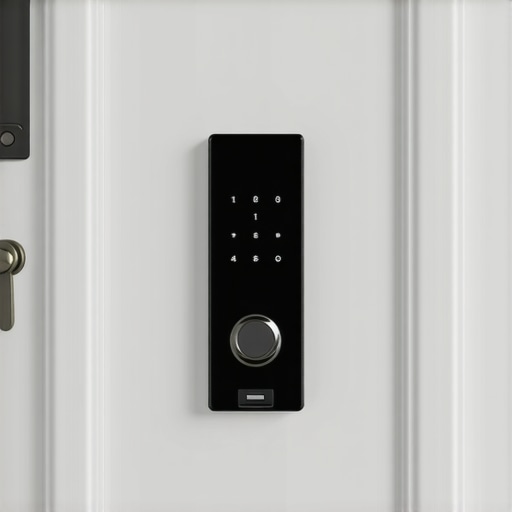
The Physical Reality of Smart Security
A burglar doesn’t care about your Wi-Fi signal. They care about the fact that most residential doors are held shut by a half-inch of soft pine and a strike plate secured with screws that wouldn’t hold a picture frame. As we move into 2026, the obsession with voice-activated locks and biometric keyless entry for cars has hit a fever pitch, but after 25 years at the bench, I see the same old physical flaws hidden behind shiny touchscreens. If you think your voice is a magic shield, you’re missing the point of a deadbolt. Security is a physics problem, not a software update. Most people buying these ‘smart’ gadgets are just installing a high-tech handle on a cardboard box.
The Scam Victim: A Cautionary Tale
A lady came into my shop crying last month because a ‘trunk slammer’—one of those unlicensed scammers who pops up first on search engines—drilled her $400 smart lock and charged her $600 for a replacement that was basically pot metal. Her lock had a simple battery failure and a jammed actuator. A real locksmith could have used a bypass tool or a Lishi to get her in without a scratch. Instead, she got the drill treatment. This is why I preach the gospel of hardware grades. If you’re looking at 2026 smart lock trends for homes, you need to look past the voice commands and check the ANSI rating. If it isn’t Grade 1, it’s a toy.
“Security is always a trade-off between convenience and protection.” – Industry Axiom
Mechanism Zooming: The Anatomy of a Voice-Activated Deadbolt
When you tell your smart speaker to lock the door, a series of mechanical events occurs inside the chassis that would make an old-school safe-cracker nervous. Inside a quality 2026 unit, a high-torque DC motor engages a clutch mechanism. This clutch is the heart of the system. In cheap hardware, this clutch is made of nylon or sintered metal (basically compressed metal dust). Over time, the resistance from a door that isn’t perfectly aligned—what we call ‘bolt bind’—strips those gears. A master locksmith looks at the throw of the bolt. We want to see a full one-inch hardened steel bolt with a ceramic or hardened steel pin inside it to prevent hacksawing. If the motor can’t fully extend that bolt because your door is sagging from the humidity, the software might tell you the door is ‘locked,’ but the shear line hasn’t been cleared, and a simple kick will bypass the whole thing.
Setting Up Voice Control Without Compromising the Perimeter
If you’re going to use voice-activated locks, you must follow a specific protocol to ensure you aren’t leaving a digital ‘key’ under the mat. First, never allow ‘unlock’ commands without a secondary voice PIN. In 2026, voice-cloning tech is a real threat. Second, ensure the lock is part of a mesh network that doesn’t rely solely on a vulnerable 2.4GHz Wi-Fi band. I tell my apprentices that the best residential door locks for safety and durability are those that maintain a physical keyway as a fail-safe. Why? Because I’ve seen enough residential lock cylinder replacement jobs where the electronics fried, but the mechanical pins stayed true. Use a high-security cylinder like a Medeco or Assa Abloy behind that smart faceplate. This gives you the convenience of voice with the drill-resistance of hardened steel sidebars.
“Standardized testing ensures that hardware can withstand the specific forces applied during a forced entry attempt.” – ANSI/BHMA A156.36 Standards
The 2026 Landscape: From Cars to Offices
We are seeing biometric keyless entry for cars influencing home tech. People want their front door to behave like their Tesla. But your house doesn’t have an ECU to manage rolling codes in the same way. In commercial settings, we’re installing panic hardware for office buildings 2026 models that integrate with voice for emergency lockdowns, but these systems cost thousands because they use heavy-duty solenoids, not tiny motors. For the average homeowner, the signs you need to change your door locks immediately include a ‘grinding’ sound when the motor turns or a delay in the voice response. That grinding is the sound of your security failing. If you have to pull or push on the door to get the voice command to work, your strike plate is misaligned.
The Forensic Audit: Why Hardware Fails
I’ve performed countless broken key extraction sessions on ‘smart’ locks because the owners neglected the mechanical side. People think ‘keyless’ means ‘maintenance-free.’ Wrong. You should be checking your door’s alignment every season. In my shop, I see the results of poor material science. Zinc die-cast components are the enemy. They crack under thermal expansion. If you’re looking for how to extract a broken key from a lock safely, you’re already in a bad spot—usually because you used a cheap keyway that wasn’t lubricated. Never use WD-40; it attracts gunk. Use a dry PTFE or graphite-based lubricant to keep those pins moving freely. When we look at locksmith response times 2026 averages, they are getting longer because so many ‘techs’ don’t know how to handle these hybrid systems. They just want to drill and replace. A real smith understands the commercial keyless entry benefits—like audit trails and time-stamped access—but they also know that if the power goes out, the physics of the latch are all that stand between a predator and a family.
The Installation Checklist: A Master’s Perspective
When installing your 2026 voice-activated system, start with the frame. Throw away the one-inch screws that came in the box. Use three-inch hardened steel screws that bite into the king stud of the house frame. If the strike plate is loose, the lock is useless. Ensure the ‘bolt throw’ is clean. You should be able to turn the thumbturn with one finger. If there’s friction, the motor will burn out in six months. This is the difference between a ‘smart home’ and a secure home. Don’t be the person who spends $500 on a lock but won’t spend $50 on a solid strike plate. Security isn’t a product you buy; it’s a standard you maintain. I’ve spent 25 years watching the industry change from brass to bits and bytes, but the sound of a solid deadbolt clicking into a reinforced frame is the only thing that lets me sleep at night.“


![5 Solar-Powered Smart Locks That Won't Die in Winter [2026]](https://prolocksmithco.com/wp-content/uploads/2026/04/5-Solar-Powered-Smart-Locks-That-Wont-Die-in-Winter-2026-1-500x330.jpeg)
![5 Solar-Powered Smart Locks That Won't Die in Winter [2026]](https://prolocksmithco.com/wp-content/uploads/2026/04/5-Solar-Powered-Smart-Locks-That-Wont-Die-in-Winter-2026-500x330.jpeg)
Reading this article really opened my eyes to the importance of thorough physical security measures alongside smart lock tech. It’s tempting to rely on the latest digital features, but if the physical installation isn’t solid—like using the right strike plates and heavy-duty screws—all the tech in the world won’t save you from a break-in. I remember upgrading my own home lock system last year, making sure to reinforce the door frame and switch to a high-security cylinder. That peace of mind is worth the extra effort. The advice about regular maintenance and avoiding cheap materials is spot on; I’ve seen too many people overlook these basics until it’s too late. What are some of the best ways to detect early signs that your smart lock or door hardware might be failing, before it becomes a security risk? Would love to hear other folks’ preventative tips.