The 2026 Digital Handshake: Why Your Car Key Is Now a Computer
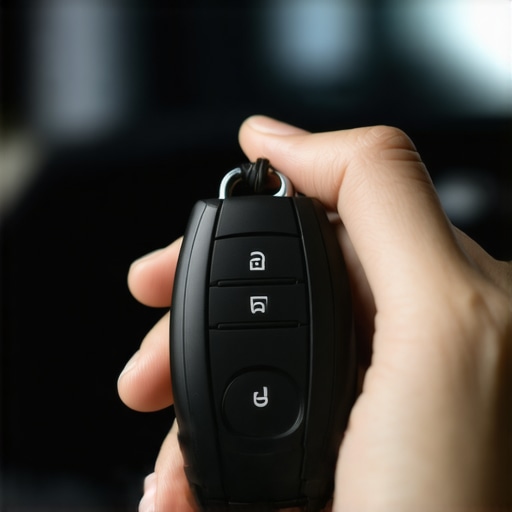
I teach my apprentices that if you have to force the key, you’ve already lost. In my 25 years at the bench, I’ve seen the industry move from simple brass wafers to sophisticated Ultra-Wideband (UWB) transceivers. Back in the day, a file and a blank were all you needed. Today, if you aren’t talking to the Body Control Module (BCM) via a secure gateway, that 2026 Electric Vehicle sitting in your driveway is nothing more than a very expensive, three-ton paperweight. I once watched an apprentice try to ‘feel’ his way through a digital ignition repair. I told him: ‘The metal doesn’t matter if the logic is locked.’ That’s the reality of 2026 EV car key fob replacement. You aren’t just paying for a piece of plastic; you’re paying for the cryptographic keys to a digital kingdom.
“Security is always a trade-off between convenience and protection.” – Industry Axiom
The Forensic Autopsy of a 2026 Key Fob
When a customer brings me a ‘dead’ fob for a 2026 model, the first thing I do is perform a forensic autopsy. We don’t just swap batteries anymore. The symptom is usually a ‘silent fail’—the proximity sensors don’t wake up the car as you approach. Why? It’s rarely the physical buttons. It’s the material science inside. These fobs utilize UWB chips that operate on a frequency-hopping spread spectrum. If the internal oscillator drifts even a fraction of a megahertz due to moisture or a drop, the ‘rolling code’ synchronization breaks. Inside the housing, you’ll find a PCB populated with microscopic surface-mount components. Unlike the car key duplication costs 2026 estimates you see online for old Toyotas, these EV fobs require 128-bit AES encryption handshakes. If the solder joints on the antenna coil have micro-fractures from being sat on, the passive entry system dies. We’re talking about a diagnostic process that involves checking for parasitic drain on the CR2032 or rechargeable lithium cell and ensuring the PCB traces haven’t oxidized. This isn’t something a ‘trunk slammer’ with a $50 clone tool can handle.
The Dealership Extortion: Hardware vs. Software
People ask me why car key duplication costs 2026 have skyrocketed to $500 or $700. The answer is the ‘Security Gateway.’ Manufacturers have locked down the OBD-II ports. To program a new fob, a locksmith needs a licensed subscription to the OEM server. Every time I plug in my tablet to perform keyless ignition repair services, I’m paying a ‘seat fee’ to the manufacturer. The dealership hides these costs in their ‘shop fees,’ but as a brick-and-mortar locksmith, I see the invoice. You’re paying for the proprietary software handshake that prevents hackers from spoofing your signal. It’s the same logic we use for commercial restricted keyways—control the source, control the security. If you go to a dealership, you’re paying for the marble floors and the coffee bar. In my shop, you’re paying for the 25 years of knowing exactly which frequency the BCM is expecting and why the proximity wake-up is lagging.
“A lock is a machine for the physics of denial.” – Security Manual
Material Science: Brass, Zinc, and Silicon
The failure of modern keys is often a mix of digital and physical degradation. Even in the high-tech world of EV charging station lock security, the physical backup key—the ’emergency blade’ hidden inside your fob—is often made of cheap nickel-plated zinc. These blades are prone to snapping if the door lock cylinder hasn’t been lubricated in years. In our local climate, the humidity causes the internal pins of the emergency cylinder to seize. When that fob battery dies and you try to use that emergency blade, the ‘pot metal’ snaps off inside the lock. This is why I advocate for garage door lock upgrades 2026 that include mechanical bypasses with high-tolerance brass pins. Whether I’m performing emergency safe cracking services or just rekeying a house, the physics are the same: precision beats force. For the mobile locksmith for RVs and campers, this is even more critical, as road vibration and salt air destroy cheap electronic latches faster than you can say ‘warranty.’
The Action Plan: Repair vs. Replace
So, your 2026 fob is acting up. Do you need a full replacement? Not always. A real locksmith will check the ‘rolling code’ sync first. Sometimes the fob just needs a hard resync with the ECU. If the housing is cracked, we can often transfer the ‘brains’—the PCB—to a new high-impact shell, saving you hundreds. This is the difference between a technician and a salesman. We apply this same diagnostic rigor to electronic access control systems for small businesses and smart locks for pet doors. We look at the failure point. Is it the solenoid? Is it the firmware? If you’ve suffered a break-in, rekeying after burglary best practices dictates that you don’t just change the keys; you inspect the strike plate and the door frame for structural fatigue. Security is a holistic system, not a single gadget.
Maintenance: The Graphite vs. WD-40 Myth
If you want your locks and fobs to last until 2030, stop putting WD-40 in them. It’s a solvent, not a lubricant; it attracts grit that turns into a grinding paste inside your cylinders. Use a dry PTFE spray or high-grade graphite. This applies to everything from your front door to your EV charging station lock security. Keep the contact points on your fob clean with a bit of isopropyl alcohol on a swab. If you treat your security hardware like the precision machinery it is, you won’t be calling me at 3 AM for emergency safe cracking services or a lockout. But if you do, make sure you call someone with a shop, a license, and the gray hair to prove they’ve seen it all before. Trust the metal, but verify the code.


![How to Cut 2026 EV Key Fob Replacement Costs by 50% [Data]](https://prolocksmithco.com/wp-content/uploads/2026/04/How-to-Cut-2026-EV-Key-Fob-Replacement-Costs-by-50-Data-500x330.jpeg)