The Physics of Modern Access: Why Touchless Office Entry is the 2026 Standard
I’ve spent over twenty-five years behind a locksmith bench, and if there’s one thing I’ve learned, it’s that a lock is not a gadget—it’s a physics problem. Most people look at a door and see a handle; I see shear lines, torque requirements, and potential points of catastrophic failure. As we head into 2026, the landscape of commercial security is shifting away from the physical brass key toward touchless entry systems for offices. This isn’t about following a trend; it’s about addressing the inherent mechanical weaknesses of traditional hardware while meeting the demands of a modern workforce. A burglar doesn’t look for a challenge; they look for a shortcut. If your office still relies on a standard SC1 keyway that any kid with a 3D printer or a bump key can bypass in thirty seconds, you aren’t secured—you’re just lucky. We need to talk about why that luck is running out and why the transition to touchless systems is the only logical step for a serious business owner.
A lady came into my shop last month crying because a scammer—one of those ‘trunk-slammers’ who advertise a fifteen-dollar service call on the side of a beat-up van—had drilled out her high-security cylinders and charged her six hundred dollars to install a piece of zinc-alloy junk. She was a property manager for a small tech firm and thought she was getting a deal on ‘smart’ hardware. Instead, she got a lock that failed after a week because the internal solenoid wasn’t rated for the high-traffic cycle of a commercial environment. That’s the reality of the market right now. If you don’t understand the difference between consumer-grade plastic and professional-grade actuators, you’re going to get burned. Touchless systems, when installed by a professional who understands the ‘why’ behind the ‘how,’ eliminate these vulnerabilities by removing the physical interface that scammers and thieves exploit.
“Security is always a trade-off between convenience and protection.” – Industry Axiom
1. Elimination of Mechanical Wear and Key Control
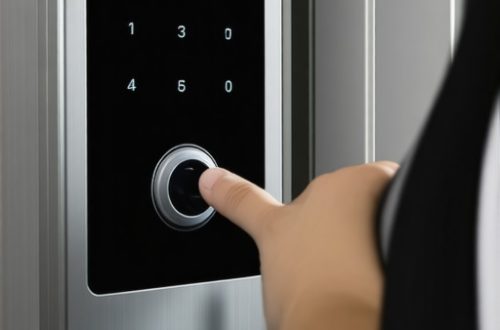
Traditional locks fail because of friction. Every time a key enters a cylinder, the brass pins and the key blade itself lose microscopic amounts of material. Over five years, that cumulative wear leads to ‘slop’ in the mechanism, making it easier to pick or bypass. Touchless entry systems for offices utilize electromagnetic locks or electric strikes that don’t rely on the physical friction of a key turning a plug. When you remove the mechanical key, you also solve the ‘Master Wafer’ problem. In a mastered building, internal wafers create multiple shear lines, which actually makes the lock easier to pick. By moving to a touchless credential, you regain absolute key control. You no longer have to worry about a terminated employee making a copy of a ‘Do Not Duplicate’ key at a hardware store kiosk. In 2026, digital credentials can be revoked in milliseconds, ensuring your perimeter remains uncompromised without the need for multi-family building lock rekeying every time a tenant moves out.
2. Advanced Audit Trails and Real-Time Oversight
A mechanical lock is a silent sentry; it doesn’t tell you who opened it or when. In a commercial setting, information is as valuable as the hardware itself. Modern touchless systems provide a forensic level of data. You can see exactly which credential accessed the server room at 2 AM. This isn’t just about catching a thief; it’s about liability and safety. If a fire occurs, you need to know exactly who is inside the building. Compare this to residential standards where best residential door locks for safety and durability are the primary concern; in a commercial space, the complexity of the ‘logic’ behind the entry is what defines true security. We are seeing more high-security locks for rental properties adopting these features because the data trail reduces insurance premiums and provides peace of mind that a simple deadbolt never could.
3. The Superiority of ANSI Grade 1 Hardware
Most ‘smart’ locks you see at big-box stores are Grade 3—essentially pot metal held together by hope. When we install a touchless system in 2026, we are looking at ANSI Grade 1 components. This means the electric strike or the motor-driven exit device is tested to withstand over a million cycles. The physics of a Grade 1 strike involves heavy-duty stainless steel and reinforced mounting plates that can resist thousands of pounds of force. When you upgrade, you aren’t just getting a ‘touchless’ feature; you are upgrading the physical skeleton of your entryway. It’s the difference between a screen door and a vault. Even for those looking into automotive key programming near me, the shift toward encrypted rolling codes is the same logic: we are replacing physical vulnerabilities with cryptographic strength.
“The strength of a system is defined by its weakest point, which is frequently the interface between the door and the frame.” – BHMA Manual
4. Integration with Modern Building Automation
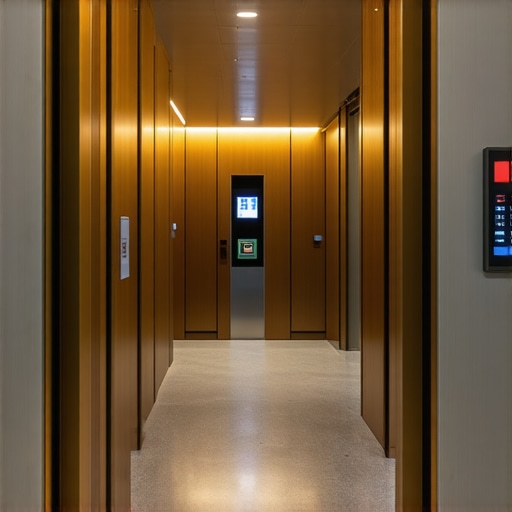
By 2026, an office entry shouldn’t be an island. Touchless systems integrate with your HVAC, lighting, and security cameras. When the first employee uses their key fob or mobile credential, the building ‘wakes up.’ This level of integration is why locksmith response times 2026 averages are becoming more about software troubleshooting than physical lock picking. We are technicians who understand how a signal from a card reader triggers a relay that moves a heavy-duty latch bolt. If you are still dealing with how to fix a sticking door lock mechanism every time the weather changes, you are wasting time. Modern touchless systems are designed to compensate for minor door misalignments, though I still tell my apprentices that a door must be hung true before any lock can do its job correctly. We even see this technology trickling down to niche markets, such as smart locks for pet doors, where precision and timing are everything.
5. Hygiene and Employee Wellness
Post-2020, the psychology of the workplace changed. Reducing high-touch surfaces isn’t just a health trend; it’s a standard of operation. A touchless office entry means your staff isn’t grabbing a handle that’s been touched by hundreds of others. From a locksmith’s perspective, this also means less oil and dirt from hands getting into the internal components of the lock. Human skin oils are surprisingly corrosive to certain finishes and internal springs over time. By eliminating the touch, you extend the life of the hardware finish and the internal electronic components. It’s a cleaner, more efficient way to manage a facility. Even if you are just looking for a key fob battery replacement guide for your personal vehicle, you recognize the convenience of not fumbling with a physical blade. In the office, that convenience translates to professional efficiency.
The Peace of Mind Verdict
Upgrading to a touchless system is a commitment to the long-term health of your business. It’s about moving away from the era of ‘zinc and pins’ and into the era of ‘encryption and actuators.’ Don’t let a ‘trunk-slammer’ convince you that a cheap keypad is enough. You need professional-grade hardware that respects the physics of security. Whether you are managing a single storefront or a sprawling complex, the move to touchless entry is the only way to stay ahead of the curve in 2026. Keep your locks lubricated—with real PTFE spray, not WD-40—and keep your credentials digital. Your security depends on it.