The Harsh Reality of Commercial Security
Walk through any office park and I can spot the vulnerabilities from fifty paces. Most business owners think a heavy door means safety. It doesn’t. Security isn’t about the weight of the steel; it’s about the physics of the locking mechanism and the integrity of the person who installed it. After 25 years at the bench, I’ve seen every shortcut in the book, from ‘trunk slammers’ using drywall screws to secure strike plates to ‘big box’ hardware that shears off under twenty pounds of lateral pressure.
A lady came into my shop recently, nearly in tears. She owned a small medical clinic and had been locked out after hours. She called a ‘dispatch’ service she found online. The guy showed up in an unmarked sedan, didn’t even look at the cylinder, and immediately took a high-speed drill to her expensive mortise lock. He charged her $900 for a five-minute job that destroyed a perfectly good piece of hardware, then replaced it with a zinc-alloy piece of junk that didn’t even meet fire code. That’s the state of the industry right now, and it’s why an audit of your office access control isn’t just a luxury for 2026—it’s a necessity for survival.
“Security is always a trade-off between convenience and protection.” – Industry Axiom
1. Hardening the Perimeter: The Move to ANSI Grade 1
When we talk about anti-pick locks for front doors 2026, we are looking at the internal tolerances of the cylinder. A standard residential lock has sloppy tolerances where the plug meets the shell. This allows a novice with a rake pick to find the shear line in seconds. For a commercial audit, I demand ANSI Grade 1 hardware. This means the lock has been tested to withstand 800,000 cycles and multiple hits from a sledgehammer. The pins in these locks are often made of hardened steel rather than soft brass, and they utilize ‘spool’ or ‘mushroom’ driver pins. These pins are designed to catch on the shear line when tension is applied, giving the picker a ‘false set’ that makes them think they’ve succeeded when they’re actually trapped. If your office is still running on Grade 3 hardware from a hardware store, you aren’t secured; you’re just suggesting people stay out.
2. Electronic Accountability: Access Logs for Smart Locks
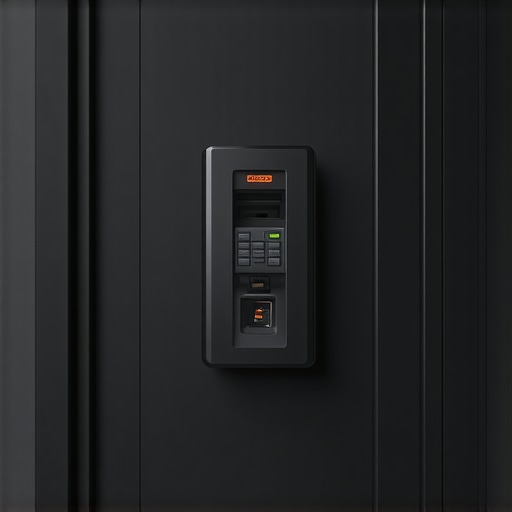
The biggest threat to most businesses isn’t a stranger with a crowbar; it’s a former employee with a copy of a key. This is where 2026 wireless lock protocols explained come into play. Modern systems are moving away from vulnerable 125kHz proximity cards—which can be cloned by a device hidden in a backpack—toward encrypted protocols like OSDP (Open Supervised Device Protocol). When you implement access logs for smart locks, you stop wondering who was in the server room at 11 PM on a Sunday. You have a timestamped, unalterable record. We are seeing a shift toward smart locks with geofencing features that can automatically trigger a lockdown if an authorized mobile credential leaves a specific radius, ensuring that the ‘last person out’ doesn’t have to remember to turn the deadbolt.
3. The Biometric Threshold: Beyond the Plastic Card
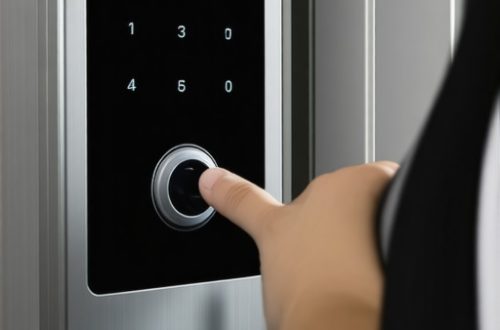
For high-security zones, I’m now recommending affordable biometric door hardware. In the past, fingerprint scanners were finicky and failed if the user had a papercut or sweaty hands. The 2026 generation of multispectral imaging sensors looks beneath the surface of the skin to the vascular pattern. This isn’t just ‘high-tech’ fluff; it’s about eliminating the ‘lost key’ liability. When a staff member leaves, you don’t need a locksmith to come out and change the pins; you simply revoke their biometric profile in the software. This is a massive part of budget home security upgrades 2026 as well, as the tech has finally dropped in price enough for small business owners to justify the cost over traditional mechanical rekeying.
4. Maintenance and Environmental Integrity
I tell my apprentices: ‘Metal moves, and wood breathes.’ In our region, the transition from humid summers to freezing winters wreaks havoc on door alignment. If your door doesn’t latch perfectly, your high-end electronic lock is useless. Lock maintenance tips for winter 2026 start with checking the strike plate alignment. If the latch is rubbing, the motor in your smart lock will burn out trying to force the bolt home. Never use WD-40 in a lock cylinder; it’s a solvent, not a lubricant, and it will eventually turn into a sticky goo that traps dust and kills the springs. Use a dry PTFE-based spray or high-grade graphite. Also, consider the metallurgy of your components. Zinc-based ‘pot metal’ hardware will become brittle and snap in extreme cold, whereas solid brass or stainless steel components maintain their structural integrity.
“The strength of a chain is only as great as its weakest link, and in security, the weakest link is often the interface between the hardware and the frame.” – Security Manual 101
5. The Strategic Choice: Rekeying vs Replacing Locks
One of the most common questions I get is about rekeying vs replacing locks which is better for a business. If the housing of your lock—the ‘chassis’—is high-quality (like a Sargent, Schlage L-Series, or Corbin Russwin), there is no reason to replace the whole unit. We perform a ‘rekey,’ which involves gutting the cylinder and replacing the bottom pins to match a new key geometry. However, if your current hardware is showing signs of ‘timing’ issues—where the bolt doesn’t retract fully or the key feels ‘mushy’—replacement is the only professional option. For businesses that need high-speed turnover, I install Interchangeable Cores (IC). This allows the manager to use a ‘control key’ to pull the entire cylinder out of the door and swap it with a new one in three seconds without a single screwdriver. This is the gold standard for key control.
The Safe Problem: When the Audit Fails
Sometimes the failure isn’t at the door; it’s at the safe. Many offices use ‘fire safes’ thinking they are ‘burglary safes.’ They aren’t. A fire safe is essentially two thin sheets of metal with a layer of wet sawdust or drywall in between. A thief with a screwdriver can peel it open like a sardine can. If you find yourself locked out of a real high-security container, you need emergency safe cracking services from a technician who understands the wheel pack and fence mechanics. We don’t just ‘drill it open’; we use forensic methods to preserve the container’s UL rating whenever possible. Security is a science of delay. No lock is ‘unpickable’ or ‘unbreakable,’ but a proper setup ensures that the time, noise, and tools required to bypass it are more than a criminal is willing to invest. Check your strike plates, update your protocols, and for heaven’s sake, stop buying your business security hardware from the same place you buy your garden hoses.