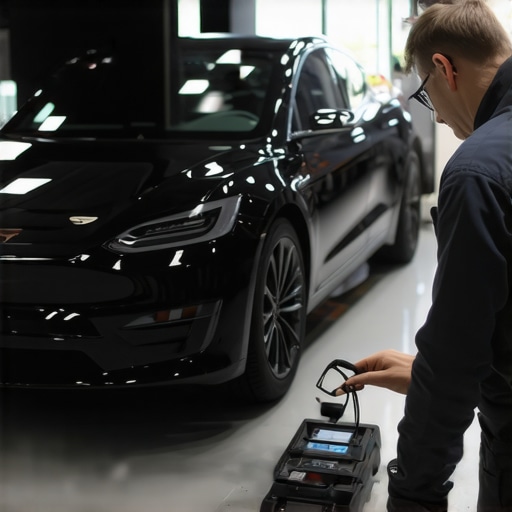
The 3 AM Hybrid Crisis: A Lesson in Modern Key Physics
I once had a customer call me at 3 AM because she was stranded in a parking garage with a 2026 Toyota Prius and a missing proximity fob. It was fifteen degrees outside, and the local dealership had already quoted her $750 for a tow and a replacement. She was panicking, but I told her to stay put. Most people think a car key is just a piece of plastic and metal. In reality, a 2026 hybrid key is a complex radio transceiver that engages in a high-speed cryptographic handshake with your car’s Engine Control Unit (ECU). When you lose that key, you aren’t just paying for hardware; you are paying for the access to the car’s digital nervous system.
“Security is always a trade-off between convenience and protection.” – Industry Axiom
The rise of high-tech hybrids has brought with it a wave of ‘trunk slammers’—unlicensed scammers who show up with a cheap OBD-II tablet and promise a quick fix. They usually end up frying the car’s immobilizer, turning a $300 problem into a $3,000 ECU replacement. If you want to save $200 or more on your next replacement, you need to understand the internal physics of these devices and how the industry actually operates. This isn’t about finding the cheapest price; it’s about avoiding the dealership tax and the scammer’s drill.
1. Source Your Own FCC-Matched Hardware
The biggest markup at a dealership isn’t the labor; it’s the plastic housing and the internal PCB (Printed Circuit Board). By 2026, the rolling code algorithms used in hybrid keys have become incredibly dense. To save money, you should source an aftermarket fob that matches the FCC ID of your original unit. Inside these fobs, a small induction coil receives a signal from the car’s antenna. This excites the transponder chip, which then broadcasts a 128-bit or 256-bit encrypted string. If the bits don’t line up with the rolling code stored in the car’s EEPROM, the hybrid system stays dead.
Instead of paying $400 for a ‘genuine’ fob, look for reputable locksmith suppliers. You need a key that uses the same frequency—typically 315MHz or 433.92MHz. Be warned: buying a cheap knock-off from a massive online marketplace often results in a ‘ghost chip’ that won’t take a program. I tell my apprentices that a key that doesn’t talk to the car is just an expensive paperweight. When you bring your own high-quality aftermarket fob to a brick-and-mortar locksmith, you skip the 300% retail markup the dealership charges for the exact same silicon.
2. Use a Lishi-Certified Locksmith Instead of the Dealer
Dealerships rarely ‘pick’ locks. If you’ve lost all keys, their first instinct is to pull the lock cylinder or even drill the door handle to find the key code. A master locksmith uses a Lishi tool. This is a precision instrument that slides into the wafer path of the emergency blade lock. It allows us to read the depth of each wafer—usually 8 to 10 positions—without taking the door apart. Once we have the ‘bittings’ (the physical cuts), we can cut an emergency blade on a laser-cutting machine to within 0.005 inches of factory specifications.
This is where the ‘Mechanism Zooming’ comes in. Inside that lock, there are tiny brass wafers under spring tension. If a scammer uses a ‘broken key extraction tool’ incorrectly or tries to brute-force the cylinder, they will bend the internal sidebars. A real pro reads the wafers, generates the code, and then uses a diagnostic programmer to introduce the new transponder to the car’s ECU via the OBD-II port. This bypasses the need for a $200 tow and the $150 ‘diagnostic fee’ that dealerships tack onto every bill. By 2026, the software for hybrid keyless entry systems has become more proprietary, but a shop with a dedicated bench and licensed software like Autel or Advanced Diagnostics can do the job for half the price.
“High-security cylinders must resist 15 minutes of forced entry and 10,000 cycles of operation.” – ANSI/BHMA A156.30-2020 Standard
3. The ‘Clone and Store’ Strategy: Avoiding the All-Keys-Lost Scenario
The most expensive phrase in locksmithing is ‘All Keys Lost.’ When the car has a working key, the ECU is ‘unlocked’ and ready to accept a partner. Cloning a 2026 hybrid key is a physics-based process where we sniff the data exchange between a working key and the ignition coil. We can then mirror that digital signature onto a secondary fob. This is significantly cheaper because it doesn’t require clearing the car’s memory or ‘flashing’ the immobilizer.
Think of it like residential security. If you have a deadbolt and you lose the key, a locksmith can often rekey it if they can get the cylinder out. But if you have smart locks with geofencing features and the electronic board fries, you’re looking at a total replacement. The same logic applies to hybrids. In 2026, many owners are moving toward residential keypad locks for their homes but forgetting that their car is even more vulnerable. Having a backup key stored in a secure fire-rated safe in your home is the single best way to save $200. It turns an emergency 3 AM service call into a routine 10-minute trip to the shop the next afternoon.
The Zinc vs. Brass Reality
Whether you are looking at locksmith for vintage car keys or modern fire-rated panic hardware options, material science matters. Many aftermarket keys use zinc or ‘pot metal’ for the emergency blade. These are brittle and snap off inside the cylinder. I always recommend using high-nickel brass or stainless steel. When a key breaks, it’s not just a nuisance; it’s a physical obstruction that requires broken key extraction tools 2026 reviews of the highest caliber to fix. Avoid the cheap stuff. A quality key should feel heavy and have a crisp ‘click’ when the blade is deployed. In my shop, we don’t just sell you a key; we sell you the assurance that the tolerances are tight enough to prevent wear on your ignition’s internal pins. Security is about the physical integrity of the metal just as much as the digital integrity of the chip.

![5 Modern Access Control Fixes for Co-Working Spaces [2026]](https://prolocksmithco.com/wp-content/uploads/2026/02/5-Modern-Access-Control-Fixes-for-Co-Working-Spaces-2026-75x75.jpeg)

![How to Cut 2026 EV Key Fob Replacement Costs by 50% [Data]](https://prolocksmithco.com/wp-content/uploads/2026/04/How-to-Cut-2026-EV-Key-Fob-Replacement-Costs-by-50-Data-500x330.jpeg)