The Physical Vulnerability of Digital Hospitality
Listen, I’ve spent twenty-five years at the bench, and if there’s one thing I’ve learned, it’s that most hotel security is a joke. By 2026, the data leaks won’t just come from your servers; they’ll come from the physical bypasses your cheap hardware allows. I teach my apprentices that if you have to force the key, you’ve already lost. If the core doesn’t turn like butter, you’ve ignored the physics of the cylinder. When you’re dealing with master key systems for hotels 2026, you aren’t just looking at metal; you’re looking at a logic gate made of brass and steel. Most ‘Trunk Slammers’ will tell you that a smart lock is a magic bullet. It’s not. A lock is a mechanical resistance to force, and if the mechanical side is weak, the software is irrelevant.
“Security is always a trade-off between convenience and protection.” – Industry Axiom
The Anatomy of the Master Wafer
To understand how we stop a 2026 data leak, we have to look at the internal physics of the lock. In a standard high-security euro cylinder lock, we’re looking at tolerances tighter than a watchmaker’s. We’re talking about nickel-silver pins machined to a ten-thousandth of an inch. When a master wafer is introduced into the stack, it creates a second shear line. This allows the guest key and the master key to both align the pins at the break point between the plug and the shell. However, cheap zinc hardware uses soft wafers that wear down, creating ‘ghost’ shear lines that can be exploited. Real security involves integrated home security lock bundles where the mechanical tolerances are so tight that physical shimming is impossible.
[image_placeholder]
1. The SFIC Encrypted Hybrid System
The first system involves Small Format Interchangeable Cores (SFIC) that integrate with 128-bit encrypted RFID. The core itself is a marvel of engineering. Unlike standard cylinders, the SFIC has a control sleeve. If a hacker tries to sniff the RFID data, they still can’t bypass the physical 7-pin stack. This is the same logic we use for emergency safe cracking services; we respect the barrier. The 2026 standard requires that the physical keyway be paracentric—meaning the warding crosses the centerline of the keyway multiple times. This makes traditional picking tools, even advanced Lishi picks, nearly useless because they can’t reach the pins without hitting the warding.
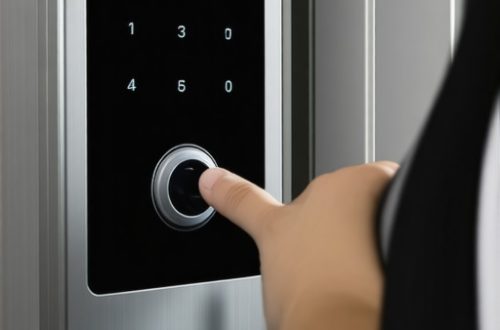
2. Affordable Biometric Door Hardware with Haptic Feedback
Many hotel managers ask about affordable biometric door hardware. The 2026 tech isn’t just about reading a fingerprint; it’s about sub-dermal vascular scanning. This prevents the ‘gummy finger’ bypasses we saw in the early 2010s. For the locksmith, the challenge is the strike plate. You can have the best biometric scanner in the world, but if your strike plate is held in by half-inch screws into a soft pine frame, a burglar is just going to kick the door in. I always install 3-inch hardened steel screws that anchor directly into the wall stud. It’s about the system, not the gadget.
3. Sustainable Eco-Friendly Locks for Homes and Hospitality
We are seeing a move toward sustainable eco-friendly locks for homes and hotels. But don’t let the ‘green’ label fool you. I’ve seen some ‘eco’ locks made of recycled pot metal that you could snap with a screwdriver. Real sustainable security means using high-grade recycled brass and stainless steel that lasts 50 years rather than 5. It’s about reducing the lifecycle cost. When we talk about how to prevent future house lockouts, we look at self-lubricating cylinders that don’t require petroleum-based graphite, which eventually gunk up the pins and lead to mechanical failure.
“The strength of a master key system is inversely proportional to the number of people who have the master key.” – Locksmith Manual v.4
4. Rolling Code Cloud-Integrated Systems
In 2026, the biggest threat is the ‘replay attack’ where a guest’s key card signal is copied. The new master key systems use rolling codes, similar to what you find in car key duplication costs 2026 discussions. Just as lost key replacement for hybrids 2026 requires a handshake between the fob and the ECU, these hotel locks require a handshake with a local secure server. If the server sees a duplicate ID, it kills the physical credential immediately. This stops the data leak at the door. I tell my clients: if your locksmith doesn’t understand rolling codes, they shouldn’t be touching your hotel.
5. Dual-Custody Interchangeable Cores
Finally, the most secure hotels are moving back to a ‘Dual-Custody’ model. This means the electronic side grants access to the handle, but a physical high-security euro cylinder lock must still be turned for the deadbolt. It’s a two-factor authentication for the physical world. This is especially vital for sensitive areas like the hotel’s main safe. If you ever need emergency safe cracking services, you’ll realize that the most expensive safes in the world still rely on these basic mechanical principles. We aren’t just selling locks; we’re selling a physics-based refusal to be moved.
The Peace of Mind Verdict
Whether you’re looking for smart locks for pet doors at home or a 500-room hotel master system, the rules are the same. Check the ANSI grade. If it isn’t Grade 1, it’s a toy. Look at the material. If it’s light, it’s garbage. And for heaven’s sake, stop using WD-40 on your locks. It’s a degreaser, not a lubricant. You’re washing away the factory grease and inviting rust. Use a dry PTFE spray or nothing at all. Real security is silent, heavy, and boring. That’s the way I like it, and that’s the only way you’ll stop the next data leak.