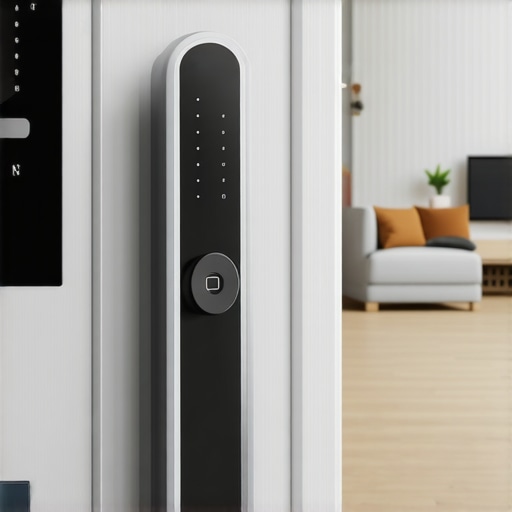
The 3 AM Reality Check: Why Your Smart Lock Might Fail You
I once had a customer call me at 3 AM because he was standing in a freezing downpour, shouting at his front door while his phone was dead in his pocket. He had installed one of those plastic ‘smart’ gadgets he bought from a big-box clearance rack, and the internal motor—a flimsy piece of nylon geared hardware—had stripped itself bare trying to throw the bolt against a misaligned strike plate. He thought he was living in the future; instead, he was living in a nightmare of pot-metal failure. As a locksmith with over 25 years at the bench, I see this daily. People trade physical security for a ‘seamless’ app experience, only to find that the physics of a door don’t care about your Wi-Fi signal.
“Security is always a trade-off between convenience and protection.” – Industry Axiom
In 2026, the market is flooded with ‘integrated home security lock bundles’ that promise the world but deliver a vulnerability. If you are looking to integrate with Alexa, you need to understand the internal physics of the lock—the pins, the springs, and the shear line—before you ever worry about the voice command. A lock is a mechanical device first and an electronic device second. If the mechanical foundation is junk, the smartest chip in the world won’t keep a kick-start from taking down your door.
The Psychology of the 2026 Burglar: Physics vs. Hacking
Most homeowners worry about high-tech hackers bypassing their encrypted signals. In reality, 95% of forced entries involve a size 12 boot or a 24-inch crowbar. The ‘2026 smart lock trends for homes’ show a move toward thinner profiles and more glass, which is a disaster for actual security. A real fortress upgrade starts with the strike plate. If your smart lock is attached to a standard 1-inch screw into a pine frame, it doesn’t matter how many encryption layers you have; the wood will splinter long before the software is breached. This is why lock shield installation for doors is becoming a mandatory standard for my high-security clients. You need a steel barrier that prevents a pry bar from reaching the bolt at its weakest point: the gap between the door and the jamb.
1. The Schlage Encode Plus (2026 Edition): The Mechanical Heavyweight
When we look at the internal components of the Schlage Encode Plus, we see why it remains the gold standard for Alexa-compatible hardware. Unlike the competition that uses zinc alloys, Schlage utilizes solid brass cylinders and a hardened steel bolt core. When you turn the thumbturn, you can feel the ‘detent’—the physical feedback of the pins seating into the plug. This lock is ANSI Grade 1, the highest rating given by the Builders Hardware Manufacturers Association (BHMA).
“Standardization in hardware testing ensures that life-safety and security requirements are met across all residential applications.” – ANSI/BHMA Standards Guide
Mechanism Zooming: Inside this lock, the stepper motor is geared to provide high torque. In 2026, doors are often heavy, triple-paned, or affected by ‘stack pressure’ in modern apartments. A weak motor will stall if the bolt hits the slightest resistance. The Encode Plus features a tapered bolt design. This means as the bolt enters the strike, the slight taper allows it to ‘find’ the hole even if the door has shifted due to humidity or house settling. This prevents the ‘jammed’ notification that plagues cheaper electronic gate lock systems.
2. The August Wi-Fi Smart Lock (The Retrofit King)
For those who live in apartments or have a high-quality existing deadbolt with specialized keyways (like a Mul-T-Lock or Medeco), the August remains the top choice. It replaces only the interior thumbturn, meaning the exterior ‘shear line’—the boundary between the plug and the shell where the pins must align to allow rotation—remains high-security. This is vital because many smart locks use low-quality cylinders that are susceptible to ‘bumping’ or basic ‘Lishi’ picking. By keeping your original high-security cylinder, you maintain physical integrity while gaining Alexa integration.
The 2026 model has improved the ‘clutch mechanism.’ In older versions, if you manually turned the lock while the motor was engaged, you could snap the plastic drive cam. The new version uses a magnetic clutch that disengages the motor instantly, preventing the ‘crunch’ sound that signals a $200 mistake. For those looking for 24/7 mobile locksmith for apartments, this is the lock I recommend because it doesn’t require redrilling the door, which keeps landlords happy and security tight.
3. Yale Assure Lock 2: The Business-Grade Residential Hybrid
Yale has pivoted toward business key management software logic for the home. The Assure Lock 2 is modular. You can swap a Zigbee module for a Matter-compatible one as standards evolve. From a locksmith’s perspective, the beauty of the Yale is the ‘Interchangeable Core’ (IC) potential. While most residential locks require a full teardown to rekey, Yale’s design allows for faster servicing. This is crucial when dealing with ’emergency locksmith growth trends 2026′ where speed of service is paramount.
We also look at the ‘fire-rated panic hardware options’ that Yale has integrated into their higher-end smart bundles. In the event of a fire, electronic locks can sometimes fail ‘closed’ if the wiring melts. Yale’s internal emergency override ensures that a physical turn of the handle always retracts the bolt from the inside, regardless of electronic state. This is a life-safety feature that most ‘trunk slammers’ installing cheap hardware completely ignore.
The Installation Process: Why the ‘Flush Fit’ Matters
When I install a smart lock, I don’t just screw it in and leave. I perform a ‘forensic check’ of the door. First, I check the ‘backset’—usually 2-3/8″ or 2-3/4″. If the hole is off by even 1/16th of an inch, the bolt will rub. Over 500 cycles, that rubbing will burn out the motor of your Alexa lock. I use 3-inch hardened steel screws for the strike plate, driving them past the door jamb and into the 2×4 framing of the house. This turns your door into a structural component rather than just a decorative slab.
Avoid the ‘auto lockout’ trap. Many smart locks have an ‘auto-lock’ feature that triggers after 30 seconds. If your door doesn’t close perfectly flush every time, that bolt will fire against the frame, eventually misaligning the internal timing gears. I always recommend a ‘re-rounding’ of the strike hole using a carbide burr to ensure the bolt has a ‘dead’ fit—meaning it sits in the hole without touching the metal edges. This reduces friction and extends battery life by 40%.
Maintaining Your 2026 Security Setup
Forget everything you heard about WD-40. That stuff is a solvent, not a lubricant; it attracts dust and turns into a sticky ‘gunk’ inside the pin chambers. If you want your smart lock to last, use a dry Teflon or graphite-based lubricant. Every six months, you should check the ‘broken key extraction tools 2026 reviews’ just to see how many people are snapping keys in their backup cylinders because they haven’t lubricated the pins. A smart lock with a seized manual override is just a high-tech brick.
In 2026, security is about layers. Use an Alexa-compatible lock, but back it up with a reinforced frame and a high-security cylinder. Don’t be the guy calling me at 3 AM because you trusted a $50 piece of zinc to protect your family. Real security involves trust in the metal, not just the code.


![How Access Logs for Smart Locks Catch Security Breaches [2026]](https://prolocksmithco.com/wp-content/uploads/2026/02/How-Access-Logs-for-Smart-Locks-Catch-Security-Breaches-2026-75x75.jpeg)
![5 Solar-Powered Smart Locks That Won't Die in Winter [2026]](https://prolocksmithco.com/wp-content/uploads/2026/04/5-Solar-Powered-Smart-Locks-That-Wont-Die-in-Winter-2026-1-500x330.jpeg)
![5 Solar-Powered Smart Locks That Won't Die in Winter [2026]](https://prolocksmithco.com/wp-content/uploads/2026/04/5-Solar-Powered-Smart-Locks-That-Wont-Die-in-Winter-2026-500x330.jpeg)
This article brings up some critical points about smart lock security that I think many homeowners overlook. I’ve seen firsthand how a sturdy mechanical lock combined with proper installation can make all the difference during a break-in attempt. What’s interesting is how the emphasis on reinforcing the strike plate and using long steel screws can actually prevent most forced entries, which constitute the bulk of burglaries. I completely agree with the latest recommendation of lubricating locks properly—every homemade fix I’ve tried with WD-40 failed quickly; dry PTFE spray works much better. I’m curious, do others here have experience with high-security cylinders like Medeco or Mul-T-Lock in conjunction with these smart locks? It seems that layering physical and digital security measures is the way forward. Also, have you found any particular brands or installation techniques especially effective in climate extremes or high-traffic areas? Would love to hear more from the community on best practices for maintaining both security and functionality over time.