
The 25-Year Bench View: Why Your Office Security is a Ticking Clock
I’ve spent over a quarter-century at the bench, surrounded by the smell of graphite and the sound of files hitting brass. Most people think a locksmith just makes keys; I see myself as a security physicist. When a commercial property manager walks into my shop, they usually want the cheapest fix for a door that won’t latch. But with the 2026 safety protocols looming, ‘cheap’ is the fastest way to a failed inspection and a massive liability lawsuit. We are moving into an era where local fire marshals aren’t just looking at whether a door opens; they are looking at the specific physics of the exit device.
The Victim of the Trunk Slammer: A Commercial Warning
A lady came into my shop crying last month because a scammer—what I call a ‘trunk slammer’—drilled her Grade 1 commercial panic bar and charged her six hundred dollars for a residential-grade deadbolt install on a fire door. She owns a small medical clinic, and the fire marshal had just walked through, threatening to shut her down until the door met code. The scammer had used a corded drill to chew through the active head of a Von Duprin device because he didn’t know how to bypass a simple cylinder malfunction. This is what happens when you search for a ‘locksmith near me’ and click the first $29 ad you see. You aren’t paying for a service; you’re paying for a catastrophe. High-security locks for rental properties and commercial spaces require more than a drill; they require an understanding of egress physics.
“Security is always a trade-off between convenience and protection.” – Industry Axiom
Rule 1: The 15-Pound Pressure Threshold (The Physics of Egress)
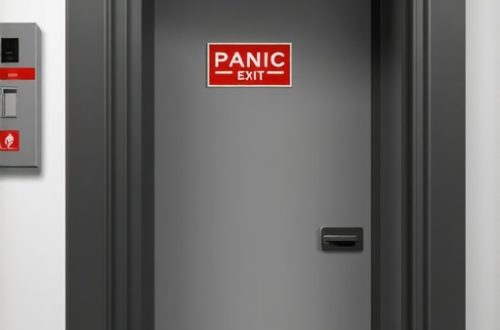
By 2026, the inspection standards for panic bar installation and repair for commercial buildings are tightening the screws on operating force. The rule is simple in theory but complex in the mechanism: it must take no more than 15 pounds of force to release the latch. I teach my apprentices to look at the ‘return spring’ inside the chassis. Over time, these springs lose their tension, or worse, they get gummed up with that ‘all-purpose’ grease that people spray in there like it’s a miracle cure. When the spring binds, the pressure required to move the actuator arm increases. If your inspector hooks a force gauge to that touchpad and it reads 16 pounds, you fail. This isn’t just about the spring; it’s about the strike plate alignment. If the door has sagged by even a sixteenth of an inch, the latch bolt is dragging against the strike. That friction adds to the operating force. We call this ‘latch binding,’ and it’s a silent killer of commercial compliance. We often see this in emergency lock changes after break-in attempts where the frame was slightly tweaked.
Rule 2: The Dogging Dilemma and Fire-Rated Integrity
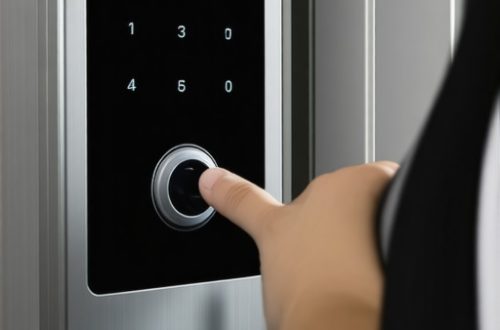
In 2026, the distinction between ‘Life Safety’ and ‘Fire Rating’ will be the primary focus of 2026 locksmith insurance claims guides. Many office managers use ‘dogging’—the act of locking the panic bar in the retracted position so the door can be pushed open—to save wear and tear on the mechanism. Here is the problem: you cannot dog a fire-rated door. If that door is meant to stop the spread of smoke and flame, it must latch every single time it closes. I’ve seen ‘handymen’ install hex-key dogging units on fire-rated doors, which is a massive violation. The internal physics of a fire-rated exit device include a ‘fusible link’—a piece of metal designed to melt at a specific temperature, ensuring the latch stays deadlocked even if the return springs fail in the heat. If you’ve replaced your old hardware with smart deadbolts with fingerprint scanners that don’t interface with the fire alarm system, you’re in for a world of hurt during your inspection.
“Life safety codes shall be primary in any building designed for public assembly.” – NFPA 101 Standard
Rule 3: 2026 Wireless Protocols and the ‘Fail-Safe’ vs. ‘Fail-Secure’ Trap
As we integrate 2026 wireless lock protocols, the inspection focus is shifting toward how these devices behave during a power loss or a system hack. If you are running voice-activated locks setup tutorials for your office, you better ensure they aren’t controlling your primary exit. The new standards require that electronic locks on egress doors must be ‘fail-safe,’ meaning they unlock automatically when the fire alarm is triggered or power is cut. I’ve seen too many ‘tech-savvy’ landlords install high-security locks for rental properties that are ‘fail-secure,’ meaning they stay locked when the power dies. That is a death trap. The 2026 protocols specifically look at the encryption of the wireless signal between the panic bar’s motor kit and the hub. If you’re using outdated 128-bit encryption instead of the newer mandated standards, you’re looking at a security breach waiting to happen. This is why you need a reliable locksmith who understands the difference between a gadget and a piece of life-safety hardware.
Diagnosing the ‘Crunch’: The Forensic Autopsy of a Failed Bar
When you press a panic bar and hear a ‘crunch’ or a grinding sound, that’s not ‘just age’—it’s material science failing you. Most cheap, imported exit devices use zinc-based alloys or ‘pot metal’ for the internal cams. These metals have low shear strength. Under the repeated stress of a high-traffic office, the cam starts to deform. Eventually, it cracks, and the shards fall into the main track, causing that grinding noise. A real Master Locksmith will suggest an upgrade to a device with investment-cast steel internals. It costs more upfront, but it won’t fail when the fire marshal is standing there with a clipboard. For those managing vintage properties, finding a locksmith for vintage car keys is hard, but finding one who can service a 1950s Von Duprin 66 is even harder. These old beauties were built with solid brass and bronze, but they require specific lubrication—not WD-40, which attracts dust and turns into a grinding paste, but a high-quality dry PTFE or graphite-based lubricant.
How to Choose a Reliable Locksmith Near Me in 2026
Don’t be fooled by a shiny van and a Google ad. A real locksmith has a shop you can visit. They have a bench covered in brass shavings. When you call for emergency residential lockout solutions or commercial repairs, ask them three things: First, ask if they carry a ‘force gauge.’ If they don’t know what that is, they aren’t a commercial tech. Second, ask if they have a local business license and insurance specifically for locksmithing—this is vital for your 2026 locksmith insurance claims guide. Third, ask if they provide a written warranty on both the part and the labor. Scammers will disappear the moment your check clears. A professional stands by the physics of their work. Whether you are dealing with emergency lock changes after a break-in or a routine upgrade to smart deadbolts with fingerprint scanners, the integrity of the person installing the lock is just as important as the lock itself.
The Final Word on 2026 Compliance
The transition to 2026 standards doesn’t have to be a nightmare if you stop treating your office hardware like a disposable commodity. Your exit doors are the most important part of your building’s security and safety profile. If you’re still using hardware that was installed in the 90s, the internal tolerances have likely shifted beyond the point of safe operation. The brass has worn down, the springs have fatigued, and the strike plates have moved. Get a professional to do a walkthrough before the inspector does. It’s a lot cheaper to fix a latch today than to pay a fine tomorrow. Security isn’t about the shiny finish on the outside; it’s about the precision of the pins, the strength of the springs, and the knowledge of the person who put it all together. Keep the ‘trunk slammers’ away from your doors, and your office will be ready for whatever the 2026 inspectors throw at you.

![5 Toughest Front Door Locks for 2026 Home Security [Tested]](https://prolocksmithco.com/wp-content/uploads/2026/03/5-Toughest-Front-Door-Locks-for-2026-Home-Security-Tested-75x75.jpeg)

This detailed overview really highlights how crucial it is to go beyond surface-level hardware when it comes to office security. I’ve seen too many companies cut corners, especially with older doors and outdated lock systems, only to face serious safety and compliance issues later on. The point about the reinforced importance of spring tension and proper strike plate alignment really resonated with me because I’ve personally learned the hard way that even small misalignments can cause compliance failures over time. It’s interesting to consider how the move toward wireless protocols adds another layer of complexity—security isn’t just mechanical anymore but also digital, which opens up new vulnerabilities if not managed correctly. Does anyone have experience with transitioning to these new wireless standards? What pitfalls should we be particularly aware of during such upgrades? It’s clear that investing in quality hardware and professional diagnostics pays off in the long run, preventing failures when they’re least expected.
This article really emphasizes the importance of proactive maintenance and understanding the underlying physics of office security hardware. I’ve encountered situations where a simple spring fatigue or slight misalignment led to failed inspections, which could have been avoided with regular checks. It’s a reminder that security systems aren’t just about the latest tech but also about basic mechanical integrity. I’d be interested to know how often office managers or building maintenance teams schedule these detailed inspections—are there recommended intervals to catch issues before they become compliance problems? Additionally, with the increasing reliance on wireless protocols, I wonder how many organizations are fully prepared to manage those vulnerabilities alongside traditional mechanical concerns. Does anyone here have firsthand experience upgrading to the 2026 standards and balancing the digital and mechanical aspects? It’s a complex puzzle, but with the right knowledge, it seems manageable to avoid costly fixes and stay compliant.