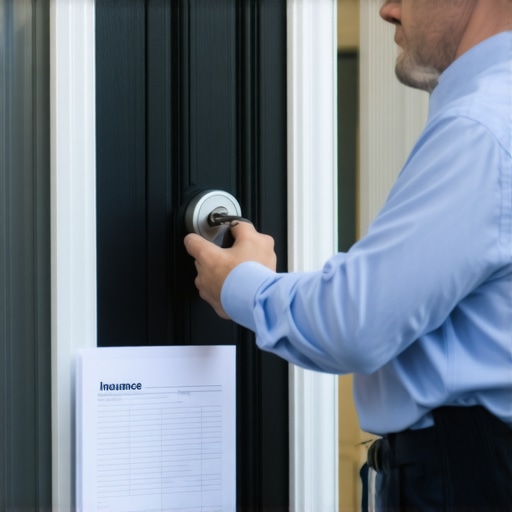
The Paperwork is the Real Key
I teach my apprentices that if you have to force the key, you’ve already lost. That lesson applies to more than just a stubborn brass cylinder; it applies to the way you handle your paperwork after a security breach. In 2026, the insurance industry has become more forensic than ever. You can’t just hand them a handwritten receipt from a ‘trunk-slammer’ and expect a payout. If you’ve suffered a burglary or a hardware failure, the difference between a check and a denial often comes down to the technical specificity of your locksmith’s report. Security isn’t just about metal; it’s about the verifiable physics of what happened to that metal.
“Security is always a trade-off between convenience and protection.” – Industry Axiom
1. Demand a Forensic Hardware Diagnosis
When you call for rekeying after burglary best practices, you aren’t just paying for new pins. You are paying for an expert to look at the ‘witness marks’ on your hardware. If a thief used a bump key, they left specific indentations on the shoulder of the pin chambers. If they used a drill, they likely bypassed the hardened steel anti-drill plates found in best residential door locks for safety and durability. Your insurance adjuster needs to know exactly how the entry was gained to determine if your hardware met the policy’s required ANSI standards. For instance, if you are using a cheap zinc-alloy deadbolt from a big-box store, the bolt can be snapped with a simple pipe wrench because zinc has a lower shear strength than solid brass or steel. When I write a report for a claim, I describe the deformation of the strike plate and the failure point of the latch bolt. I mention if the screws were the standard half-inch variety that pull out of the pine frame with a stiff breeze, or if they were the three-inch hardened steel screws that actually anchor into the jack stud. If you want a successful claim, your locksmith needs to zoom into the mechanics. They need to explain that the app-controlled door locks security risks were realized through a physical bypass of the manual override rather than a digital hack, if that was the case. Without this detail, the insurance company might claim the door was simply left open.
2. The Proof of ‘Reasonable Care’ with Restricted Keyways
Commercial clients often get their claims denied because they cannot prove who had access to the keys. This is where commercial restricted keyways become your best friend in the insurance game. A restricted keyway means the blanks are not available at the local hardware store; they are legally protected. If your business is burgled with no signs of forced entry, the adjuster will immediately look for an inside job. If you can produce a signature-verified key log showing that every restricted key is accounted for, you’ve just removed the ‘negligence’ card from the insurance company’s hand.
“Hardware must meet specific cycle tests and strength requirements to maintain Grade 1 certification.” – ANSI/BHMA A156.13
When we talk about panic bar installation and repair for commercial buildings, we are looking at complex mechanical assemblies. A panic bar has a dogging mechanism, a star wheel, and a series of springs that must maintain a specific tension. If that bar fails during an incident, the insurance company will check the maintenance logs. Did you have a certified tech perform an annual check? In 2026, locksmith response times 2026 averages show that while you can get a ‘pro’ to show up in 20 minutes, they usually don’t have the tools to properly service a Grade 1 exit device. They just want to sell you a new, inferior one. For a successful claim, you need documented proof that your high-traffic touchpoints—like touchless entry systems for offices—were maintained. These systems use infrared sensors and electric strikes. If the strike plate solenoid burns out and the door stays open, the insurer will call it a maintenance failure, not a covered loss, unless you have the paper trail to prove it was a sudden mechanical defect.
3. Digital Logs and Physical Evidence of Bypass
If you are looking at how to upgrade your home security on a budget, you might be tempted by the latest smart locks. However, you must understand the app-controlled door locks security risks. Most insurance policies in 2026 have specific clauses regarding ‘cyber-physical’ breaches. If someone hacks your Wi-Fi and opens your door, was it a ‘break-in’? To win this claim, you need the digital audit trail from the lock’s software matched with the physical state of the motor-driven bolt. Often, these motors are made of plastic gears that can be stripped if someone applies enough torque to the thumbturn from the outside. As a Master Locksmith, I look for the ‘shaving’ of those plastic gears. If I find those shavings inside the housing, I can certify that physical force was used to overcome the motor. This turns a ‘digital anomaly’ into a ‘physical burglary’ in the eyes of the adjuster. The same logic applies to keyless ignition repair services. If your vehicle is stolen without the key, the insurer wants to know if the ECU was bypassed or if a signal relay attack was used. If you ever find yourself needing to how to extract a broken key from a lock safely, save the pieces! That broken key is physical evidence of the torque applied to the cylinder. If the key broke because the cylinder was seized due to lack of lubrication (and you used WD-40 which gummed it up instead of a proper PTFE-based spray), the insurer might argue you neglected the hardware. Always keep the broken components; they tell the story of the physics involved better than any words can.
Final Word on Security Integrity
In the end, insurance companies are in the business of measuring risk and minimizing payouts. They look for the path of least resistance. If you present them with a technical, forensic-level breakdown of the lock’s internal failure—describing the pin stacks, the shear line, and the metallurgy of the bolt—you show them that you are a serious property owner who understands security as a physics problem. Don’t let a ‘trunk slammer’ drill your way out of a claim. Hire a professional who knows how to document the ‘why’ as much as the ‘how’.


![5 Urgent Signs You Need to Change Your Door Locks Immediately [2026]](https://prolocksmithco.com/wp-content/uploads/2026/03/5-Urgent-Signs-You-Need-to-Change-Your-Door-Locks-Immediately-2026-75x75.jpeg)
![Key Fob Battery Replacement: 3 Easy Steps to Fix Your Remote [2026]](https://prolocksmithco.com/wp-content/uploads/2026/04/Key-Fob-Battery-Replacement-3-Easy-Steps-to-Fix-Your-Remote-2026-500x330.jpeg)