The Apprentice Lesson: Why Force Is a Failure of Physics
I teach my apprentices that if you have to force the key, you’ve already lost the battle against the cylinder. When a student of mine first picks up a tension wrench, their instinct is to crank it like a lug nut on a rusted Ford. I have to stop them. A lock is a series of delicate balancing acts involving pin stacks, shear lines, and spring rates measured in fractions of an ounce. If you’re forcing it, you’re either binding the plug or marring the brass components inside. This same logic applies to the modern transition into touchless entry systems for offices. We are moving away from the physical friction of a blade key against a wafer and into the world of electromagnetic fields and encrypted handshakes. But don’t be fooled—the physics of the door remains the same. If your strike plate is misaligned or your door closer isn’t hitting the latch point, the most expensive biometric system in the world is just a shiny paperweight.
“Security is always a trade-off between convenience and protection.” – Industry Axiom
The Mechanics of Modern Access: Beyond the Brass Key
In 2026, the standard for securing a commercial site has shifted. We are no longer just looking at the best residential door locks for safety and durability for home offices; we are looking at enterprise-grade hardware that survives thousands of cycles a day. When I talk about touchless entry, I’m talking about the elimination of the contact point. This reduces the mechanical wear on the cylinder—the very thing that causes that gritty ‘crunch’ sound you hear right before a lock fails. Let’s look at the internal physics. A traditional deadbolt relies on a throw bolt extending into a strike. In a touchless setup, we often use an electric strike or an electromagnetic lock (maglock). A maglock works by creating a magnetic circuit between an electromagnet and an armature plate. When energized, the magnetic flux creates a holding force often rated at 1,200 pounds. If your installer doesn’t understand the duty cycle of that solenoid, the coil will burn out in six months. That is the difference between a pro and a trunk-slammer.
1. Encrypted Mobile Credential Systems (Bluetooth Low Energy)
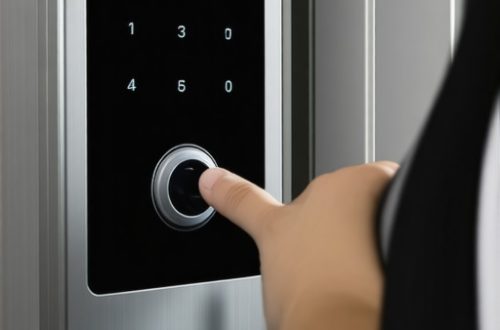
The first system dominating the 2026 landscape is the Bluetooth-based mobile credential. Instead of a lost wallet key replacement fast search, users carry their credentials on a smartphone. The reader at the door sends out a continuous ‘heartbeat’ signal. When your phone, containing an encrypted token, enters the range, the handshake occurs. I prefer these because they use 128-bit AES encryption. Older 125kHz proximity cards were a joke; I could clone one in the parking lot with a $20 device from an online marketplace. These modern systems ensure that the credential cannot be intercepted or replayed. However, the hardware behind the wall must be solid. I always recommend door reinforcement for security alongside these readers, specifically heavy-duty electric strikes that can handle the preload of a pressurized HVAC system pushing against the door.
2. Facial Recognition with Infrared Depth Sensing
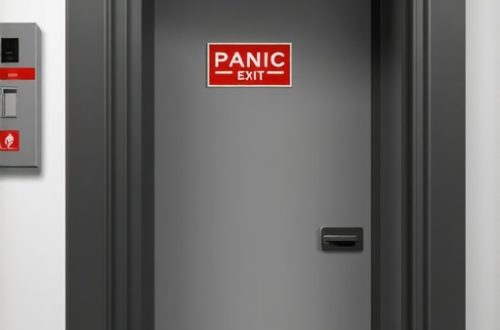
Gone are the days of grainy cameras that could be fooled by a high-resolution photo. The 2026 biometric locks installation guide 2026 focus is on LiDAR and infrared depth sensing. These systems map the 3D geometry of the face. As a technician, I look at the integration of the ‘request-to-exit’ (REX) sensor. A touchless system isn’t just about getting in; it’s about getting out. If the PIR sensor doesn’t catch the heat signature of a person moving toward the door, the maglock stays energized, and you have a safety hazard. We integrate these with the fire alarm panel so that a power cut or an alarm trigger drops the circuit immediately. This is technical security, not just a gadget from a big-box store. It requires a deep understanding of low-voltage wiring and fail-safe versus fail-secure configurations.
“The strength of a system is determined by its weakest link, often the strike plate or the credential encryption.” – Security Manual 101
3. Wave-to-Open Infrared Sensors
For high-traffic interior doors, the wave-to-open sensor is the workhorse. This isn’t just a convenience; it’s a hygiene necessity. Mechanically, these are simple but require precision. They trigger a relay that pulls the latch back. I often see these paired with ADA-compliant door operators. If you are doing a lock shield installation for doors, you have to ensure the shield doesn’t interfere with the sensor’s field of vision. I’ve seen amateurs mount these too close to metallic surfaces, causing ‘ghosting’ where the sensor triggers itself. You need a clean, dry contact closure to keep the system reliable. If your office is in a high-humidity area, those sensor boards need conformal coating, or the moisture will bridge the traces and cause a permanent ‘open’ state.
4. Cloud-Based Intercoms with QR Code Management
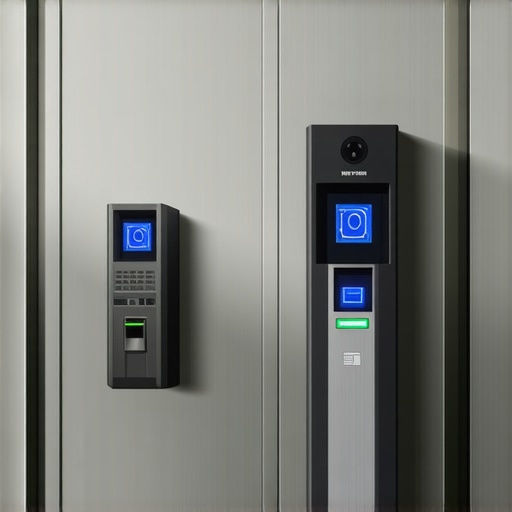
Managing visitors used to be a nightmare of physical keys and logbooks. Now, we use cloud-based intercoms that issue temporary QR codes. The visitor waves their phone in front of the camera, and the door releases. As a locksmith, I worry about the cost of hiring a professional locksmith in 2026 being inflated by guys who don’t understand networking. You need someone who can punch down Cat6 and configure a static IP, but also someone who knows how to drill a vertical wire run through a concrete-filled door frame. If the network goes down, you need a mechanical override—usually a high-security interchangeable core (IC) cylinder. Never rely 100% on the cloud; always have a physical ‘plan B’ that isn’t a cheap zinc lock from a hardware store.
5. Multi-Factor Biometric + NFC Hybrid Systems
The gold standard for 2026 is the hybrid system. It requires two forms of touchless identification. Perhaps a hand-wave (NFC) followed by a retina scan. This is what I install for locksmith services for vacation homes that are actually high-end corporate retreats. The security logic here is the ‘Air-Gap’ philosophy. By requiring two separate frequencies or technologies, you eliminate the possibility of a single-point failure. During installation, I focus on the mounting of the reader. It must be flush. If there is a gap, a pry bar can get behind it. I use security Torx screws and often back-fill the mounting holes with epoxy. We aren’t just installing electronics; we are hardening a perimeter.
The Reality of Maintenance and Reliability
I get calls all the time for key extraction for deadbolts because someone tried to use a screwdriver to force a broken electronic lock. The ‘Forensic Autopsy’ of these failures usually reveals poor material science. Cheap pot-metal components in the latch assembly shear off under the stress of an electric motor. When we install these 5 systems, we use Grade 1 hardware only. This means the latch can survive one million cycles. We also talk about car remote programming tutorials—people think all wireless tech is the same, but the rolling codes in a vehicle are different from the encrypted tokens in an office. You need a specialist who understands the difference between a 433MHz signal and a 13.56MHz NFC signal. Don’t let a ‘trunk-slammer’ tell you that a residential smart lock is enough for your commercial site. It’s not. It’s zinc, and it will snap when a disgruntled ex-employee gives the door a solid kick.
The Peace of Mind Verdict
Security is a feeling, but safety is a fact of physics. When you upgrade to a touchless system, you are removing the friction of the daily grind and replacing it with a managed, auditable trail of access. Whether you’re dealing with a lost wallet key replacement fast or a full-scale office build-out, the goal is the same: controlled access. Keep your sensors clean, your strikes aligned, and your firmware updated. And for the love of all that is holy, use a real lubricant like Tri-Flow on the mechanical parts, never WD-40, which just gums up the works with dust and debris. Real security involves trust, but it’s built on 1,200 pounds of holding force and 128-bit encryption.


![Save $100 on Automotive Key Programming Near Me [2026 Tips]](https://prolocksmithco.com/wp-content/uploads/2026/03/Save-100-on-Automotive-Key-Programming-Near-Me-2026-Tips-75x75.jpeg)