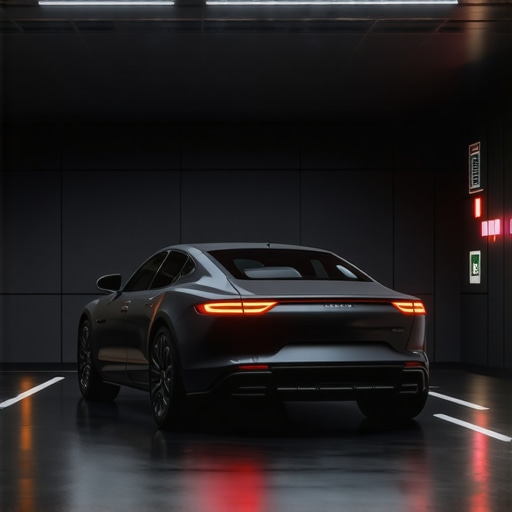
The Ghost in the Door Handle: Why Your Biometric Entry is Dying
You approach your vehicle, thumb ready, expecting the familiar chirp of a disarmed perimeter. Instead, you get nothing. The sensor is cold, dark, and unresponsive. As a locksmith with over 25 years at the bench, I see this daily. Modern automotive security has moved from physical brass bits to complex capacitive and ultrasonic sensors, and frankly, most of it is built to a price point that doesn’t account for real-world grit. When your biometric entry fails, it is rarely a ‘glitch’—it is a physics failure. I teach my apprentices that if you have to force the key, or in this case, mash your thumb until it turns white, you’ve already lost the battle against the hardware. Understanding the internal physics of these systems is the only way to stay mobile in 2026.
“Security is always a trade-off between convenience and protection.” – Industry Axiom
The Forensic Autopsy of a Failed Sensor
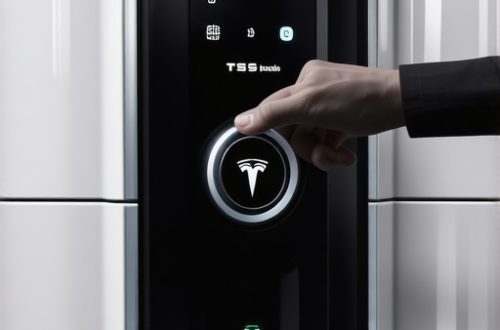
Why do these high-tech handles quit? It starts at the micron level. A capacitive sensor works by measuring the change in electrical capacitance when your finger—a conductor—touches the glass. Over time, micro-abrasions from road salt and grit create ‘valleys’ in the sensor surface. These valleys trap moisture, creating a permanent conductive bridge that confuses the ECU (Engine Control Unit). Inside the door panel, the wiring harness is often a victim of vibration. We see 26-gauge wire that is barely thicker than a human hair, vibrating against the window track until the insulation rubs raw. This creates a parasitic drain or a ‘noisy’ signal that the car’s BCM (Body Control Module) rejects as a hacking attempt. For Tesla models, this often manifests as a total lockout where the Bluetooth handshake and the biometric backup both fail simultaneously because the 12V auxiliary system has dropped below the critical threshold required to wake the sensor.
Fix 1: The ‘Lishi’ Approach to Mechanical Redundancy
The first secure fix isn’t digital; it’s physical. Most drivers don’t even know they have a physical keyway. If your biometric entry fails, look for the small notch on the underside of the handle. Pop that plastic cap—which is usually held on by a cheap zinc clip—and you’ll find a high-security laser-cut cylinder. My advice? Have a professional locksmith cut a ‘wallet key’ or a ‘blank’ that bypasses the electronics. We use Lishi picking tools to decode these cylinders without even taking the door apart. This ensures that even if the ECU is completely fried by a power surge at an EV charging station, you aren’t stranded. EV charging station lock security is becoming a major issue in 2026, as surges can travel through the charging port and scramble the sensitive CMOS chips in your door handles. A physical bypass is the only 100% fail-safe.
Fix 2: Ultrasonic Upgrades and Shielding
If your factory sensor is dead, don’t replace it with the same OEM garbage. The market is now seeing a surge in ‘Hardened Ultrasonic Sensors.’ Unlike capacitive sensors, these use sound waves to map the ridges of your fingerprint. They can see through dirt, grease, and even thin gloves. When we perform these upgrades, we also install electromagnetic interference (EMI) shielding around the sensor housing. This prevents ‘relay attacks’ where a thief uses a booster to trick your car into thinking your phone or biometric signal is nearby. While we often discuss this in the context of commercial master key system advantages for businesses to maintain tight key control, the same logic applies to your car: you need to control the ‘signal’ as tightly as a physical master wafer controls a lock cylinder.
Fix 3: Secondary Authentication Pads
Sometimes the best fix is a secondary input. Much like how residential keypad locks reviews often highlight the reliability of a physical button over a finicky app, installing a hidden, weather-rated keypad in the door pillar can save your life. These pads are hardwired into the door actuator, bypassing the biometric BCM logic entirely. For those looking for how to upgrade your home security on a budget, this ‘layered’ approach is the gold standard. We use the same logic for electronic locks for Airbnb properties—always have a tactile backup. For 2026, look for pads that are panic bar code compliance 2026 ready, meaning they allow for immediate egress from the inside regardless of the exterior lock state.
“True security does not reside in the complexity of the mechanism, but in the reliability of its fail-states.” – Locksmith’s Manual Vol. 4
The Myth of the Quick Fix
Don’t let a ‘trunk slammer’ tell you they can fix your biometric lockout by spraying WD-40 into the handle. That’s a death sentence for electronics. WD-40 attracts dust and gums up the very sensors you’re trying to save. If you’re on a budget home security upgrade path, stick to dedicated electronic contact cleaners or high-grade silicone lubricants specifically designed for tight-tolerance automotive parts. Whether you are following neighborhood watch lock recommendations for your driveway or trying to secure your Tesla, the physics remain the same: clean contacts, solid grounds, and mechanical backups. Don’t let 2026 tech leave you out in the cold.


![How to Cut 2026 EV Key Fob Replacement Costs by 50% [Data]](https://prolocksmithco.com/wp-content/uploads/2026/04/How-to-Cut-2026-EV-Key-Fob-Replacement-Costs-by-50-Data-500x330.jpeg)