
The Psychology of the Low-Resistance Entry
Most people think a burglar is a master of the dark arts, someone with a set of picks and the patience of a saint. In reality, your average neighborhood thief is a lazy opportunist looking for a mechanical failure they can exploit in under ten seconds. They are not looking for a challenge; they are looking for a gap. If your door has a visible latch, you have a gap. This is where the physics of security comes into play. A deadbolt is a solid piece of metal, but if I can get a pry bar or even a stout screwdriver between the door and the jamb, I can exert thousands of pounds of pressure against the wood or the cheap zinc strike plate. That is why door reinforcement for security is the first thing I look at when I do a residential survey. Most homeowners spend hundreds on fancy cameras that just record the thief’s hoodie, while ignoring a twenty-dollar piece of steel that would have kept them out in the first place.
The Victim of the Trunk Slammer: A Lesson in Trust
A lady came into my shop crying because a scammer drilled her lock and charged her six hundred dollars for a twenty-dollar deadbolt. She had been locked out and called the first number on a search engine. The guy showed up in an unmarked car, no license, no uniform, and immediately pulled out a drill. He did not even try to pick it or use a Lishi tool. He destroyed a perfectly good high-security cylinder, then told her the door was ‘special’ and needed a custom replacement. When I looked at the mess he left, I saw he had installed a Grade 3 big-box special with a latch that was already sticking. I had to explain to her that for a fraction of what she paid that thief, she could have had a metal lock shield and a properly fitted strike plate that would have made the door nearly impenetrable to the tools that guy was using. It breaks my heart to see people get taken advantage of when the solution is simple physics and honest hardware.
“Security is always a trade-off between convenience and protection.” – Industry Axiom
The Anatomy of Vulnerability: Why Your Latch is Failing
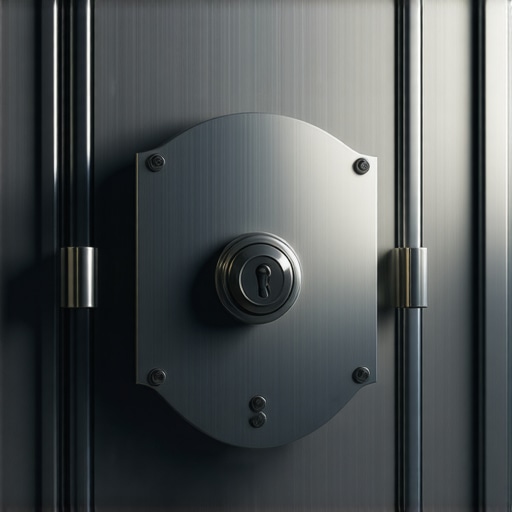
When we talk about mechanism zooming, we have to look at the interaction between the latch bolt and the strike plate. In a standard setup, there is a small gap called the ‘reveal’ between the door edge and the frame. This reveal is necessary so the door can swing without binding, but it is also the primary entry point for a ‘loiding’ attack. If you are using a standard key-in-knob lock or a cheap deadbolt, that latch is often the only thing holding the door shut. A metal lock shield, also known as a latch guard, is a piece of 14-gauge or 12-gauge cold-rolled steel that bolts onto the door and covers that gap. It creates a physical barrier that prevents anyone from inserting a tool to retract the latch or pry the door away from the frame. For businesses, commercial master key system advantages for businesses often include the requirement for these shields because they know that employee turnover and physical security go hand-in-hand. You can have the best master key system in the world, but if the door can be jimmied with a crowbar, the keys are irrelevant.
Budget Home Security Upgrades 2026: The Year of Physical Reinforcement
Looking ahead at budget home security upgrades 2026, we see a shift back to physical hardening. While everyone is distracted by integrated smart lock hubs 2026, the real pros are looking at the frame. If you are installing a new lock, you need to consider the material science. Most cheap hardware is made of ‘pot metal’ or zinc alloys that have a low shear strength. A quality lock shield is made of stainless steel or heavy-duty brass-plated steel. When you bolt this shield through the door, you are not just adding a plate; you are tying the exterior face of the door to the internal mechanism. This creates a sandwich effect that makes it much harder to ‘tulip’ the lock or pull the cylinder out. This is especially critical when performing rekeying after burglary best practices. If you have already been hit, the thief knows your door is weak. Adding a shield is the loudest way to tell them to move on to the next house.
The Physics of the Strike Plate and Deadbolt
A deadbolt is only as strong as the wood it is seated in. Most strike plates are held in by half-inch screws that only grab the thin decorative trim. In my shop, I tell people to throw those screws in the trash. You need three-inch hardened steel screws that reach all the way into the wall stud. But even then, the wood can split. A metal lock shield that wraps around the edge of the door provides lateral stability. It prevents the door from bowing under pressure. When we look at weatherproof outdoor locks reviews, we often find that the locks themselves are fine, but the doors they are attached to fail because of moisture and wood rot. A metal shield protects the wood from the elements and provides a solid mounting surface that will not degrade over time.
“A lock is only as strong as the frame it is mounted in.” – The Master Locksmith Manual
Technical Deep Dive: Installing for a Flush Fit
Installation is where most DIYers fail. To get a ‘flush fit,’ you have to account for the thickness of the metal. If you just slap a shield on, the door might not close properly or the latch might not sit deep enough in the strike. You need to ensure the shield is aligned so that it does not interfere with the weatherstripping. In areas with high humidity, wood doors swell, and a poorly installed shield will cause the lock to bind. I always recommend using one-way security screws for the shield. These can be driven in with a standard driver but cannot be backed out without a specialized tool. This prevents a patient burglar from simply unscrewing your security measures. This level of detail is what separates a professional install from a ‘trunk slammer’ special.
2026 Trends: From High-Tech to Heavy Metal
The 2026 trends in automotive security are focused on encryption and rolling codes, but for residential and commercial spaces, the trend is ‘The Fortress Effect.’ We are seeing more touchless entry systems for offices that incorporate heavy-duty magnetic locks and latch protectors. Even solar-powered smart locks 2026 are being designed with integrated shielding. Why? Because hackers are rare, but people with pry bars are common. If you are looking at your office security, don’t just think about the software. Think about the physical gap between the door and the frame. If I can see your bolt, I can cut your bolt. A metal shield hides the target. You cannot hit what you cannot see.
Final Verdict: The $20 Investment
Stop overcomplicating your security. You don’t need a thousand-dollar camera system if your front door can be opened with a flat-head screwdriver. Go to a real locksmith shop, buy a heavy-duty steel latch guard, and spend the afternoon installing it with long screws. It is the cheapest, most effective way to harden your perimeter. Security is about layers, and this is the layer that most people forget. Don’t be the person calling me at 3 AM because your door was jimmied. Be the person who sees the pry marks on their new metal shield and realizes the thief gave up and left empty-handed.
Comments are closed.