
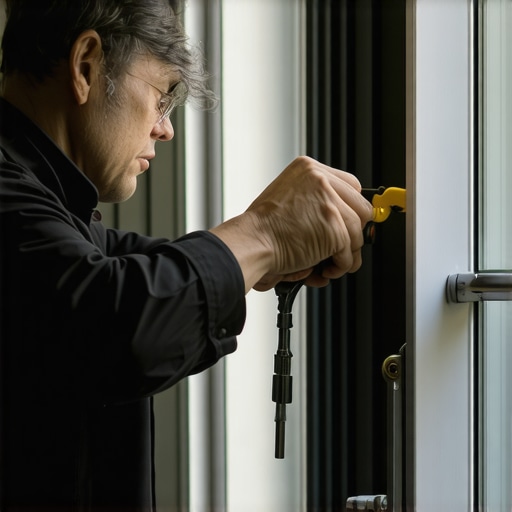
The Price of Security vs. The Cost of a Scammer
A lady came into my shop crying because a scammer drilled her lock and charged her six hundred dollars for a ten dollar deadbolt. It is a story I hear at least once a week in this business. She had searched for a locksmith online, saw a twenty-nine dollar service call, and thought she was getting a deal. Instead, she got a trunk-slammer with a cordless drill and no soul. I have spent twenty-five years behind a workbench, and if there is one thing I have learned, it is that you cannot cheat the physics of a lock or the economics of a legitimate business. When you ask what a locksmith actually costs, you are not just paying for a person to turn a wrench; you are paying for the thousands of dollars in specialized diagnostic equipment, the years of apprenticeship, and the insurance that protects your property when things go sideways.
“Security is always a trade-off between convenience and protection.” – Industry Axiom
The Anatomy of the Twenty-Nine Dollar Scam
Let us break down the math of a scammer. No legitimate professional can operate a vehicle, pay for fuel, carry liability insurance, and maintain a brick-and-mortar storefront for a twenty-nine dollar service fee. That number is a hook. Once they arrive, they will look at your door and tell you it is a high-security lock that cannot be picked. They will claim they must drill it out. This is a lie ninety-nine percent of the time. A real pro understands the internal mechanics of the cylinder. We use Lishi tools or traditional picks to manipulate the pin stacks. We feel the binding order. We identify the difference between a standard driver pin and a spool or serrated pin that is designed to catch the shear line and trick an amateur. A scammer does not have the patience for the physics of the shear line; they just want to destroy your hardware and sell you a piece of zinc-alloy garbage at a ten-thousand percent markup.
Why Automotive Key Programming Near Me Costs More Than a Hardware Store
When you are looking for lost wallet key replacement fast, you might be tempted by the cheapest option, but automotive security is a high-tech battlefield. Modern vehicles do not just use a mechanical cut; they utilize transponder chips and rolling code algorithms. I have invested over thirty thousand dollars in programming computers that can communicate with an ECU to perform automotive key programming near me. When I program a key, I am accessing the vehicle’s immobilizer system to introduce a new digital handshake. If this is done incorrectly by a hack using pirated software, you risk bricking the entire car computer. That is a three-thousand dollar mistake to save fifty bucks. The cost reflects the risk and the specialized knowledge of EEPROM and frequency modulation. We are talking about micro-electronics encased in a plastic shell that must survive being dropped on concrete and submerged in coffee. High-quality transponder keys use genuine chips, not the generic clones that lose their memory after three months.
The Physics of Residential Security and ANSI Grades
If you are looking for best residential door locks for safety and durability, you need to stop buying hardware at big-box retailers. Most of that stuff is made of pot metal and thin stamped steel. In my shop, I push for door reinforcement for security and ANSI Grade 1 hardware. The American National Standards Institute has clear benchmarks. A Grade 3 lock, which is what most people have, is only tested to withstand two hits from a hammer. A Grade 1 deadbolt is a different beast entirely. It features a solid brass cylinder, a hardened steel bolt that resists sawing, and anti-drill pins placed strategically to break a drill bit before it can reach the shear line. When we talk about anti-pick locks for front doors 2026, we are looking at complex keyways with sidebars and telescopic pins. These mechanisms require a level of precision that a scammer simply cannot bypass. A professional installation also includes a heavy-duty strike plate with three-inch screws that anchor into the wall stud, not just the flimsy door frame. That is the difference between a door that stays shut and a door that flies open with one well-placed kick.
“The goal of physical security is to delay an intruder long enough that the risk of detection becomes too high to continue.” – Security Manual 101
Commercial Access Control and the Future of the Industry
For my business clients, the conversation shifts from physical keys to electronic access control systems for small businesses. We are seeing a massive trend toward commercial smart access control 2026 trends where the smartphone is the credential. However, the hardware still matters. You can have the fanciest software in the world, but if the electronic gate lock systems are poorly installed, the logic fails. We look at affordable biometric door hardware that uses capacitive sensors rather than optical ones, because optical sensors can be tricked by a high-resolution photo. A professional locksmith understands the wiring, the power draw of a magnetic lock, and the fire code requirements for egress. You do not want a scammer wiring your fire exit. Key extraction for deadbolts is another common call where technical skill saves money. If a key breaks, an amateur will try to dig it out with a screwdriver, ruining the wafers. A pro uses a spiral extractor and a steady hand to pull the blade without damaging the plug. This is why a service call from a real shop might be eighty to one hundred dollars before the work even starts. You are paying for a person who knows how to solve the problem without creating three new ones.
How to Vet Your Tech Before They Touch Your Door
Before you let anyone touch your security, ask to see their pocket card. A legitimate tech will have a state-issued license if your state requires it, or at least a business license and a clear ID. Look at their vehicle. Is it a professional van with a permanent wrap and a workbench inside, or is it a beat-up sedan with a bag of tools in the trunk? A real locksmith has a bench in their van because we are mobile workshops. We carry pinning kits with thousands of different bottom pins, master wafers, and springs. We carry specialized lubricants like PTFE-based sprays because we know that graphite actually gums up a lock over time. If you want a lock that lasts twenty years, you pay for the expertise of someone who treats your home like a fortress, not a paycheck. Security is an investment in your peace of mind, and the truth is that quality costs exactly what it is worth. High-quality hardware and skilled labor are the only things standing between you and a very bad day.
Comments are closed.