
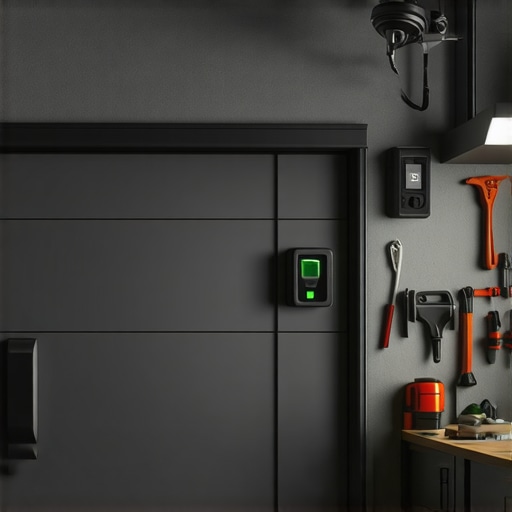
Converting Your Garage to a High-Security Zone on a Budget
The garage is the soft underbelly of the modern home. Most homeowners spend thousands on fancy front doors and high-tech cameras, then leave their garage secured by nothing more than a piece of thin rolled steel and a plastic handle. As a locksmith with over two decades of grease on my hands, I see the aftermath of this mistake every week. Burglars do not need to be master pick-artists; they just need a coat hanger and six seconds to ‘fish’ your emergency release cord. If you are serious about security, you need to stop thinking about your garage as a storage shed and start treating it like a vault. This guide will walk you through the physics of fortification without draining your bank account.
The Scam Victim: A Lesson in Vulnerability
A lady came into my shop crying because a scammer drilled her lock and charged her nearly five hundred dollars for a fifteen-dollar deadbolt. She had been locked out of her side garage door. Instead of using a Lishi tool or a simple bypass technique, the ‘trunk-slammer’ she found on a sponsored search result went straight for the drill. He ruined the door, installed a low-grade zinc lock from a big-box store, and vanished. This is why you must understand the hardware you are buying. Security is not just about having a lock; it is about having the right lock installed by someone who knows why it works. If your locksmith’s first tool is a power drill, send them packing before they destroy your door and your wallet.
“Security is always a trade-off between convenience and protection.” – Industry Axiom
The Physics of the Deadbolt: Mechanism Zooming
When you look at a deadbolt, you see a thumb-turn or a keyhole. I see the shear line, the driver pins, and the plug tolerances. Most residential locks are Grade 3, which means they are made of ‘pot metal’ or zinc alloys that have a low melting point and even lower shear strength. A real high-security deadbolt needs to be ANSI Grade 1. Let us zoom into the cylinder. Inside, there are typically five or six chambers holding a stack of pins: the key pin (which touches your key) and the driver pin (which blocks the plug from turning). In a cheap lock, these pins are simple cylinders. In a high-security setup, we use spool pins or serrated pins. These are ‘security pins’ designed to catch on the shear line when someone tries to pick or rake the lock. The ‘mushy’ feeling you get when a lock is failing is often the result of spring fatigue or brass shavings clogging these chambers. If you notice signs you need to change your door locks immediately, such as the key sticking or the plug feeling ‘crunchy,’ it means the mechanical tolerances have drifted. A lock that is jamming in 2026 will likely be the result of debris buildup or metal-on-metal wear that has finally reached its breaking point.
Reinforcing the Pedestrian Door
The side door of the garage is a favorite entry point because it is often hidden from the street. You need to upgrade this beyond a simple hardware-store handle. Start with the strike plate. The little metal plate that comes with your lock is held in by half-inch screws that only grip the decorative wood trim. One solid kick and the whole thing splinters. You need a heavy-duty strike plate secured with three-inch hardened steel screws that bite directly into the wall studs. This moves the force of a kick from the flimsy door frame to the entire structure of the house. For those with high-value items like a vintage car, you might even consider commercial restricted keyways. These systems, like Schlage Primus or Medeco, prevent anyone from taking your key to a kiosk and making a copy. Key control is the foundation of real security. If you have a locksmith for vintage car keys nearby, ask them about the difference between a standard blank and a patented keyway; the price jump is worth the peace of mind.
The Garage Door Itself: Bypassing the Bypass
The overhead door is notoriously easy to open. The ‘six-second break-in’ involves a thief pushing the top of the door in, sliding a coat hanger through the gap, and pulling the emergency release cord. To fix this on a budget, simply use a heavy-duty zip tie to lock the release lever in place. It will still break if you pull it hard in a real emergency, but it stops the ‘fishing’ technique cold. If you want something more permanent, you can install a garage door shield. For those who lose their clickers often, knowing what to do when locked out of your car or garage is vital. Do not reach for a brick; reach for a professional. If you are looking for a transponder key programming guide because your car is stuck inside, remember that modern rolling codes are designed to prevent replay attacks, but they can still fail if the receiver is old. Always keep your garage door opener out of sight and never leave it clipped to your sun visor while your car is parked in the driveway.
“Standardized testing ensures that hardware can withstand both the elements and the calculated attacks of an intruder.” – ANSI/BHMA Security Standard
Smart Tech and Future-Proofing
We are seeing a massive influx of electronic locks. In fingerprint lock reliability tests, many budget models fail in the cold or humidity of a garage environment. For 2026, we expect door lock jamming fixes to involve better environmental sealing. If you are preventing bike lockouts with smart tech, ensure your locks have a physical key override. Electronics fail; physics (and brass) does not. When you search for how to choose a reliable locksmith near me, look for someone who understands both the old-school mechanical systems and the new-school digital interfaces. A true pro will tell you that a fingerprint scanner is a convenience, but a solid steel deadbolt is the security. Check the metallurgy of your hardware. If it feels light and hollow, it is probably zinc. You want solid brass or hardened steel. The weight of the lock in your hand is often the first indicator of its quality. High-security does not have to mean high-cost; it means making smart choices about where the metal meets the wood.
Maintenance and Longevity
Never use WD-40 in your locks. It is a solvent, not a long-term lubricant. It attracts dust and eventually turns into a gummy paste that will seize your pins. Use a dry PTFE-based spray or high-quality graphite. If your garage is unheated, the metal will contract and expand, causing the strike plate to misalign. A small adjustment with a file can save you from a snapped key. Security is a lifestyle of maintenance, not a one-time purchase. Keep your hinges tight and your sensors clean. By following these steps, you turn your garage from a liability into a fortress, ensuring that your tools, your cars, and your family stay safe behind a barrier of well-engineered brass and steel.