
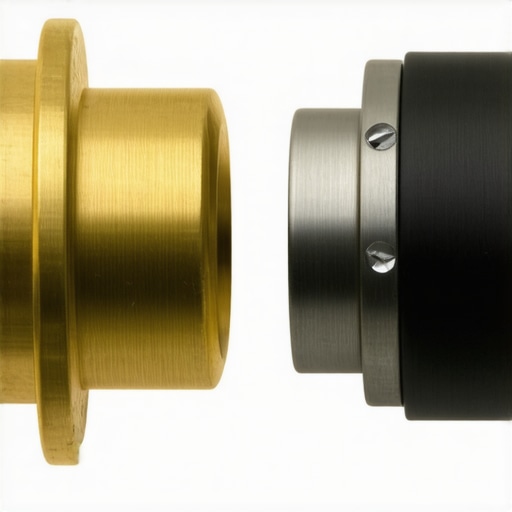
The Burglar Strategy and the Vulnerability of Metal
When a professional criminal looks at your front door, they are not seeing a barrier; they are seeing a physics equation. Most residential doors in multi-family buildings rely on standard Euro cylinders that are fundamentally flawed in their geometry. A burglar does not care about your deadbolt if the cylinder core can be snapped in under thirty seconds using nothing more than a pair of vice grips. This is the brutal reality of standard pin tumbler locks. They are designed for convenience and low manufacturing costs, often utilizing soft brass components that provide almost zero resistance to physical force. High-security Euro cylinder locks, however, represent a complete shift in defensive engineering. They move away from the basic five-pin stack and introduce complex mechanical hurdles like sidebar logic, telescopic pins, and hardened steel reinforcement. If you are considering a smart home security integration 2026 setup, the mechanical foundation of your door remains the most critical component because no software can stop a physical snap-and-pull attack.
“Security is always a trade-off between convenience and protection.” – Industry Axiom
The Scam Victim and the Drill Point
A lady came into my shop crying because a scammer drilled her lock and charged her six hundred dollars for a replacement that cost ten bucks at a big-box store. She had lost her purse, and instead of a professional locksmith providing a lost wallet key replacement fast, she found a trunk-slammer via a sponsored ad. This technician did not even attempt to use a Lishi tool or a pick set. He went straight for the drill, destroying a perfectly good high-security housing because he lacked the technical skill to manipulate it. This is why I tell my customers that the difference between a high-security cylinder and a standard one is not just the price; it is the level of expertise required to bypass it. A standard cylinder is a toy. A high-security Euro cylinder, specifically those with a 3-star TS007 rating, is a professional-grade barrier. When we talk about multi-family building lock rekeying, the goal should always be to move away from these vulnerable brass cores toward something that can actually withstand a kinetic attack.
Mechanism Zooming: The Physics of the Shear Line
Let us look inside the plug. In a standard pin tumbler lock, you have a series of five or six chambers. Each contains a bottom pin, a top pin (the driver), and a spring. When the correct key is inserted, the gap between the bottom and top pins aligns perfectly with the shear line, allowing the plug to rotate. The problem is the tolerances. In cheap hardware, these tolerances are wide enough to drive a truck through. This allows for ‘bumping’ where a kinetic shock forces the driver pins above the shear line for a fraction of a second. High-security Euro cylinders eliminate this through ‘pin-in-pin’ technology. Imagine a pin that has another smaller pin inside it, each requiring its own unique height to reach the shear line. This creates a geometric puzzle that makes traditional picking almost impossible. Furthermore, high-security cylinders utilize a ‘sacrificial cut.’ If a thief attempts to snap the lock, the cylinder breaks at a predetermined point, leaving the locking mechanism intact and unreachable behind a wall of hardened steel. This is a primary consideration for commercial keyless entry benefits because even with electronic access, the mechanical override must be robust enough to prevent forced entry.
ANSI Grades and the Material Science of Security
Hardware grades matter. Most residential locks are ANSI Grade 3, which is essentially pot metal with a shiny finish. For garage door lock upgrades 2026 and main entry points, you should be looking for Grade 1 or 2. High-security cylinders often use nickel-silver keys instead of brass because they resist wear and prevent the ‘key snap’ syndrome that happens when a lock gets sticky. The internal components are even more impressive. We are talking about tungsten carbide inserts placed specifically to shatter drill bits on contact. If you try to drill a high-security Euro cylinder without knowing exactly where the anti-drill pins are located, you will go through five bits and still be staring at a locked door. This is the difference between a deterrent and a delay. In the world of master key systems for hotels 2026, this durability is essential because those locks see more cycles in a month than a house lock sees in a decade. Weatherproof outdoor locks reviews frequently highlight that high-security models also handle environmental stress better because their internal tolerances are designed to clear debris rather than trap it.
“Physical security is the first and last line of defense in an increasingly digital world.” – Security Standards Manual
The Installation Process: Achieving the Flush Fit
Installing a high-security Euro cylinder is not a ‘drop-in’ job for an amateur. It requires a precise measurement of the door thickness including the rose plates or escutcheons. If the cylinder protrudes more than 3mm from the face of the door, you have just handed a burglar the leverage they need to snap it, regardless of its security rating. A professional install involves ensuring a flush fit where the cylinder face is perfectly aligned with the protective furniture. During an auto lockout, we use similar precision tools like the Lishi 2-in-1 to decode the wafers without damage, and that same level of surgical care should be applied to your home. As we look at 2026 trends in automotive security and residential tech, the focus is shifting toward hybrid systems. This means your mechanical cylinder might have a passive RFID chip that must be recognized before the mechanical pins will even move. This prevents even the most advanced 3D-printed keys from working. For those dealing with automotive transponder keys 2026 updates, you know that the code is as important as the blade. The same logic is finally reaching the Euro cylinder market.
The Peace of Mind Verdict
Choosing a high-security Euro cylinder over a standard pin lock is the difference between buying a lock and buying security. A standard lock keeps an honest person honest; a high-security lock keeps a criminal out. When you consider the cost of a break-in, the price of a high-end cylinder is negligible. It is an investment in the physics of resistance. Whether you are managing a complex master key system or just looking to protect your family, the mechanical integrity of that cylinder is your last line of defense. Do not trust your safety to a piece of brass that can be defeated by a hardware store tool. Upgrade to a system that utilizes sidebars, telescopic pins, and anti-snap architecture. It is the only way to ensure that when you turn the key, you are truly the only one who can.