
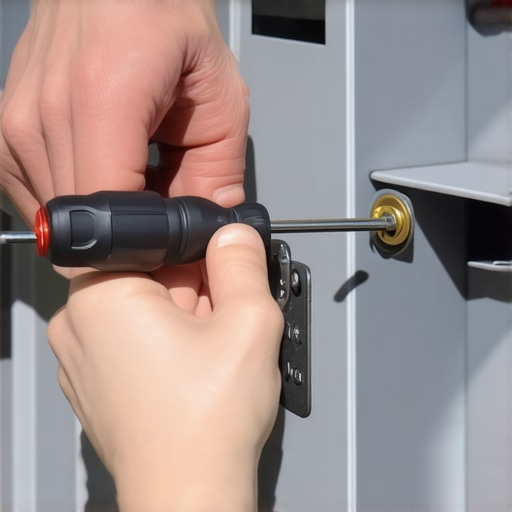
The Gritty Reality of Commercial Mailbox Security
I have spent twenty five years at the bench and one thing never changes: people treat their commercial mailbox locks like an afterthought until they are standing in the rain with a broken key or a spinning cylinder. Most property managers think a lock is just a piece of metal, but in reality, it is a precision-engineered gatekeeper. When you are dealing with a Cluster Box Unit (CBU) or a horizontal 4C mailbox, you are dealing with a specific physics problem. I teach my apprentices that if you have to force the key, you have already lost the battle. That resistance is not just a stubborn lock; it is a mechanical signal that the internal tolerances have failed. If you push past it, you are not just breaking a five dollar key, you are potentially ruining a door that costs hundreds to replace. Most of the ‘trunk slammers’ you find online will tell you to just drill it out immediately. That is the mark of an amateur. A real technician understands the wafer configuration and the cam geometry before they even touch a tool.
“Security is always a trade-off between convenience and protection.” – Industry Axiom
The internal physics of a mailbox lock is simpler than a high-security deadbolt, but more finicky. These are typically five-wafer or six-wafer tumbler systems. Unlike the pin-tumblers you find in your front door, which use top and bottom pins to find a shear line, these use flat brass or steel plates called wafers. Each wafer is spring-loaded and must be pulled to a precise height by the key’s bitting to clear the cylinder housing. When these locks fail, it is usually because the zinc-alloy housing has oxidized or the spring tension has weakened due to environmental exposure. If you are in a city where the humidity is high, that salt-heavy air creates a galvanic reaction between the brass wafers and the pot-metal housing. This results in the ‘crunch’ sound you hear right before the lock seizes entirely.
Phase 1: Diagnosing the Mechanical Failure
Before you start the ten-minute clock, you need to identify the failure point. Is the key spinning 360 degrees without engaging? That is a cam nut failure. Is the key refusing to turn? That is a wafer misalignment or a debris clog. In my shop, I see hundreds of these returned by ‘DIY experts’ who bought the wrong rotation. You have to know your degrees: 90-degree clockwise, 90-degree counter-clockwise, or 180-degree rotation. If you install a 180-degree cam on a 90-degree strike, you have just created a security hole large enough to fit a pry bar through. This is why business access control audits 2026 are becoming so critical for commercial properties. It is not just about the digital stuff; it is about ensuring that physical hardware like mailbox locks actually meets the intended security perimeter. You can have all the smart locks with video integration in the world, but if your physical mail—the source of identity theft—is behind a 1/8th inch zinc cam, you are vulnerable.
Phase 2: The Forensic Removal Process
To replace the lock, you need to access the rear of the door. If you are locked out, this is where the expertise comes in. A real locksmith uses a Lishi pick or a wafer rake to open the lock non-destructively. Once the door is open, the anatomy is exposed. You will see a large horseshoe-shaped spring clip or a large thin hex nut holding the cylinder to the door. I prefer the spring clip because it handles vibration better, but it is a bear to remove without the right pliers. Pull that clip, and the cylinder should slide out. But wait: look at the cam. Is it straight? Is it offset? Is it a hook cam? Using the wrong cam is like trying to use a car key for a tractor; the physics simply do not align. While we talk about automotive locksmith vs dealership for car key replacement, the same logic applies here: the right part matters. You would not use a transponder key for a mailbox, and you should not use a generic big-box store lock for a commercial USPS-approved box.
“Grade 1 hardware is tested to withstand significantly higher cycles and impact than the consumer-grade alternatives found in retail chains.” – ANSI/BHMA Standards Overview
Phase 3: Installing the New Cylinder
Slide the new cylinder into the hole. If you have done your homework, the ‘D’ shape of the cylinder will match the cutout in the door. This ‘D’ shape is there to prevent the lock from spinning when a thief tries to use a wrench on it. If your door hole is rounded out, the lock is useless. This is the difference between a secure install and a ‘trunk slammer’ special. Once the cylinder is flush, slide the horseshoe clip back into the grooves. You want a ‘snap’ sound. That snap tells you the spring steel has seated. Now, attach the cam. This is where most people fail. You must ensure the cam is oriented so that the key can only be removed in the locked position. If the key comes out when the mailbox is open, you have created a liability. In the world of business key management software and panic hardware for office buildings 2026, we call this ‘enforced compliance.’ The hardware should force the user to be secure.
Material Science: Why Zinc Fails
I hate pot metal. Most commercial mailbox locks are made of a zinc alloy because it is cheap to cast. But zinc has a low shear strength. If a burglar puts a flathead screwdriver into the keyway and hits it with a hammer, a zinc lock will shatter. When I do security audits, I recommend locks with a hardened steel face or at least a stainless steel scalp. This prevents the ‘drilling’ method that scammers love to use. If you are looking at smart home security integration 2026, you will see a move toward 2026 wireless lock protocols explained in many contexts, but for a mailbox, the physical metal is still your primary defense. Even the best smart locks for pet doors have more physical integrity than a cheap mailbox lock. Don’t cheap out on the one thing protecting your bank statements and tax documents.
The Lubrication Myth: Graphite vs. Reality
The final step is lubrication. If I see one more person spray WD-40 or dump a tube of black graphite into a lock, I might retire early. WD-40 is a solvent, not a long-term lubricant; it attracts dust and turns into a sticky sludge that jams the wafers. Graphite is conductive and, if over-applied, creates a ‘cake’ inside the cylinder that prevents the springs from resetting. I use a synthetic PTFE-based lubricant. It stays fluid in sub-zero temperatures and does not attract the road grime that tends to blow into outdoor CBUs. This is the same stuff we use for keyless ignition repair services and high-end automotive locks. It keeps the physics of the lock working smoothly without the mess.
The Expert Verdict
Replacing the lock is a ten-minute job if you have the right parts and understand the cam’s rotation. It is a sixty-minute nightmare if you buy a generic kit and try to ‘make it fit.’ If you find yourself wondering what to do when locked out of your car or your mailbox, remember that professional tools and knowledge of internal mechanisms are what save you money in the long run. Security is about the details: the thickness of the cam, the tension of the spring, and the quality of the alloy. Get those right, and you won’t need to call me at 3 AM to fix a broken door.
“,”image”:{“imagePrompt”:”A close-up, high-detail macro shot of a commercial mailbox lock cylinder being held by a locksmith’s weathered hand. The focus is on the brass wafer tumblers visible inside the keyway and the stainless steel horseshoe clip. The background is a slightly blurred Cluster Box Unit (CBU) in an urban setting, with professional locksmith tools like a small wrench and PTFE lubricant nearby. Gritty, technical aesthetic.”,”imageTitle”:”Professional Commercial Mailbox Lock Replacement”,”imageAlt”:”A master locksmith installing a high-quality wafer tumbler lock in a commercial mailbox unit.”},”categoryId”:12,”postTime”:”2025-05-20T10:00:00Z”}