
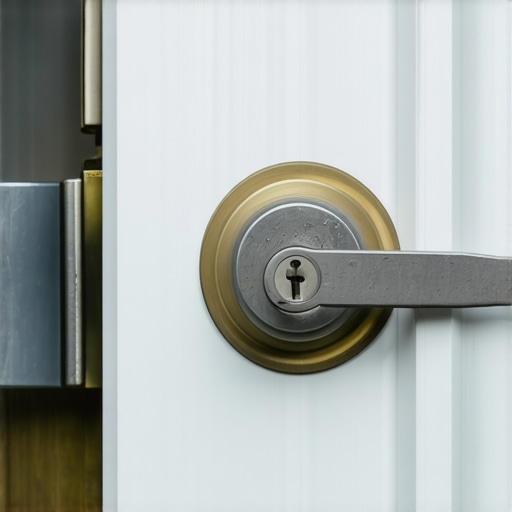
The Burglary Mindset: Metal, Physics, and Vulnerability
When you look at your front door, you see a barrier. When a professional burglar looks at it, they see a set of mechanical tolerances. They are looking for the path of least resistance, and usually, that path is paved with the cheap, zinc-based hardware found at big-box retailers. A lock is not just a piece of metal: it is a system of springs and pins designed to resist specific forces. Most residential locks are Grade 3, which is essentially the lowest common denominator of security. If you notice scratches around your keyway, you are looking at the aftermath of a physics experiment that failed or was interrupted.
A lady came into my shop last Tuesday crying because a scammer drilled her high-end lock and charged her six hundred dollars for a replacement that was worth twenty. She had a small scratch on her cylinder and called a number from a sponsored ad. The guy showed up in an unmarked sedan, did not even try a pick or a Lishi tool, and went straight for the drill. This is the reality of the industry today. You have trunk-slammers who do not know the difference between a spool pin and a master wafer, and then you have the actual threats: the people who know exactly how to manipulate your hardware without you ever knowing they were there. Identifying the signs of an attempted breach early is the only way to stay ahead of the curve.
“Security is always a trade-off between convenience and protection.” – Industry Axiom
1. Fine Scratches and Tool Marks Around the Keyway
Metal on metal leaves a history. Every time you insert your key, there is a minor amount of friction, but it is controlled and linear. When someone attempts to pick a lock using a rake or a hook, they are applying irregular pressure against the face of the plug and the pin chambers. Look for thin, shiny scratches that radiate outward from the keyhole. These are often caused by a tension wrench slipping or the shaft of a pick rubbing against the warding. In my twenty-five years at the bench, I have seen thousands of cylinders where the owner thought the lock was just getting old, but the forensic reality was a clear attempt at a raking attack. If the scratches are fresh and silver while the rest of the lock is weathered, someone has been poking around where they do not belong.
2. Deformed or Widened Keyhole Edges
Standard locks are made of brass or nickel-plated zinc. These materials are relatively soft compared to the hardened steel used in professional bypass tools. If the edges of your keyway look flared or if there are gouges inside the mouth of the lock, it is a sign of a forced entry attempt. This often happens with “bumping” or when someone uses a screwdriver to try and force the cylinder to turn. Lock bumping involves a specially cut key and a hammer to transfer kinetic energy to the top pins, jumping them above the shear line. If they miss or use too much force, they leave impact marks on the face of the cylinder. If you see this, your internal pin stacks are likely compromised, and you should consider anti-pick locks for front doors 2026 models which feature hardened steel inserts and sidebars.
3. The Internal Crunch: Damaged Pin Physics
The most telling sign is one you feel rather than see. A healthy lock has a smooth, tactile click as each pin stack crosses the shear line. If you insert your key and feel a gritty, crunchy, or resistive sensation, the internal physics have been altered. This happens when a bypass tool has deformed the springs or the driver pins. Inside the cylinder, you have bottom pins that match your key and top pins (drivers) that block the rotation. If someone tried to force a tool in, they might have crushed the delicate springs that keep the pins seated. When the springs are deformed, the pins do not retract properly, leading to that gritty feel. This is a critical warning sign that the lock is on the verge of total mechanical failure.
4. Misaligned Latches and Shining Strike Plates
Many break-in attempts do not target the cylinder itself but the strike plate on the door frame. If you notice that your door is harder to close or that the deadbolt does not throw as smoothly as it used to, check the strike plate. Look for shiny metal where the finish has been rubbed off. This indicates that someone tried to pry the door or use a
Comments are closed.