
The 3 AM Reality Check: When High-Tech Fails
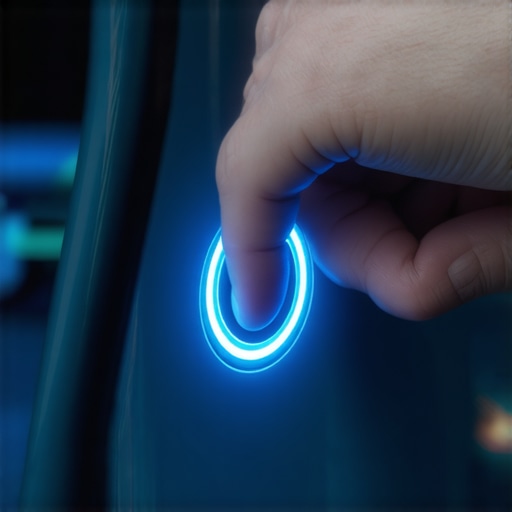
I once had a customer call me at 3 AM because his high-end luxury sedan decided his thumb no longer existed. It was a freezing Tuesday night, the kind of wet, bone-chilling cold that makes metal brittle and electronics erratic. He was standing in a grocery store parking lot, pressing his thumb against a frosted sensor that refused to acknowledge him. The car was dead to his touch. This is the inherent flaw in the push toward a keyless future. People assume that because a technology is expensive, it is infallible. In my 25 years at the bench, I have seen that the more complex a system becomes, the more points of failure it introduces. Biometrics in the automotive sector are marketed as the ultimate convenience, but security is a physics problem, not a software update. When that sensor fails due to a scratch, a layer of ice, or a glitch in the vehicle’s ECU, you are not just locked out; you are stranded by a computer that does not have a sense of urgency.
“Security is always a trade-off between convenience and protection.” – Industry Axiom
The Physics of the Biometric Failure
To understand why a thumbprint might not be enough, you have to look at the mechanism zooming inside the sensor. Most automotive biometric systems use capacitive scanning. These sensors use tiny electrical currents to map the ridges and valleys of your fingerprint. When you place your finger on the scanner, it measures the change in capacitance. If your finger is too dry, too wet, or if the ambient temperature has caused the sensor’s glass to contract, the reading fails. Unlike a mechanical wafer lock where a physical key moves brass components to a shear line, a biometric sensor relies on a digital handshake with the car’s computer. If the rolling code sequence is interrupted or if the keyless ignition repair services are needed due to a corrupted module, that thumbprint is useless. I tell my customers that a biometric lock is a secondary layer at best. It should never be the primary method of entry without a robust mechanical override. This is the same logic I apply to a locksmith for smart home ecosystems. If your best smart locks compatible with Alexa 2026 do not have a physical keyway, you are one power outage or software bug away from a forced entry scenario.
The Mechanical Backup: Why Lishi Tools Still Matter
When I arrived at that 3 AM call, I did not pull out a laptop. I pulled out a Lishi pick. Even the most advanced biometric vehicles usually have a hidden mechanical lock cylinder, often tucked behind a plastic cap on the door handle. A Lishi tool allows a Master Locksmith to feel the individual wafers inside that cylinder. By applying tension and picking each wafer to its height, I can decode the lock and cut a physical key on the spot. This is the reality of keyless ignition repair services; it often starts with traditional locksmithing. The wafers are tiny bits of flat brass or nickel silver that must be aligned perfectly to allow the plug to rotate. If you have a key extraction for deadbolts issue or a car lock that has been gummed up with road salt, no amount of fingerprint scanning will help. The mechanical integrity of the lock is the final line of defense.
Smart Home Integration and the 2026 Ecosystem
We are seeing a massive shift toward commercial smart access control 2026 trends where cars and homes share the same digital credentials. Your car might tell your house you are home, and the best smart locks compatible with Alexa 2026 will retract the deadbolt before you even reach the porch. While this sounds like the future, it creates a massive security vacuum. If a hacker intercepts the signal or if your key fob battery replacement guide was ignored and the fob dies while transmitting, the system can hang in an unsecured state. In my shop, I see best residential door locks for safety and durability that are being replaced by plastic-heavy smart locks. I hate seeing zinc hardware. It is soft, it has a low melting point, and a thief with a heavy screwdriver can snap it. Real security comes from commercial restricted keyways where the key cannot be duplicated at a kiosk and the cylinder is reinforced with hardened steel pins to prevent drilling.
“The strength of a lock is inversely proportional to the number of people who have the means to bypass it.” – Security Manual 101
Hardening Your Perimeter: From Cars to Offices
For my commercial clients, I am currently installing panic hardware for office buildings 2026 models that incorporate biometric readers with mechanical crash bars. This ensures that while entry is controlled by high-tech data, egress is always guaranteed by physics. We also focus on high-tech lock bumping prevention. Bumping is a technique where a specially cut key is used to ‘bump’ the pins up to the shear line. To stop this, we use spool pins or mushroom pins. These are security pins that have a narrowed center. When a picker or a ‘trunk slammer’ scammer tries to manipulate the lock, these pins catch on the shear line, creating a ‘false set.’ It makes the lock feel like it is turning when it is actually more stuck than before. This level of detail is what separates a professional from a guy with a drill. If a locksmith arrives and immediately reaches for a drill to open your door, send them away. A real tech knows how to use the physics of the lock against itself.
Maintenance: The Key to Longevity
Whether you are dealing with a car’s biometric sensor or commercial restricted keyways, maintenance is non-negotiable. I see people spray WD-40 into their locks all the time. Stop doing that. WD-40 is a solvent, not a long-term lubricant; it attracts dust and turns into a sticky gunk that traps the springs. Use a dry PTFE-based lubricant or high-grade graphite. For your biometrics, keep the sensor clean with an alcohol wipe. If your key fob is acting sluggish, do not wait. Check a key fob battery replacement guide and swap the CR2032 or CR2025 cell immediately. A weak battery can cause the rolling code to desync, leaving you stuck even if your thumbprint is recognized. In the world of security, the smallest component is often the one that fails. A single rusted spring in a deadbolt or a dead capacitor in a biometric reader can be the difference between a secure home and a night spent on the sidewalk. Trust the metal, respect the electronics, but always have a backup plan that involves a physical key.