
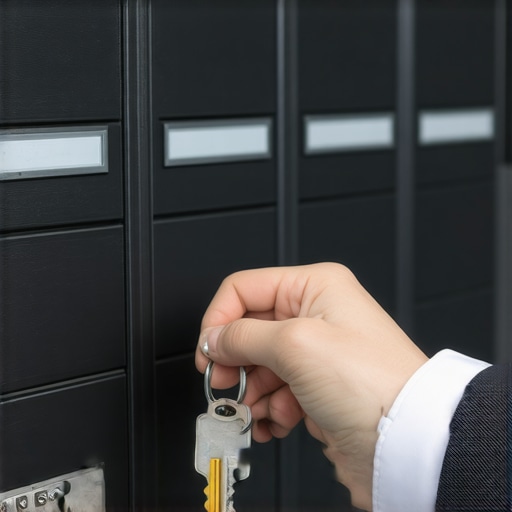
Professional Guide to Securing Multi-Unit Mailboxes for Property Managers
A lady came into my shop last Tuesday, her eyes red from crying. She had hired one of those $19 dispatch service trunk-slammers to fix a jammed tenant lock on a 16-unit Cluster Box Unit. The guy did not have a lick of training. He drilled out six locks, destroyed the mounting brackets, and handed her a bill for $1,200 for hardware that would not even pass a basic salt spray test. This is the reality of modern security. If you are a property manager responsible for multi-unit mailboxes, you are holding the keys to your tenants’ identities, and if you treat it as a secondary concern, you are failing your residents. Security is not a product you buy; it is a physics problem you solve. When we talk about multi-unit mailbox security, we are talking about the integrity of the wafer tumbler and the shear strength of the cam. Most managers think a lock is just a lock, but there is a massive difference between a high-grade brass wafer and the pot metal junk that comes in a plastic bag from a big-box store.
“Physical security is the first line of defense against identity theft in residential complexes.” – USPS Postal Operations Manual
The Physics of the Wafer Tumbler Mechanism
To understand why mailboxes fail, you have to look at the internal physics. Standard CBU locks utilize a wafer tumbler design rather than the pin tumbler systems found in deadbolts. Inside that tiny zinc housing, you have a series of five to seven brass wafers under spring tension. When you insert the key, the wafers move vertically to align with the shear line of the plug. In high-volume environments, those tiny springs fatigue. The moment a spring loses its tension, the wafer hangs, and the key will not turn. If you have to force the key, you have already lost. Forcing a key into a fatigued wafer system leads to metal shavings clogging the keyway, which eventually requires a full replacement rather than a simple lubrication service. When you examine weatherproof outdoor locks reviews, you will notice that the top-rated hardware always uses stainless steel springs rather than music wire, which corrodes at the first sign of humidity. In 2026, we are seeing a shift toward more robust materials, but the basic mechanical principles of the shear line remain the same.
The Psychology of the Mailroom Burglar
A burglar is looking for the path of least resistance. They do not pick locks like you see in the movies; they use leverage. Most mailbox break-ins occur because the cam, the metal tailpiece that rotates to lock the door, is too thin. A simple flathead screwdriver can provide enough torque to bend a 12-gauge steel cam. This is why I advocate for the Fortress Upgrade. You need to ensure your CBU units are using 10-gauge reinforced cams with a deep throw. The strike plate, the part of the mailbox frame that the cam grips, is often the weakest point. If the frame is made of thin aluminum, the lock itself can be perfectly strong, but the frame will peel back like a sardine can. When performing emergency lock changes after break-in, I always tell managers to look for signs of prying around the master arrow lock. This is the lock the postal carrier uses to open the entire unit. If that lock is loose, the entire security of the building is compromised.
Advanced Access Control and 2026 Trends
We are entering a new era of property management. The commercial smart access control 2026 trends show a move away from physical keys for communal areas. For package rooms, following a biometric locks installation guide 2026 is becoming the standard. These systems use capacitive sensors that recognize the electrical current in a finger, making them nearly impossible to spoof with a 2D print. This eliminates the need for rekeying smart locks after moving in because you can simply revoke digital access in seconds. However, for the individual mailbox, the mechanical lock still reigns supreme due to USPS regulations. If you are managing a site with a bike room, you should be preventing bike lockouts with smart tech like RFID fobs that log every entry and exit. This level of auditing is what separates a professional facility from a target. Property managers should also be looking into commercial panic exit devices 2026 to ensure that while the mailroom is secure from the outside, it remains a safe exit path for tenants during an emergency.
“Security is always a trade-off between convenience and protection.” – Industry Axiom
The Maintenance Checklist: Beyond Graphite
Stop using WD-40 on your locks. I say this every single day, and yet I still see people spraying fish oil into precision machinery. WD-40 is a solvent, not a long-term lubricant. It attracts dust and creates a sticky paste that will seize a wafer lock in six months. For outdoor mailboxes, use a dry PTFE spray or a high-quality Houdini lubricant. If you have a broken key, stop before you reach for the pliers. Key extraction for deadbolts and mailbox locks requires a spiral extractor tool that hooks the bitting of the key without damaging the wafers. If you try to pull it out with needle-nose pliers, you will likely jam the broken fragment deeper into the plug. For larger buildings, I recommend using a mobile app locksmith booking 2026 service that allows you to track the maintenance history of every lock on your property. This data helps you identify which units are prone to failure before a tenant gets locked out. Finally, part of your job is educating residents on how to prevent future house lockouts. A simple spare key kept in a secure, monitored location can save everyone a 2 AM emergency call. Security involves trust and regular maintenance, not just a slab of metal on a door.
{“@context”: “https://schema.org”, “@type”: “HowTo”, “name”: “How to Secure Multi-Unit Mailboxes”, “description”: “A professional checklist for property managers to maintain and secure CBU mailboxes.”, “step”: [{“@type”: “HowToStep”, “text”: “Inspect the cam thickness of each mailbox lock to ensure it is at least 10-gauge steel.”}, {“@type”: “HowToStep”, “text”: “Apply a dry PTFE-based lubricant to the keyway twice a year to prevent wafer fatigue.”}, {“@type”: “HowToStep”, “text”: “Verify the structural integrity of the USPS master arrow lock mounting bracket.”}, {“@type”: “HowToStep”, “text”: “Upgrade communal package rooms with 2026-standard biometric access control for audit trails.”}]}